I watched Dave Scott drive a car on the Moon this morning.
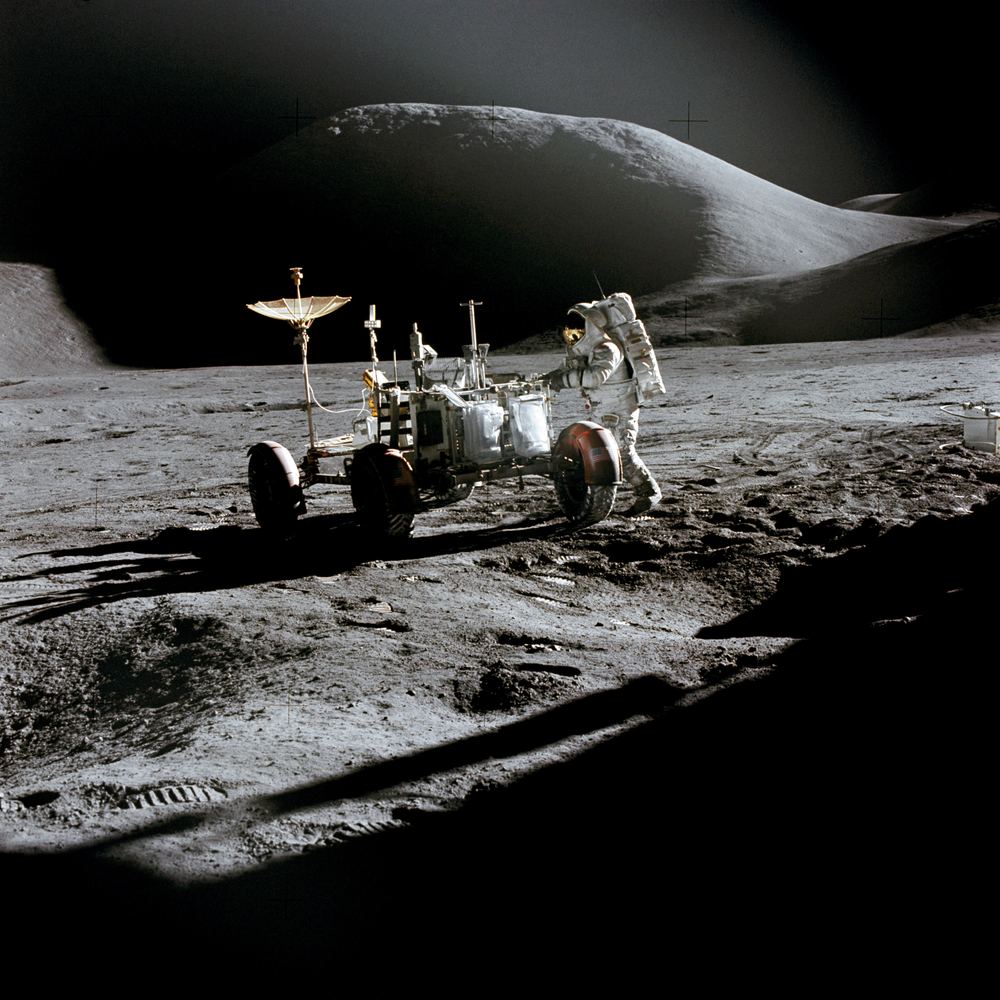
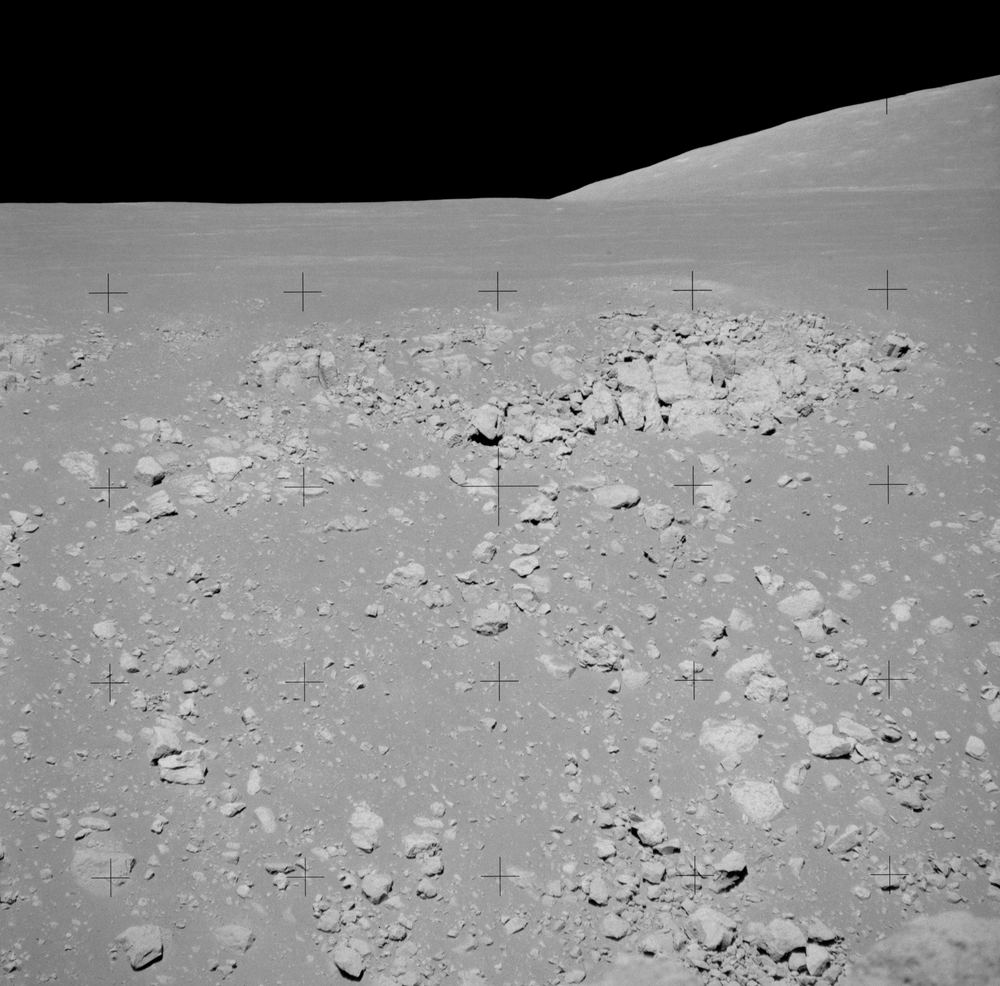
The television camera on the Lunar Rover transmitted live from the lunar surface as he drove. I watched mountains go by in the background — the Apennine front, 15,000 feet high — and the rille in the distance, and craters and boulders and the peculiar compressed perspective of the lunar landscape where nothing is quite the right size because there’s nothing to provide a scale reference. And Scott’s voice came through, narrating: “All right, we’re coming up on Elbow Crater…”
He was driving to Hadley Rille. The sinuous channel that runs along the edge of their landing site. When they reached it, they stopped at the rim and looked down. The rille was about a kilometer across and the walls dropped steeply to the floor. Scott described seeing layered rocks in the wall — different strata of lava flows, laid down over millions of years. A cross-section of lunar geological history, exposed by whatever ancient event formed the rille. Scott and Irwin tried to get samples from as far down the rim as they could safely reach.
The mountains in the background — Hadley Delta, Mons Hadley — are real mountains. Not the rolling hills of Earth, smoothed by water and wind and time. Sharp-edged, austere, unchanged since they formed billions of years ago. Nothing on Earth looks like this because on Earth everything eventually gets worn down. The Moon preserves everything as it was.
I have watched a lot of television in my life. I have never watched anything quite like watching the Lunar Rover camera pan across the base of a mountain range on the Moon while an astronaut describes what he sees. I keep thinking about the transmission chain: from the camera on the Rover, to the Lunar Module’s high-gain antenna, to the Deep Space Network tracking stations scattered across Earth, to my television set in my living room. That signal traveled 240,000 miles in just over a second. I’m watching the Moon in nearly real time from my armchair.
I want to put this in some kind of perspective, though I’m not sure I can. When I was born, aircraft was still a relatively new technology. Flight was an adventure. The idea of flying across the Atlantic was daring. And now I’m watching a car drive on the Moon. The Moon! On live television!
More moonwalks to come. They have three EVAs planned for this mission — more surface time than all previous Apollo missions combined. They’ll go further each time, collecting more samples, examining more terrain. The science is just beginning.