I want to write about the photographs. Not the photographs of the Moon — the ones of Earth.
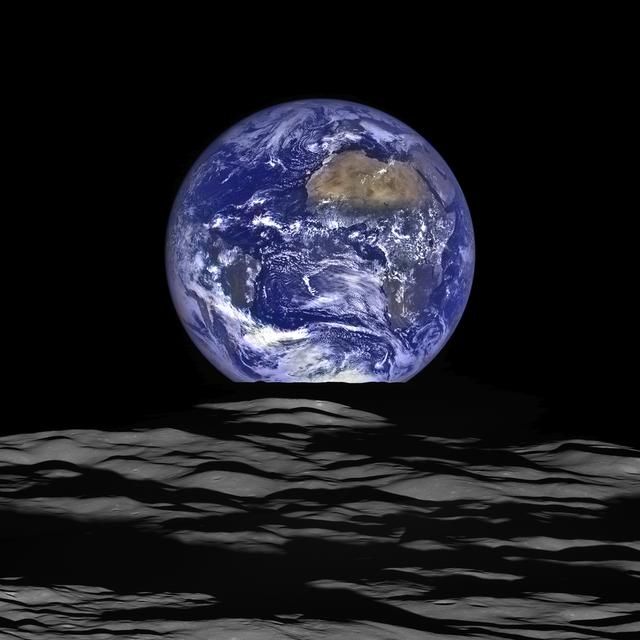
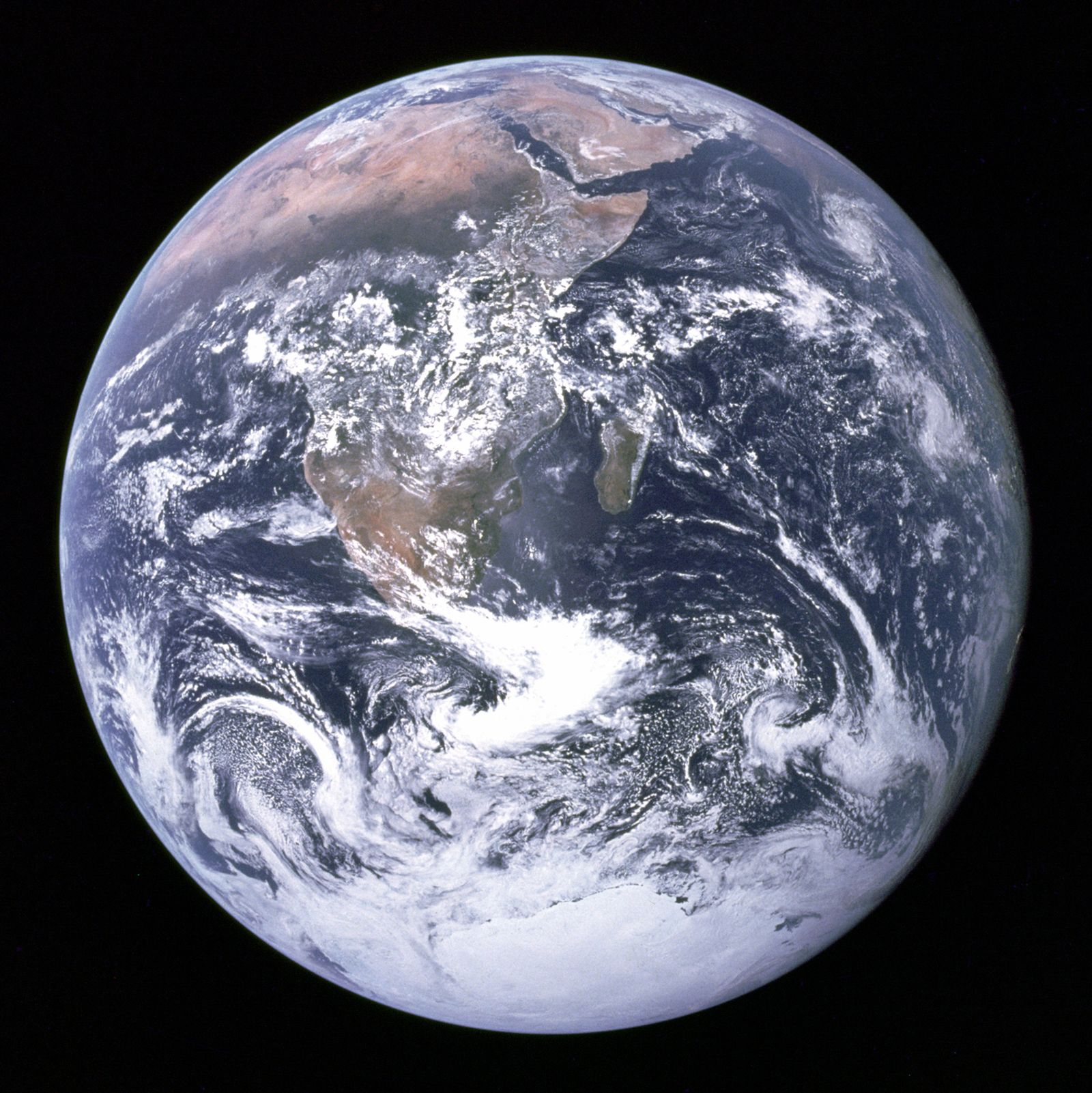
There are two that I think will matter for as long as there are people to look at photographs.
The first is Earthrise. December 24th, 1968. Bill Anders, orbiting the Moon on Apollo 8, looked out the window during a roll maneuver and said: “Oh my God! Look at that picture over there! Here’s the Earth coming up. Wow, is that pretty.” He grabbed a camera and took the photograph. Earth, rising above the lunar horizon, fully illuminated, brilliant blue and white against the absolute black of space, the gray and ancient surface of the Moon in the foreground.
It was the first time anyone had seen a photograph of Earth from far enough away to see the whole thing, or nearly the whole thing. The whole planet in one image. We had satellite photographs of Earth’s surface, but those were taken from close enough that you could only see a region. This was different. This was: here is your planet. Here is the entire thing. This is where you live.
The second photograph is the Blue Marble. December 7th, 1972. The crew of Apollo 17, outbound from Earth, 28,000 miles out. Someone — possibly Schmitt, possibly Cernan, the attribution is uncertain — took a photograph of Earth. Fully sunlit, no shadows, the full disk. The African continent. The Antarctic ice cap. The swirling cloud systems. Our whole planet, in full sunlight, 28,000 miles from the spacecraft.
It is, I think, the most widely reproduced photograph ever taken. It appeared on the cover of magazines, on posters, on book covers, in textbooks. Millions of copies. Possibly billions. You know this photograph. You’ve seen it.
What both photographs do is give you the overview — the ability to see your home from somewhere else. To see the Earth as a place, a specific place, a blue ball in the dark, finite and beautiful and alone. There’s no indication in either photograph of national borders. There’s no indication of cities or wars or arguments or politics. Just the planet, the clouds, the water, the land.
The Apollo program was, nominally, about the Moon. About landing humans on another world. And it did that. Twelve men walked on the Moon. We know more about the early solar system because they went.
But I keep thinking that the most lasting gift of the program might be the photographs. Earthrise and the Blue Marble. The image of home from elsewhere. The first time humanity could see itself from the outside.
Some of the astronauts who saw Earth from the Moon described what researchers now call the “overview effect” — a sudden, overwhelming sense of the Earth’s fragility and beauty and the arbitrariness of all the divisions that matter so much when you’re on the surface. You look at the blue ball in the dark and you cannot find the line that divides America from the Soviet Union. You cannot find the borders. You cannot find the arguments. You find an atmosphere that seems impossibly thin — a fragile membrane of air that keeps everything alive — and you find oceans that are impossibly blue and land that is impossibly complex.
We went to the Moon and we looked back and saw Earth. And that might be the thing that changes us, if anything does. Not the Moon rocks, not the orbital mechanics, not the engineering achievements — those matter. But this: we can see our home from far enough away to understand what it is. A marble. A blue marble in the dark. Alone. Worth taking care of.
I have a print of Earthrise in my office. Have had it for five years. I look at it when the day gets difficult. It helps.