Al Bean, Owen Garriott, and Jack Lousma have been in space for thirty days now on Skylab 3, with thirty more to go.
Al Bean walked on the Moon on Apollo 12. He’s the only Skylab crewmember who’s also walked on the Moon. I’ve been following Bean since Conrad’s Gemini missions; he seems like a quiet, thoughtful man who will describe the Moon in terms that go beyond the technical.
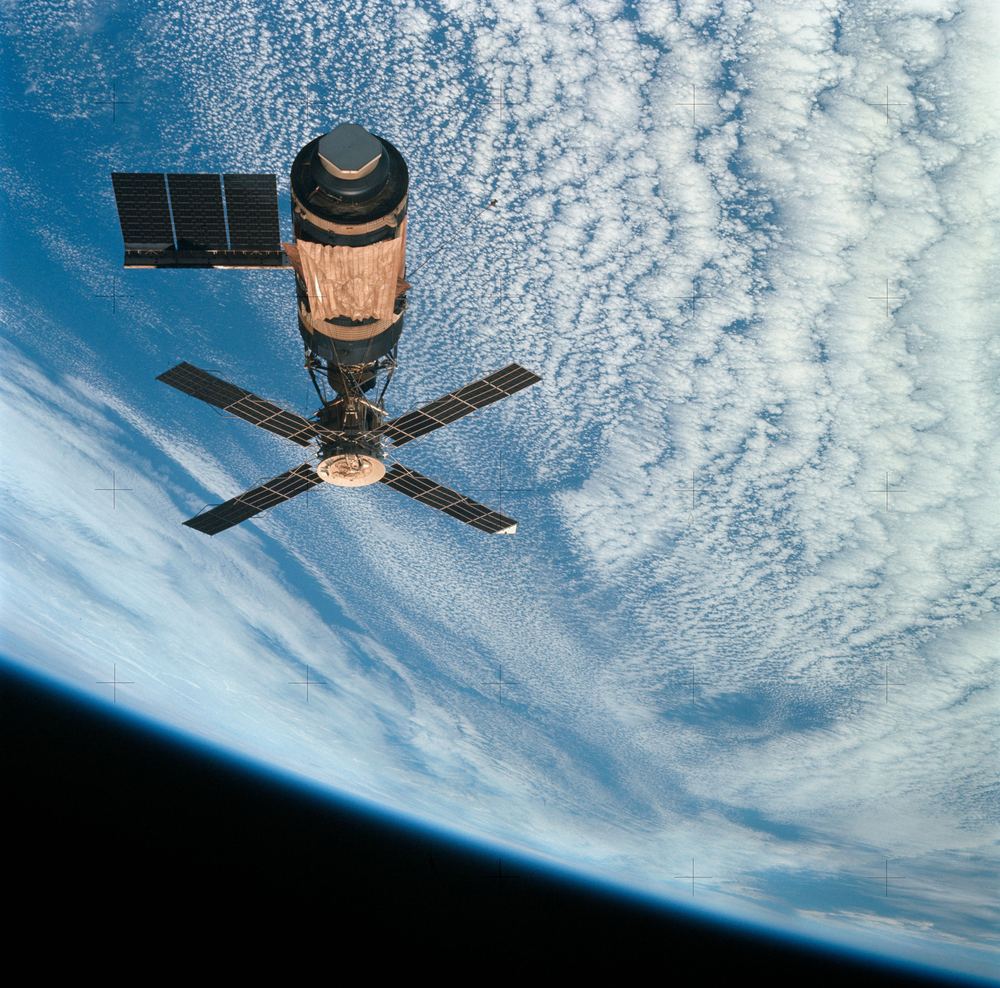
What are they doing up there? The solar observations are the centerpiece. The Apollo Telescope Mount has eight telescopes observing the Sun in ultraviolet and X-ray, and every day the crew points them at solar phenomena: active regions, flares, prominences, the corona. The amount of data they’re accumulating about the Sun is unprecedented. It will take years to fully analyze.
Garriott is a physicist, not a test pilot by background. He’s one of the scientist-astronauts who’ve been training since 1965, waiting for a mission that would use their scientific skills. His presence represents a shift in the program: we’re not just exploring whether people can go to space, we’re using the fact that people are in space to do science that couldn’t be done otherwise.
The Earth photography has been striking too. Systematic photography of the same regions over time is showing changes: erosion patterns, vegetation growth, ocean temperature distributions. Geologists are requesting specific targets. Agronomists want crop status photographs. The atmospheric scientists want cloud pattern data. Skylab is the beginning of Earth observation as a systematic science program rather than incidental photography.
The medical data is accumulating. Bone density, cardiovascular function, vestibular adaptation, muscle mass, fluid shifts. All measured regularly on a human population spending two months in weightlessness. When the first Mars crew eventually goes, they’ll have this data to design their exercise protocols.
Sixty days in space. Forty years ago, nobody could have imagined it. Now it’s a scheduled thing.