The Apollo guidance computer uses integrated circuits, which didn’t exist commercially ten years ago.
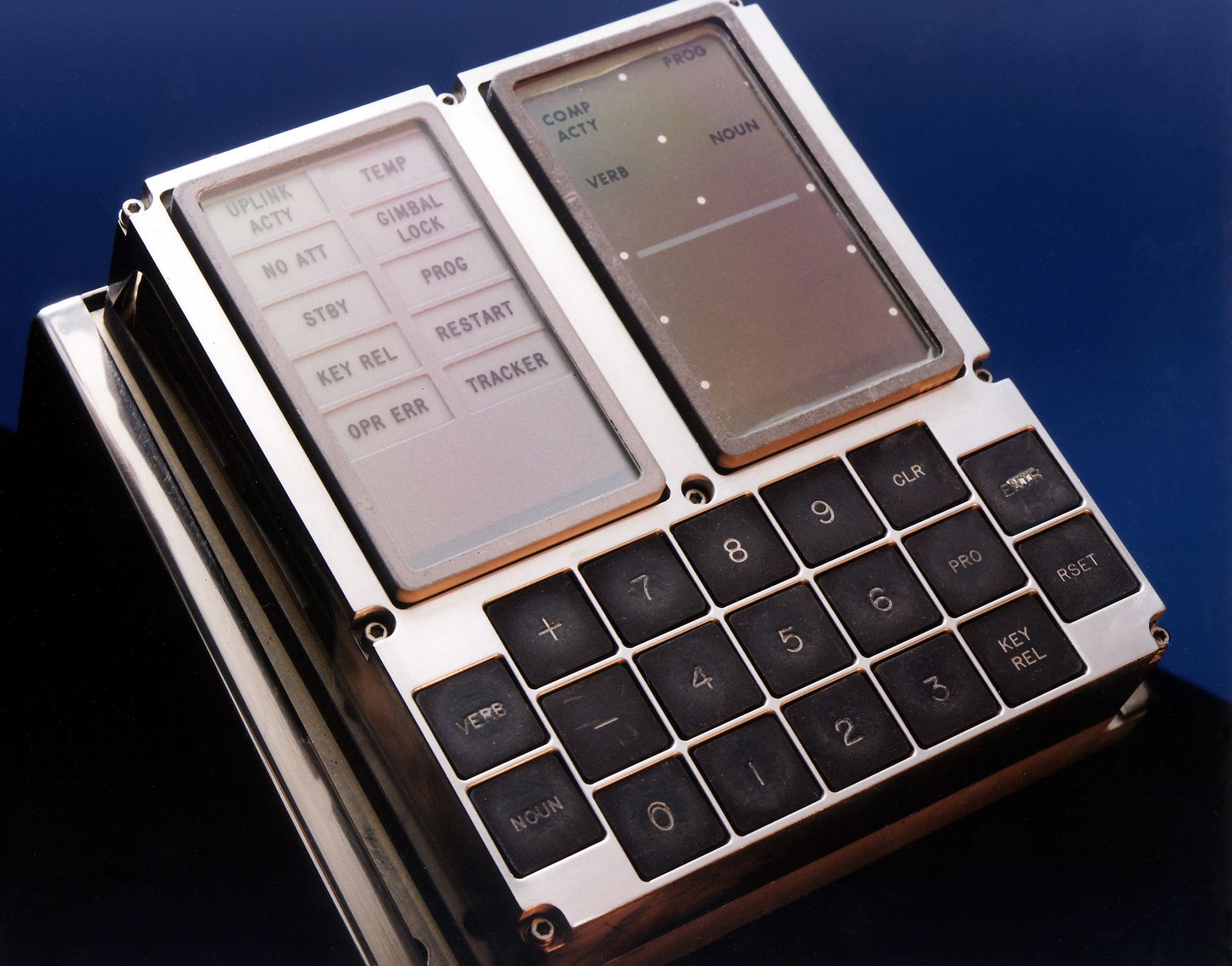
Jack Kilby at Texas Instruments and Robert Noyce at Fairchild Semiconductor developed the integrated circuit independently in 1958-1959. The idea: instead of wiring together individual transistors, resistors, and capacitors, manufacture all of them on a single piece of semiconductor (silicon), connected by deposited metal traces. One chip replaces dozens of discrete components.
The advantages: smaller, lighter, more reliable (fewer solder joints mean fewer failure points), lower power consumption. All of these matter enormously for spacecraft electronics.
The Apollo guidance computer was one of the first large-scale uses of integrated circuits. NASA’s decision to use ICs for the AGC created a large, reliable, government-funded market for the new technology at a time when Fairchild and others were still proving the manufacturing process. This market support was critical to the commercial development of the IC industry.
Fairchild supplied roughly 60% of all integrated circuits produced in the United States in 1962, mostly for the military and space programs. The manufacturing learning curve — each generation of chips gets cheaper and more reliable as production scales — was accelerated by this demand.
Which means: the home computers that are beginning to appear in hobbyist magazines, the calculators, the digital watches — these are all downstream from the investment that NASA made in integrated circuits for the Apollo guidance computer. The technology that makes a pocket calculator possible exists partly because the space program needed small, reliable computers.
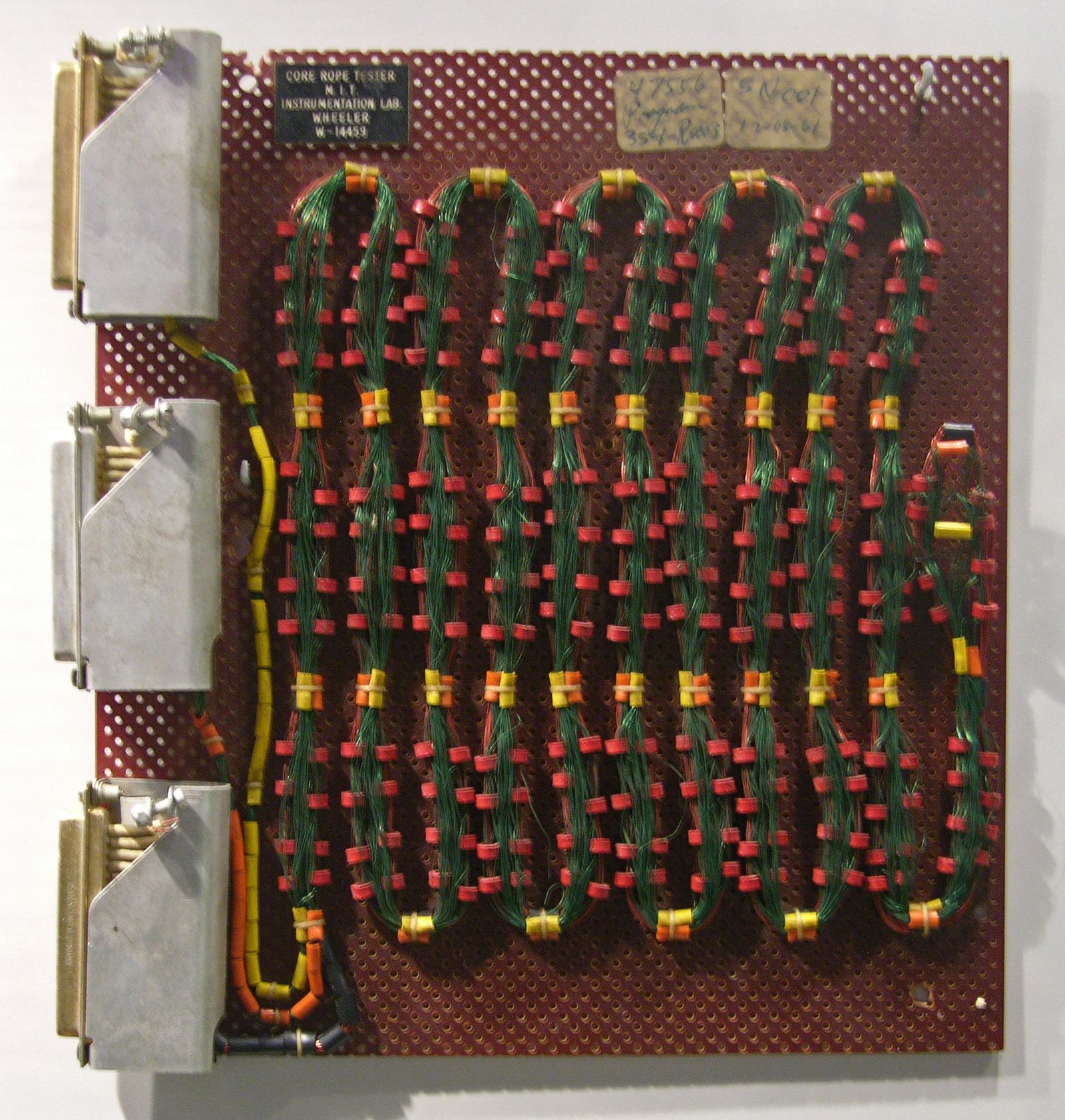
The AGC has 4,096 words of erasable memory and 36,864 words of fixed memory. By the standards of the large IBM mainframes of the time, this is negligible. By the standards of what you could fit in a spacecraft, it was a miracle.
The engineers who wrote the software for the AGC had to be extraordinarily economical. No wasted instructions. No unnecessary subroutines. Every word of memory had a purpose. It’s programming as craft rather than programming as carpentry — you cut nothing you don’t need.
The program that flew to the Moon was hand-crafted, line by line, in a language called MAC/AMS, by a team at MIT Instrumentation Lab led partly by Margaret Hamilton, who coined the term “software engineering” to describe what she was doing.
Software engineering. Coined for the Moon.