I’ve been trying to understand the Saturn V rocket, and the numbers are almost too large to hold in your head.
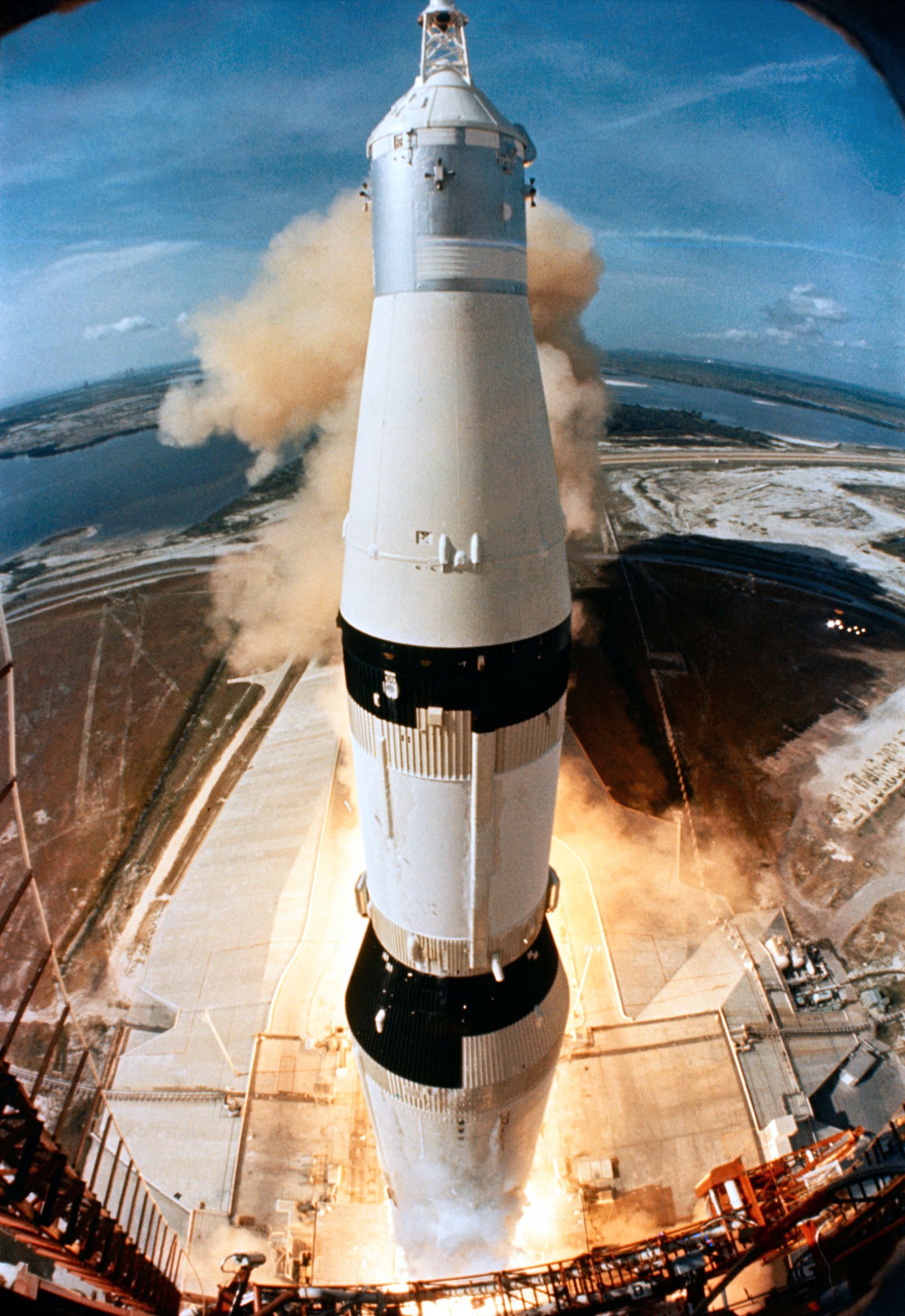
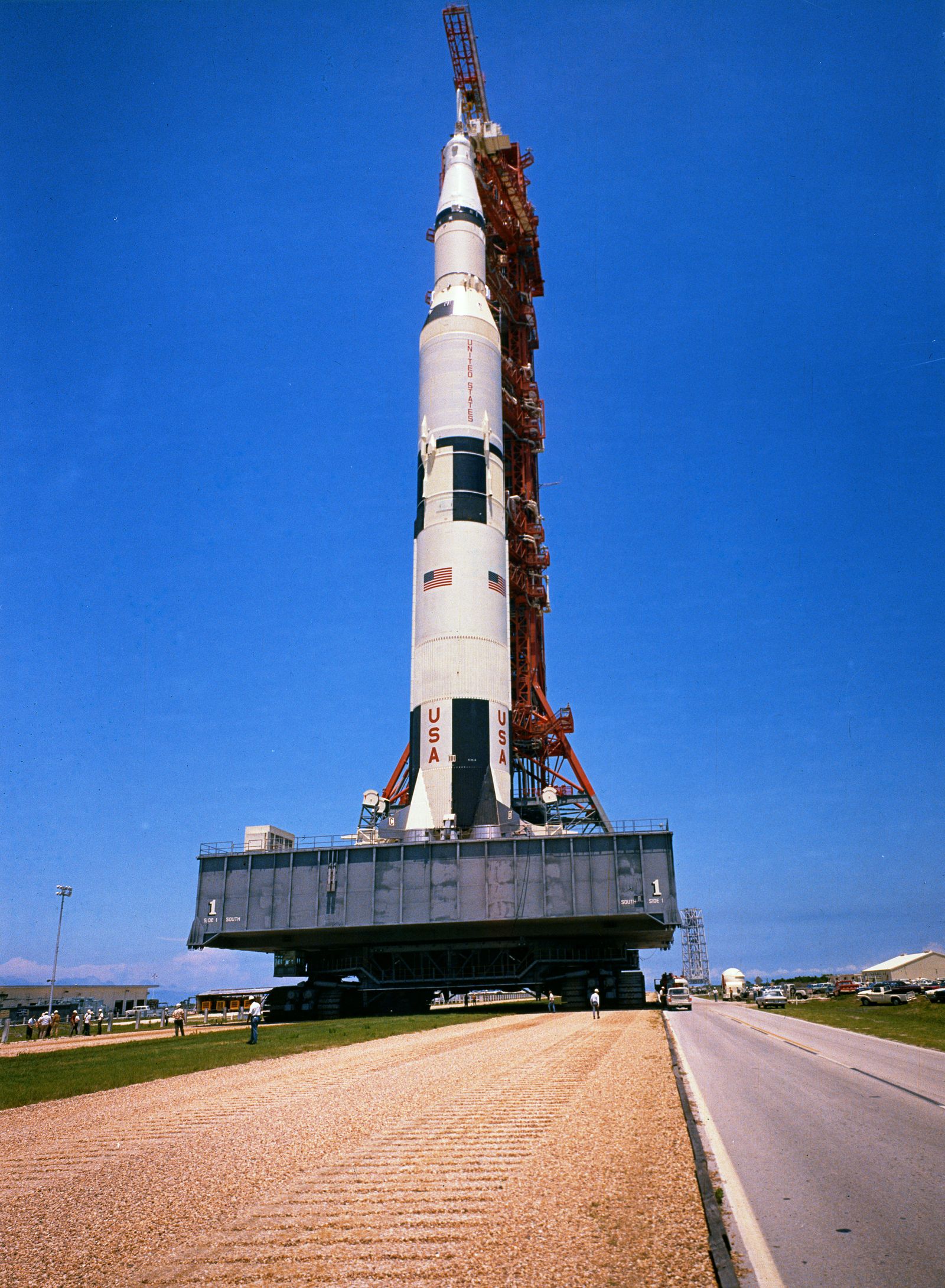
The Saturn V is being built in Huntsville, Alabama, by a team led by Wernher von Braun. It’s the rocket that will carry the Apollo crew to the Moon. Let me try to describe it in terms that mean something.
Height: 363 feet. That’s taller than the Statue of Liberty (305 feet including the pedestal). Taller than any building in Columbus. When it stands on the launch pad, it is the tallest object on the Florida landscape for miles in any direction. You can see it from the beach.
Weight (fully fueled): 6.2 million pounds. 3,100 tons. The fuel alone — liquid oxygen and RP-1 kerosene in the first stage, liquid oxygen and liquid hydrogen in the second and third stages — makes up about 85% of that weight. The useful payload — the crew, the capsule, the lunar lander — is roughly 100,000 pounds sitting atop 6.1 million pounds of explosive propellant.
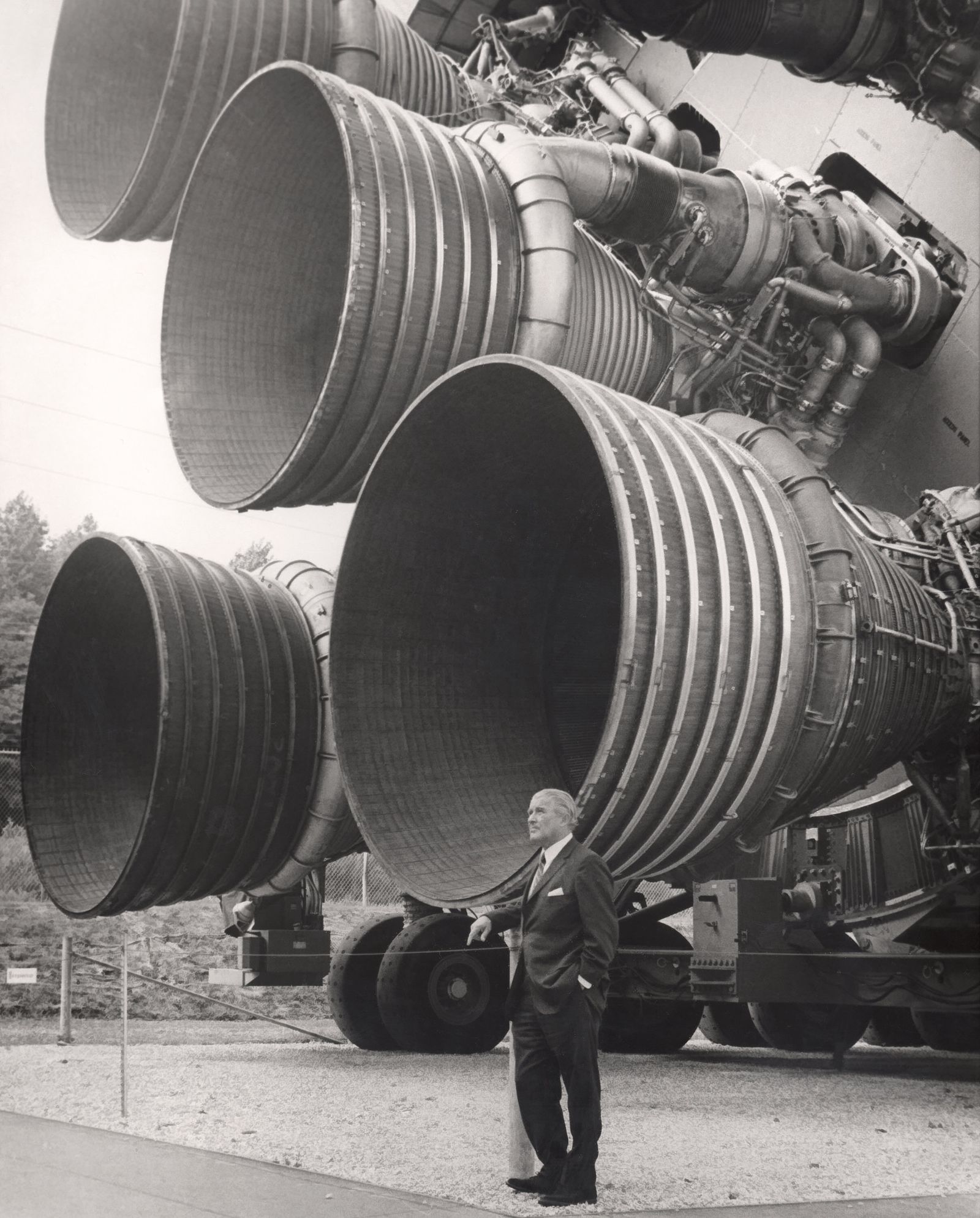
Thrust (first stage): 7.5 million pounds of thrust, produced by five F-1 engines. Each F-1 engine burns 5,683 pounds of propellant per second. All five together burn more than 28,000 pounds per second. In the two and a half minutes the first stage burns, it consumes roughly 4.5 million pounds of fuel.
Think about that: 4.5 million pounds of fuel in two and a half minutes.
The F-1 engine itself is the largest liquid-fuel rocket engine ever built. It produces 1.5 million pounds of thrust from a single engine. The combustion chamber burns at 5,800 degrees Fahrenheit. The turbopump that feeds the propellants spins at 5,500 RPM and could power a small city.
Building this thing required solving problems nobody had solved before. The early F-1 engines had a catastrophic instability problem — the combustion in the chamber would develop acoustic resonances that would tear the engine apart in a fraction of a second. They fixed it through systematic empirical testing: blowing things up until they understood how to prevent it. Hundreds of engine tests. They couldn’t calculate their way to the solution; they had to blow things up carefully and observe.
The Saturn V has three stages. First stage: five F-1 engines, burns for about 2.5 minutes, falls away at 38 miles altitude. Second stage: five J-2 engines (smaller, using liquid hydrogen instead of kerosene), burns for about 6 minutes, falls away at 115 miles altitude. Third stage: one J-2 engine, initially burns for about 2.5 minutes to reach orbit, then fires again to send the spacecraft to the Moon.
By the time the third stage has fired and the spacecraft is on its way to the Moon, 97% of the mass that left the launch pad has been jettisoned. What makes it to lunar orbit is roughly 3% of what started. This is the fundamental mathematics of rocketry: propellant is expensive, payload is precious, and the relationship between them is brutal.
I’m keeping a technical file alongside this notebook now. Clippings, magazine articles, the NASA technical reports that get declassified and show up in the engineering journals. I’ll never understand the differential equations. But I want to understand the shape of the problem.
The Saturn V is a cathedral of engineering — built to be used once, to do one impossible thing, to carry three people across 240,000 miles of vacuum and bring them back. It’s the largest machine ever built for a single specific purpose.
I think about it sometimes when I drive past the water tower outside of town. The Saturn V is taller than a water tower by a factor of three. And it goes to the Moon.