I have been sitting here for an hour, not quite sure how to start this entry.
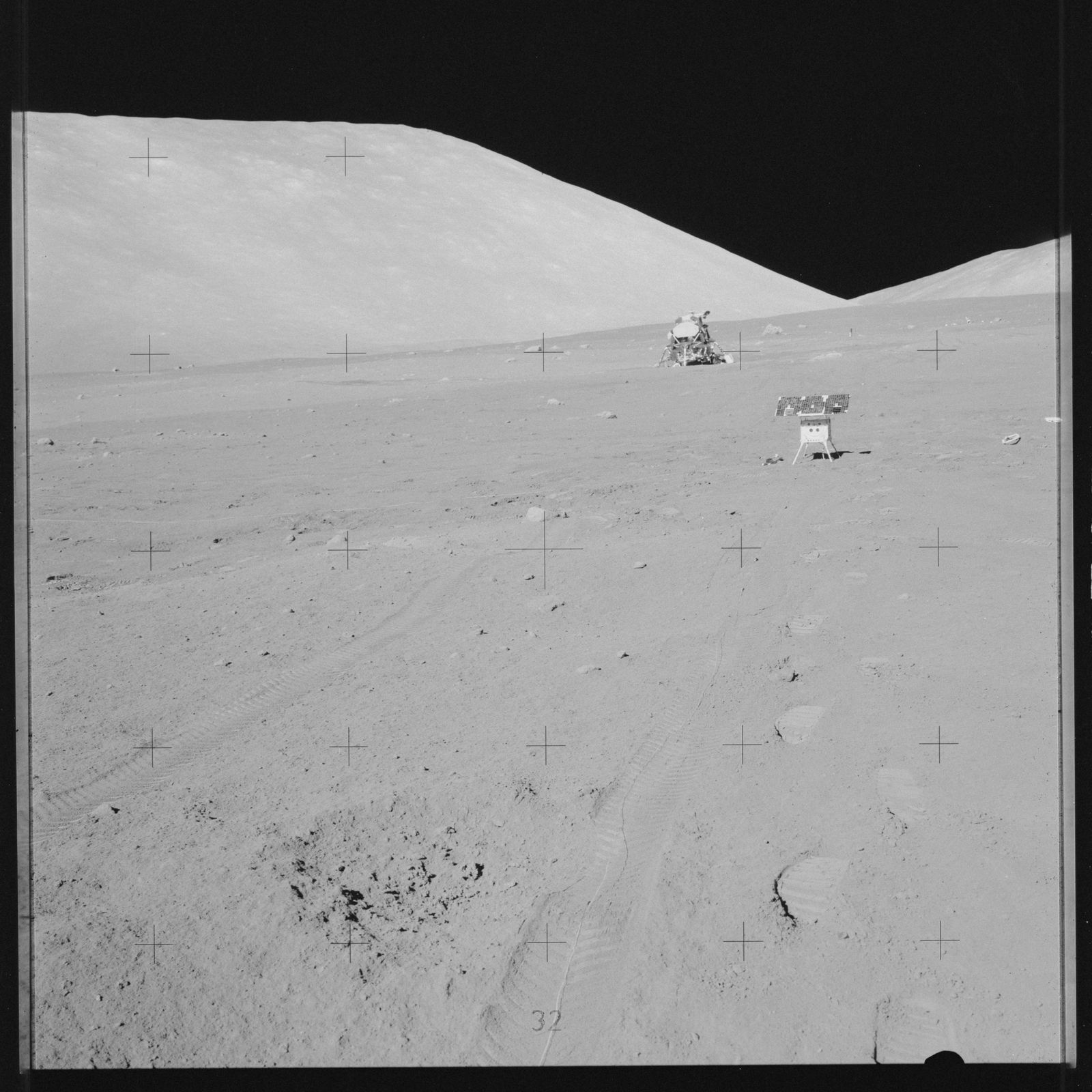
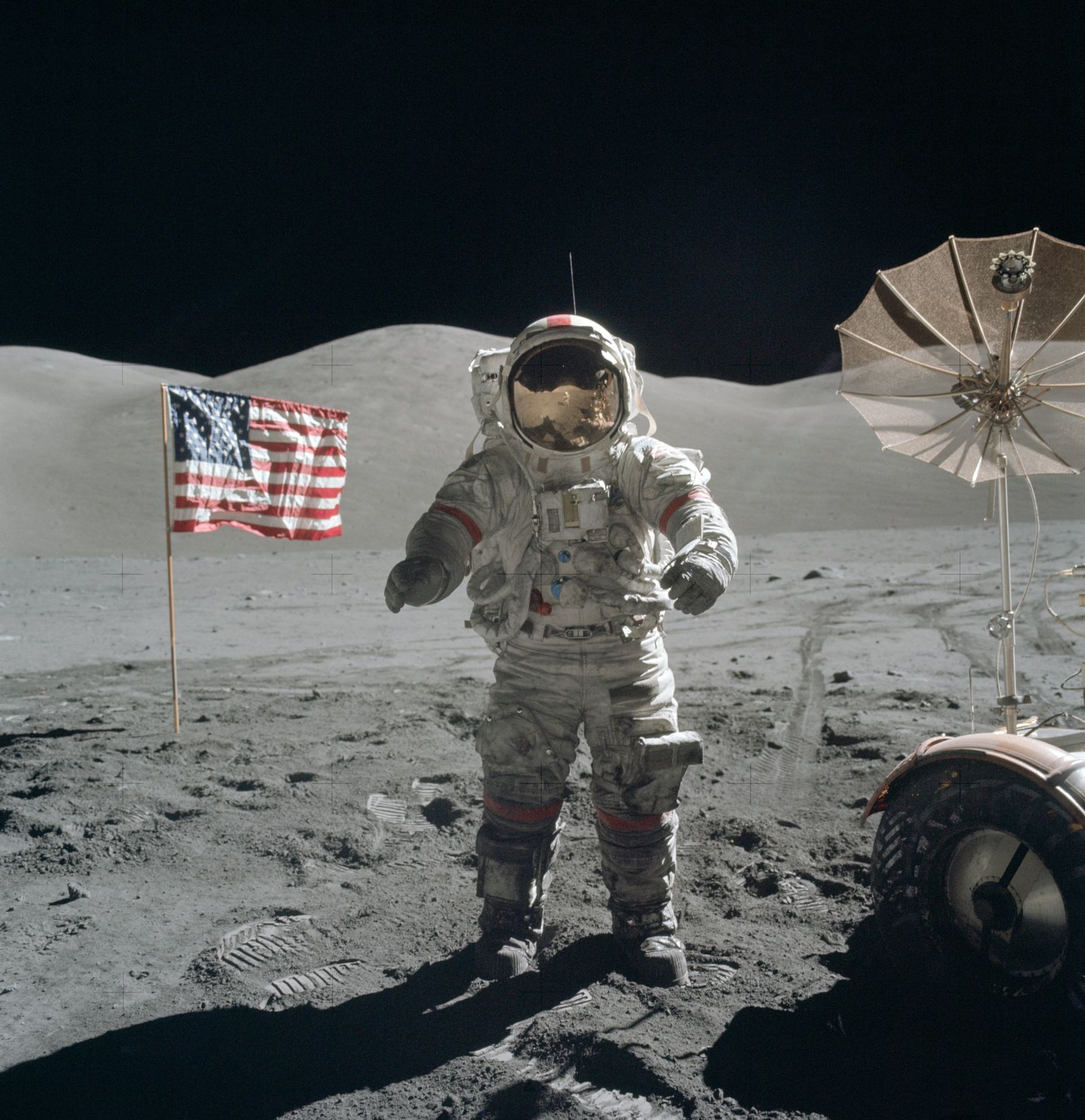
The third EVA of Apollo 17 ended today. Gene Cernan and Harrison Schmitt drove the Rover, collected samples, deployed experiments, examined the terrain. The science of the mission was comprehensive — Schmitt’s geological training made this the most systematically documented surface exploration of any mission.
At the end of the EVA, as they were preparing to ascend the ladder and return to the LM, Cernan walked back to the lunar surface one last time. He had something he wanted to say.
He said:
“As I take man’s last step from the surface, back home for some time to come — but we believe not too long into the future — I’d like to just say what I believe history will record: that America’s challenge of today has forged man’s destiny of tomorrow. And, as we leave the Moon at Taurus-Littrow, we leave as we came and, God willing, as we shall return, with peace and hope for all mankind. Godspeed the crew of Apollo 17.”
Then he climbed the ladder. The hatch closed. The Lunar Module ascent stage fired. Cernan and Schmitt rose from the surface.
As of this writing, no human being has been on the Moon since the moment Gene Cernan left. I don’t know when anyone will be back. I want to believe Cernan is right — “not too long into the future” — but I don’t know that, and I think he doesn’t entirely know it either. It’s a hope, not a schedule.
I thought I would cry more. Instead I feel something quieter than crying. Something like standing in an empty room after a party, seeing the furniture where people were sitting, feeling the absence of the noise and warmth. The program is not officially over until splashdown, but the Moon-walking part is over. The part where people can look up and know that other people are standing down there on that surface looking back — that part is done, for now.
What did we do here? In eleven years? We sent twelve men to the surface of another world, retrieved hundreds of kilograms of samples, planted instruments that are still transmitting data, and made more scientific progress on understanding the early solar system than would have been possible any other way. We lost three men on the ground in 1967 and brought home safe every crew that actually flew, including the one that had a spacecraft blow up under them. We built the Saturn V, which is the most powerful machine ever constructed. We put cameras on the Moon and broadcast from orbit and sent photographs back from the far side.
And one night — Christmas Eve, 1968 — men in orbit around the Moon read from Genesis, and the world stopped for a moment to listen.
Cernan’s last words: we leave as we came. We came with wonder. I think we leave with more of it, not less. The Moon turned out to be harder and stranger and more wonderful than we knew when we started. It always has more to tell us. We just have to keep going back.
I believe we will. I have to believe we will. Because the alternative — that this was it, that Cernan’s are the last human footprints on the Moon for a very long time — is more than I want to sit with tonight.
Godspeed, Cernan. Godspeed, Schmitt. Come home safe.