Deke Slayton, grounded since 1962 because of an idiopathic atrial fibrillation detected during a routine medical exam, has been medically cleared to fly.
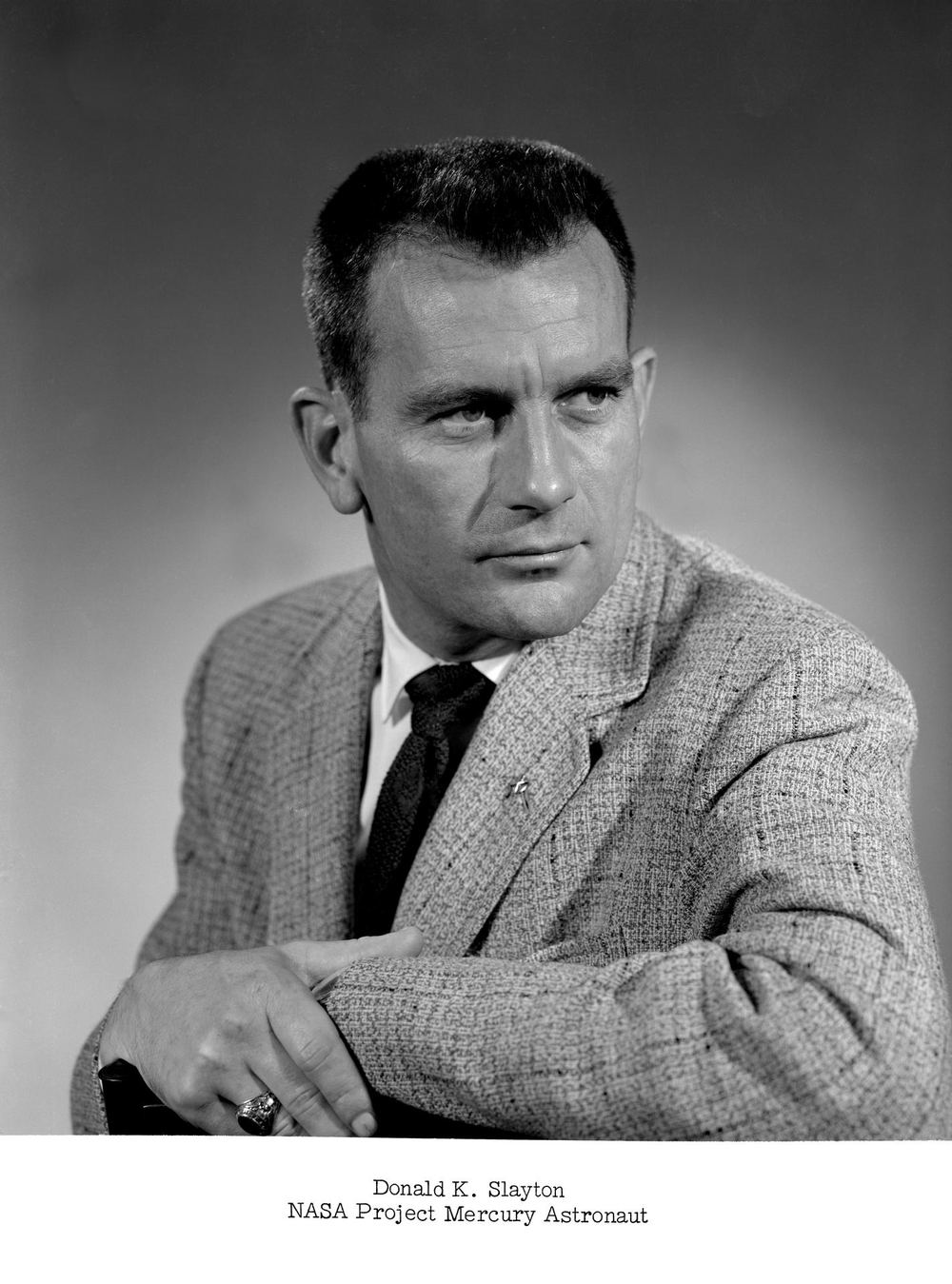
He’s been managing the astronaut office for ten years. He made the crew assignments for Gemini, for Apollo. He decided who flew Mercury’s later missions, who walked on the Moon. He sat at his desk in Houston while the people he managed went into space.
He was assigned to Mercury-Atlas 7 — the orbital flight that Scott Carpenter eventually flew. He was grounded six months before his launch date. The heart irregularity was intermittent, not constant; most of the time it wasn’t present. The flight surgeons decided they couldn’t certify him for flight without further study, and “further study” stretched into years.
He didn’t leave the program. He took the chief astronaut position, became the crucial gatekeeper for who flew and when, and held the astronaut corps together through Mercury, Gemini, and Apollo. His role in managing the crew selection process — the most fraught, competitive, and politically sensitive operation in the program — has been fundamental.
Now he’s 48 years old and cleared to fly. Assigned to the 1975 Apollo-Soyuz Test Project, where an American crew and Soviet crew will dock their spacecraft in orbit — the first joint spaceflight, a symbol of détente.
He’ll be the oldest person to fly in space at that point.
I wrote in 1960 that I worried about Slayton — something private he seemed to be fighting. He was fighting this. Ten years of watching others fly. Now his turn.
Deke Slayton, 1975. After everything he built, he gets to fly in it.
Good.