They’re home.
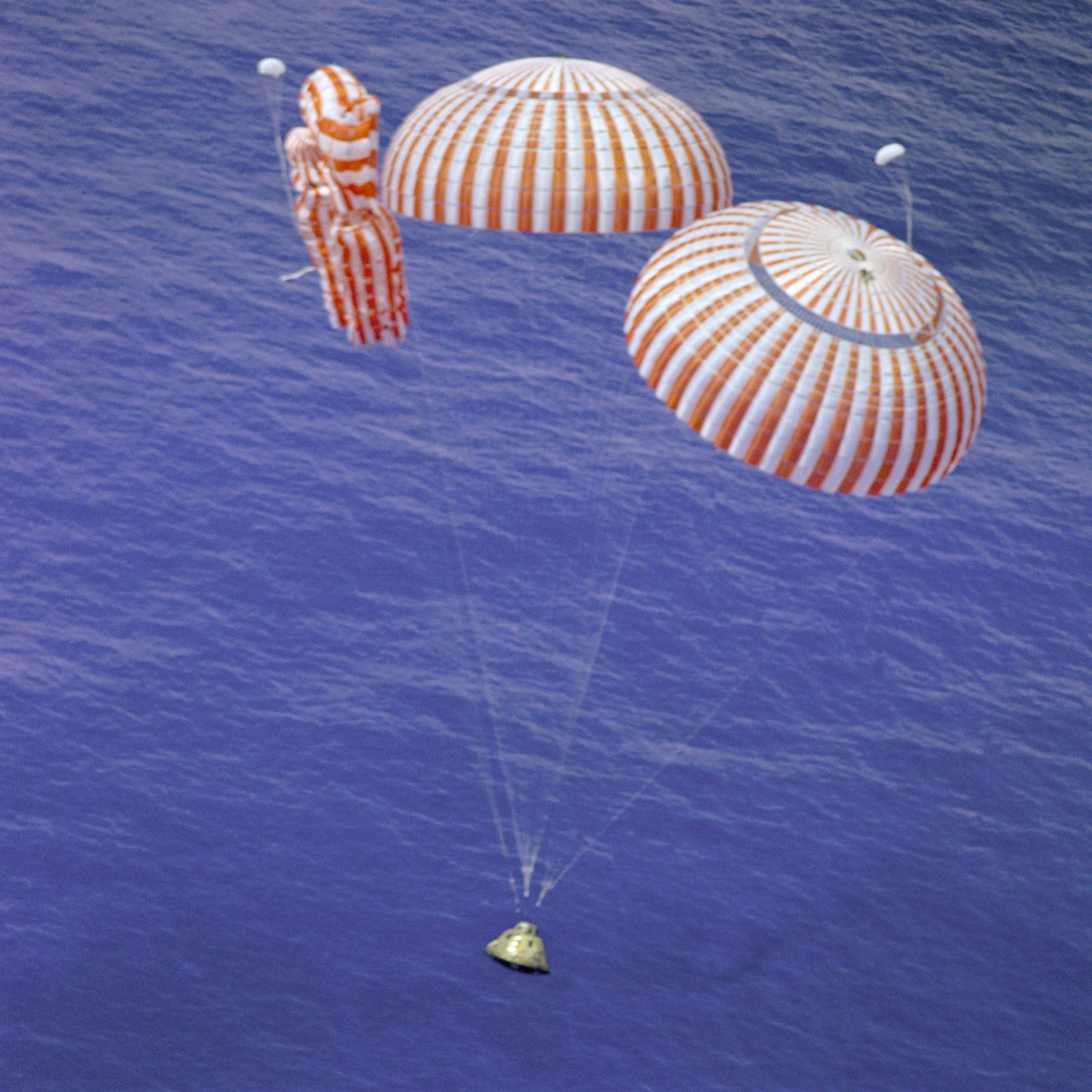
I need to say that first before anything else. Jim Lovell, Jack Swigert, and Fred Haise splashed down in the Pacific Ocean this afternoon at 1:07 PM Eastern. The Command Module Odyssey — cold and dark for four days, powered up on flingers and prayer and the extraordinary competence of the Mission Control team — descended under three parachutes into the South Pacific recovery zone. The USS Iwo Jima was waiting.
When the three parachutes deployed on the television screen — and oh, the moment when you could see all three fully inflated, three orange and white canopies above that conical capsule — Betty made a sound that I will never forget. It wasn’t a word. It was just relief, compressed into a sound. I had been holding my shoulders up around my ears for six days, I think, without realizing it, and when those parachutes deployed they came down.
The capsule hit the water. The recovery helicopters were overhead almost immediately. The swimmers were in the water. The hatch opened. Three men came out.
Three men came out. They are alive. They went to the Moon in a spacecraft that exploded two-thirds of the way there. They survived for four days in a lifeboat that wasn’t designed for them. They navigated using stars, improvised a carbon dioxide scrubber from cardboard and tape, breathed rationed air, drank rationed water, shivered in 38-degree temperatures, and came home.
Let me tell you what I know about what made this possible:
The crew. Lovell made decisions clearly under extreme pressure. Swigert powered up the Command Module using a checklist written from scratch in Houston and transmitted to them in the field — a checklist that normally takes months to prepare, and they had hours. Haise managed the Lunar Module systems with precise attention. All three men stayed focused on procedures when they had every reason to panic.
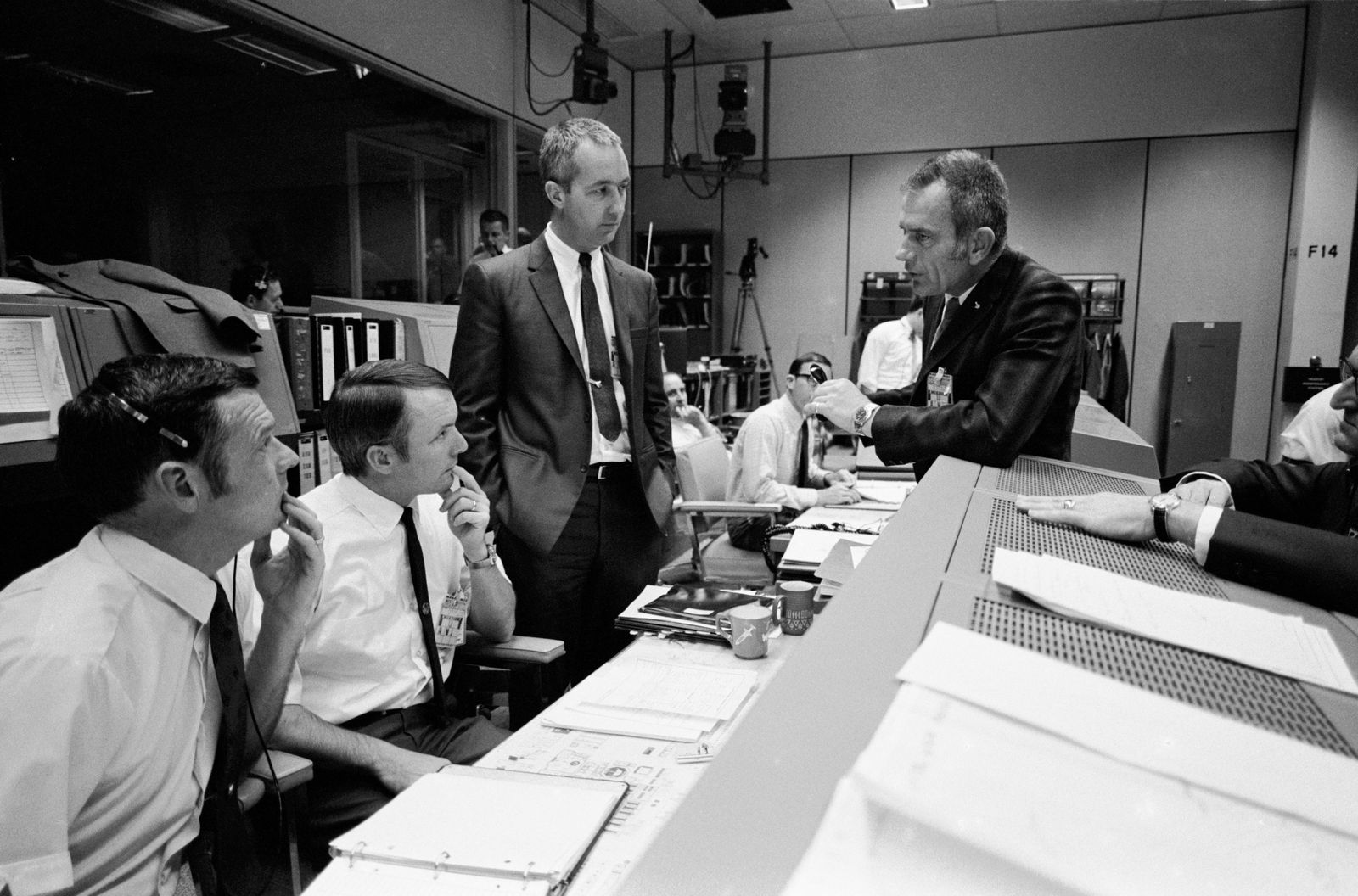
Mission Control. The flight controllers, who worked rotating shifts without meaningful rest for six days. The engineers in the back rooms who solved the CO2 problem, who wrote the power-up checklist, who calculated every possible trajectory and contingency. The Flight Directors — Gene Kranz and Glynn Lunney and the others — who maintained calm in the front room and communicated it to everyone around them.
The Lunar Module. Grumman built it, and it worked as a lifeboat for four days when it was never designed to do that. The descent engine fired. The systems ran. The LM Aquarius earned its name.
Lovell reportedly said, when asked about the mission afterward, that it was a “successful failure.” They didn’t land on the Moon. They didn’t complete their objectives. But they came home alive, and coming home alive is the only objective that matters when your spacecraft blows up.
My daughter asked me tonight: did NASA fail? And I said no. I said: the hardware had a flaw that no one caught in time, and that’s a failure of a kind. But the response — the improvisation, the problem-solving, the refusal to give up on three men in an impossible situation — that was not a failure. That was the opposite of failure.
I went outside after dinner and looked up. Cold spring sky. The Moon was there, pale and high. The same Moon that Aquarius flew around. The same Moon that watched three men figure out how to stay alive.
I was angry at the beginning of this week that the newspapers called Apollo 13 a “routine Moon mission.”
Nothing about it turned out to be routine.