I want to write about the people in Mission Control, because I think in the chaos and relief of the past week, their role doesn’t get said clearly enough.
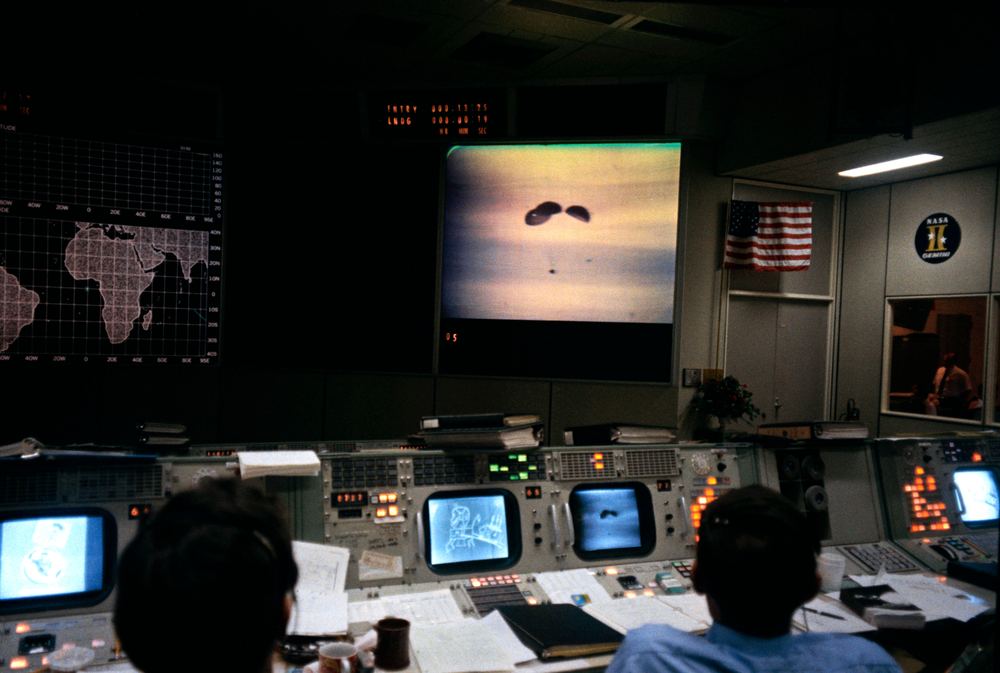
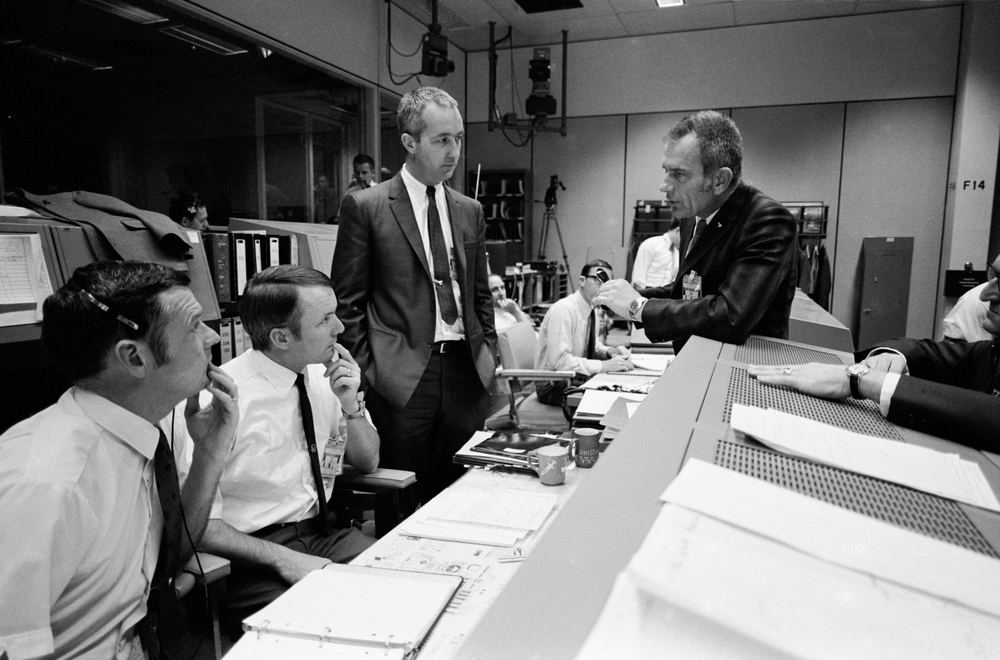
The astronauts are the ones in the spacecraft. They’re the ones we know by name, the ones who get the ticker-tape parades. And they deserve every bit of the recognition they receive. But over the past six days, watching what unfolded, I have been struck by something I keep coming back to: the people in the rooms in Houston are extraordinary.
Gene Kranz is the Flight Director I keep reading about. He led the White Team — one of several teams of flight controllers who rotated shifts around the clock. Kranz is a former Air Force pilot, a precise and demanding man by all accounts. He is known for wearing a vest during missions — his wife makes them, I’ve read. The vests have become something like a good luck charm, or a reminder. He wore a white one during Apollo 11. I don’t know what he wore this week. But I know his team was there.
There’s a story going around — I don’t know if it’s exactly true — that after the explosion, Kranz gathered his team and said: “We’ve never lost an American in space, we’re sure as hell not going to lose one on my watch.” That’s the spirit I’m talking about. Not false confidence — nobody in that room thought this was easy. But refusal to accept defeat before you’ve tried everything.
The controllers: there are dozens of them. EECOM (electrical), FIDO (flight dynamics), GUIDO (guidance), TELMU (LM systems), and on and on. Each controller is a specialist. Each one knows their system — their specific set of parameters, their specific set of possible failures — as well as anyone alive. They’re young, most of them. People in their twenties and thirties. Engineers who studied and trained and practiced until they could recite failure modes from memory.
The engineers in the back room who designed the mailbox. I think about those men (and I assume they were mostly men, in 1970) sitting at a table in Houston with a list of everything aboard the spacecraft, working backward from a problem to a solution. “We have cardboard. We have tape. We have socks. What can we build?” That’s engineering. That’s the applied version of knowing things.
The simulator teams: every procedure that went up to the crew was first tested on the spacecraft simulator in Houston. You don’t send an untested procedure to men in a crippled spacecraft in deep space. You verify it works on the ground first. The simulator teams worked around the clock testing procedures before they could be transmitted. Every extra hour that took was an hour the crew was still safe. Every procedure that failed in the simulator was a procedure that didn’t get sent up.
John Young and Ken Mattingly — the backup crew — worked the simulators almost continuously, checking procedures. Mattingly, who was pulled from the mission two days before launch because of the rubella scare (he never got rubella, by the way), spent the entire crisis working the power-up checklist for reentry in the simulator. He worked it over and over until he had confirmed it could work. His checklist is what got them home. He never went on this mission. He helped save it from the ground.
There are 400,000 people who worked on the Apollo program — designers, engineers, contractors, technicians, managers. Most of them will never be famous. They were there. They did the work. And when three men were stranded 200,000 miles from home in a crippled spacecraft, the best of those 400,000 people came through.
This is what human capability looks like when it’s pointed at the right problem.