The full story of what Mission Control did during Apollo 13 is becoming clear, and it goes beyond the survival narrative.
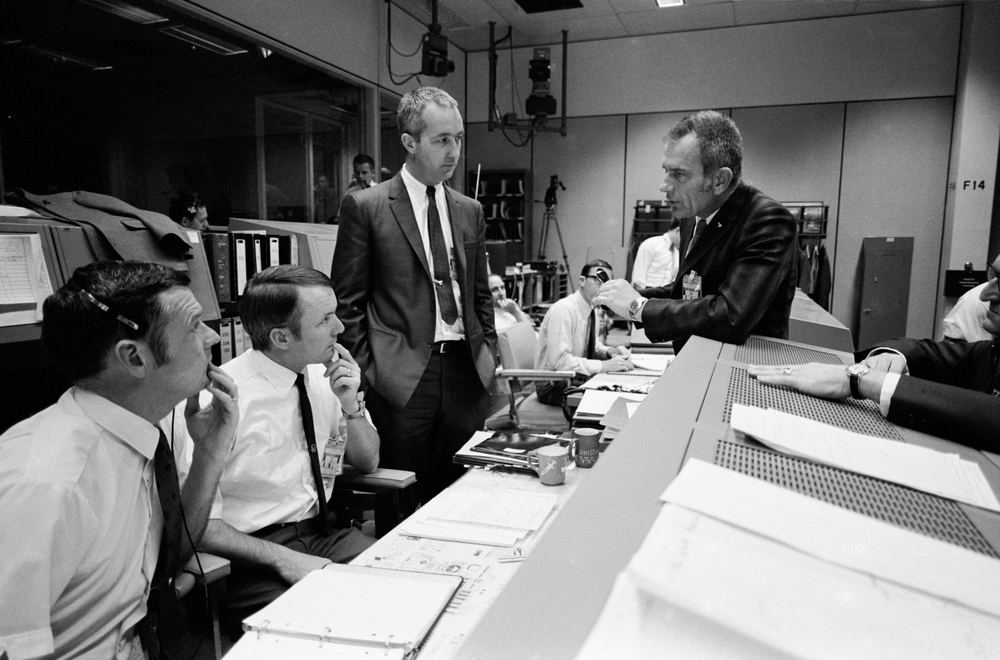
The immediate headline was: the crew survived. The explosion happened, they moved to the lunar module, they came home. Miraculous, dramatic, wonderful. That’s the story.
But the engineering story underneath is extraordinary in its own right. Consider what the team on the ground had to solve in four days with no ability to physically touch anything:
Power management: The command module’s batteries had to be preserved for re-entry. That meant the crew living in the lunar module on its batteries, which were designed for 45 hours of LM-only operation, stretched to support three people for 87 hours. Every non-essential system had to be identified and shut down. A list of power consumers had to be compiled and prioritized and a load-shedding protocol developed on the fly.
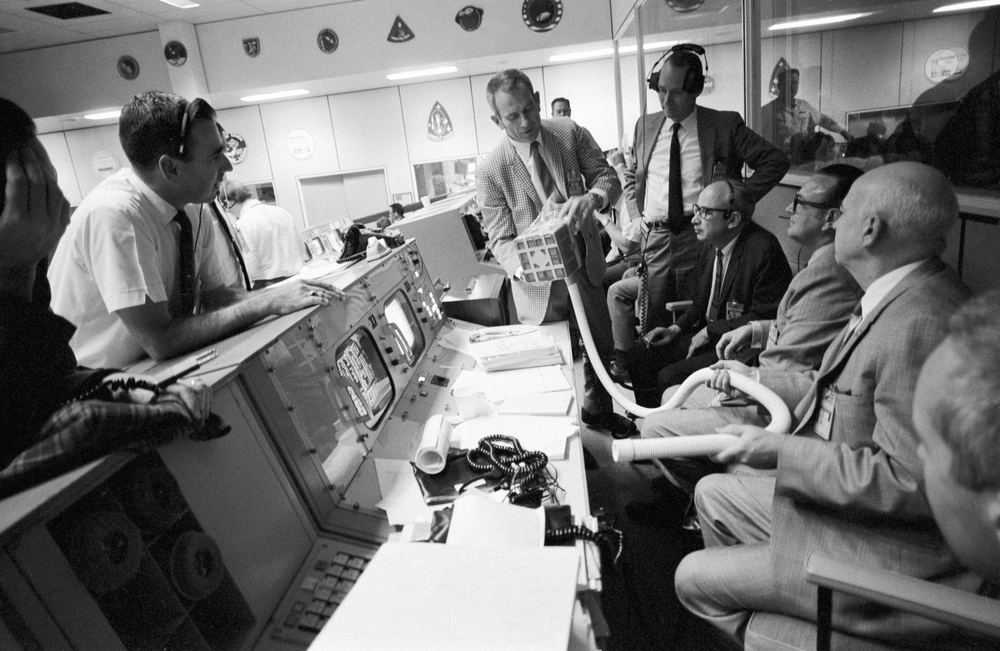
Carbon dioxide: The lunar module’s lithium hydroxide canisters were designed for two people. They were saturated with carbon dioxide much faster with three people. The command module had spare canisters — but they were round, and the LM system used square canisters. The team on the ground invented a procedure to adapt a square canister to the round system using materials the crew had on hand: cardboard from checklist covers, plastic bags, socks, a piece of the suit biomedical harness. They tested it on the ground and gave instructions by voice. The crew built it. It worked.
Trajectory correction: The normal navigation methods required power and attitude control fuel they couldn’t afford. A manual burn using the Sun and Earth as reference points was designed and the crew executed it precisely.
Re-entry procedures: The normal command module power-up sequence takes days. They had to develop an emergency 15-minute power-up procedure from scratch that had never been tested.
None of this was in any checklist. The training hadn’t covered all of this. The team invented the solutions under pressure, in real time, using only their knowledge of the systems and their problem-solving capability.
Jack Swigert and Fred Haise and Jim Lovell implemented what they were told, from a crippled spacecraft, for four days. They came home.
Apollo 13 is what good engineering culture looks like when everything goes wrong. The redundancy, the training, the competence, the communication, the culture that trusted the engineers in the room rather than the schedule or the politics.
It should be taught in every engineering school. Not just the happy ending, but the specific problems and the specific solutions.