Apollo 11 splashed down in the Pacific on Thursday. Armstrong, Aldrin, and Collins were recovered by the USS Hornet and put into a Mobile Quarantine Facility — a converted Airstream trailer, essentially — because nobody is entirely certain there aren’t lunar microbes that might infect Earth’s ecosystem. The precaution is sensible and, watching the photographs of Nixon talking to the astronauts through a window in the trailer, faintly absurd. They went to the Moon and came home and now they’re in a trailer being looked at through glass by the President. This is probably the right thing to do. It doesn’t stop it from being a little funny.
But that’s not what I want to write about tonight.
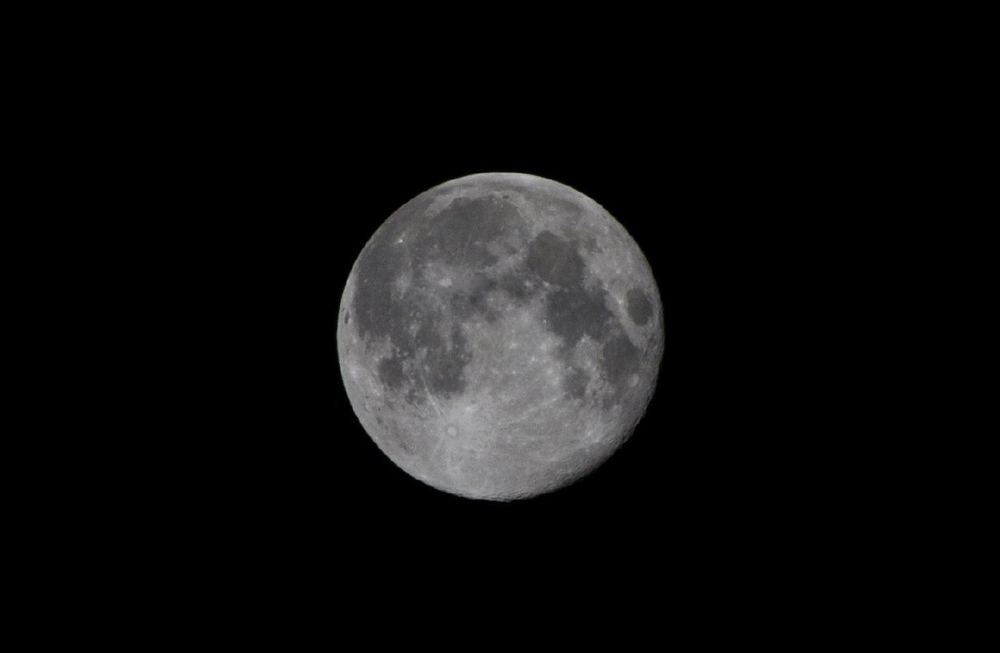
Last night — Friday, four days after the landing — I went outside after dinner. It was a warm evening. The Moon was up, nearly full, bright and high in the south. I stood in the yard and I looked at it.
It was different.
I don’t mean the Moon itself was different. The Moon is the same as it has always been — the same craters, the same maria, the same ancient battered face that has been up there for four billion years. But looking at it was different. Something in my relationship to it has changed permanently, and I stood in my yard trying to understand what exactly had changed.
I think what changed is this: the Moon used to be a thing I could only look up at. It was remote and unreachable and beautiful and it was up there and I was down here and that was the condition of it — the Moon was up, humans were down, and never the twain shall meet. That was the eternal arrangement, going back to the first person who ever looked up and wondered what it was.
Now it’s a place.
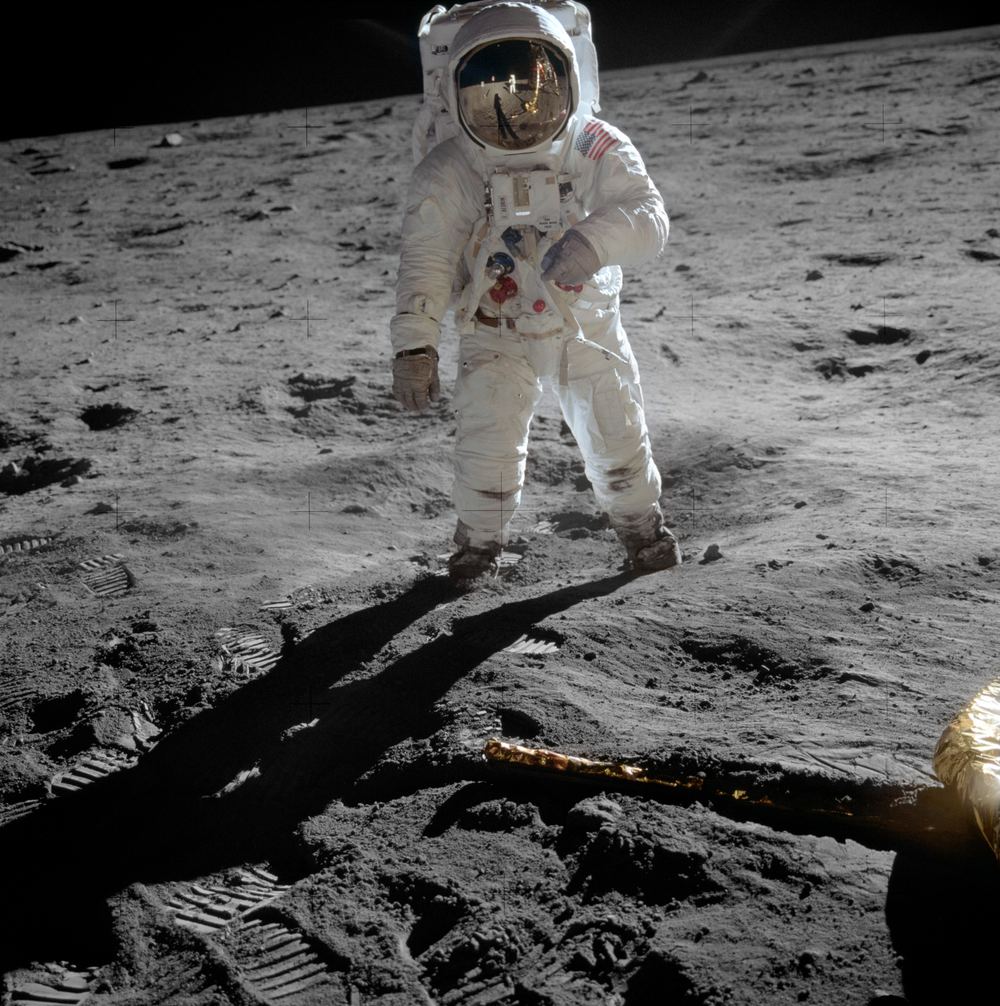
It’s a place where people have been. Where footprints are. Where equipment sits in the regolith. Where a flag stands, planted by Buzz Aldrin’s hands. The Sea of Tranquility is not an abstraction anymore — it’s a location. A specific valley, with specific rocks, where a specific spacecraft landed and specific people walked and then came home. It’s a place the way Normandy is a place, the way the summit of Everest is a place, the way the South Pole is a place. It is a location on a map where human beings have been.
My neighbor Harold came out of his house while I was standing there. He came over and stood next to me and we looked at the Moon together. Harold said, “Hard to believe they were up there.” I said it was. We stood in silence for a bit longer. Then Harold said, “I was wrong.” I looked at him. He said, “When Kennedy said we’d go. I said it was a waste of money.” He shook his head. “I was wrong.”
Harold does not say he was wrong very often. I’ll remember this moment.
I went back inside and sat with Betty. She asked what Harold had said and I told her. She smiled. Then she said something that I’ve been thinking about since: she said that she hoped we weren’t done now. That she hoped this wasn’t the end of it. That she hoped the Moon landing wasn’t a stunt we did and then walked away from.
I don’t know. There are more Apollo missions planned — I’ve read about Apollo 12, 13, 14, maybe more. So we’ll go back. We’re not done. But Betty’s question goes deeper than the mission schedule. She was asking whether we’re going to take this seriously, long term. Whether the Moon landing becomes the first step in something, or just the one step we keep talking about forever after.
I hope it’s the first step. I think it has to be the first step. We have proven that human beings can go to another world and come home. That knowledge doesn’t diminish. It’s ours now. It belongs to the species.
The Moon is a place. We’ve been there. We can go back. We will go back.
And last night, standing in my yard in July, looking up at something that will never be quite the same as it was before — I was glad I’d been paying attention. Glad I’d kept all those clippings. Glad I’d watched every launch and stayed up for every splashdown and cried a little on a Friday night in January 1967 and hoped my way through the rebuilding and held my breath through the 1202 alarm.
We went to the Moon. We actually went. And now when I look up, I know it’s a place.
I don’t think I’ll ever be able to look at it any other way.