The Apollo 11 moon rocks are in the Lunar Receiving Laboratory at the Manned Spacecraft Center in Houston, and scientists are beginning to analyze them.
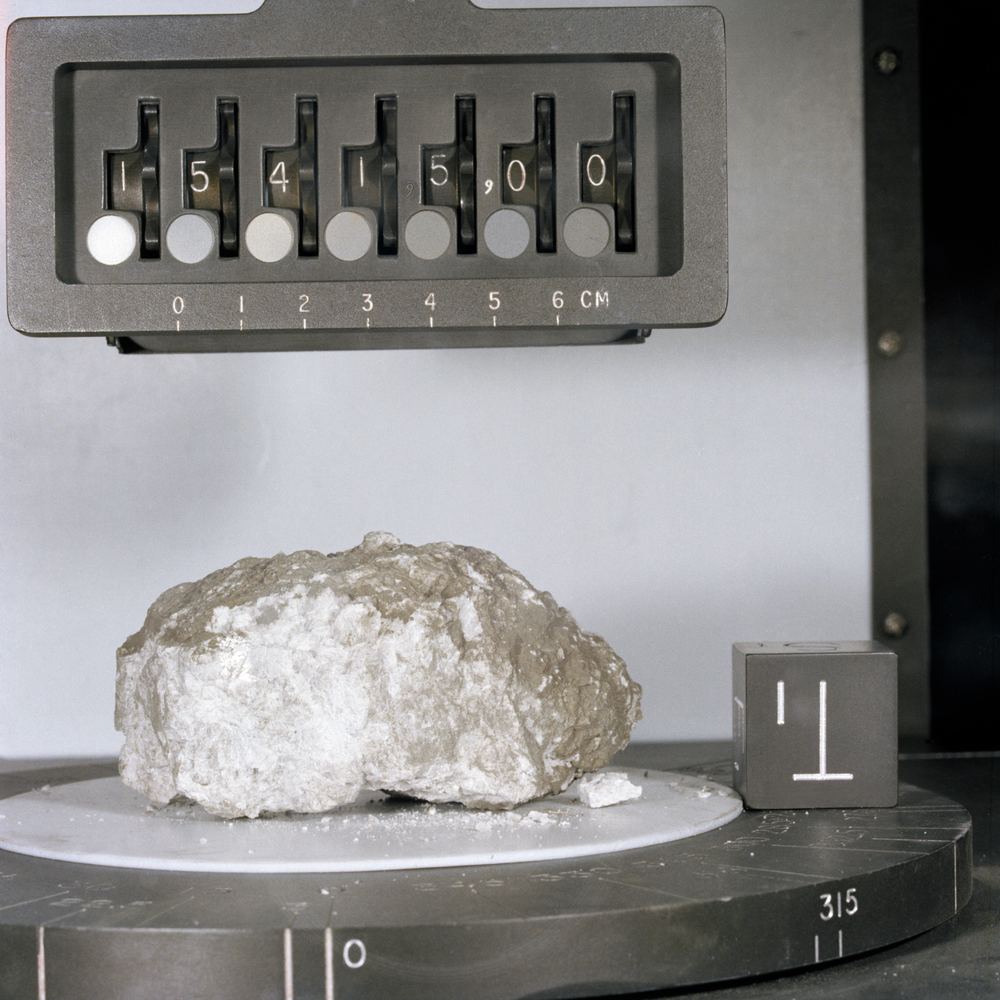
47.51 pounds. That’s the total weight of the samples Armstrong and Aldrin collected: basalt from the maria surface, fine-grained regolith, core tube samples from several inches below the surface. Some individual rocks, some bulk soil. Packed in vacuum-sealed sample return containers.
The quarantine protocols are strict. The rocks, the astronauts, and the equipment are all in biological containment. Scientists working with the samples wear biohazard suits. The reasoning: we don’t know for certain that the Moon is sterile. The probability of any biological contamination is extremely low — the Moon has no atmosphere, no liquid water, extreme temperature variation, and intense radiation. Every indication is that it cannot support life. But “extremely low probability” is not “zero probability,” and “zero probability” is what you need before you decide it’s acceptable to potentially expose the Earth’s biosphere to extraterrestrial material.
After the quarantine period (21 days from last potential contamination), assuming no biological signs, the samples will be distributed to laboratories around the world for analysis.
What are they hoping to find? The age of the Moon rocks, primarily. Uranium-lead dating can tell us exactly when the basalt crystallized from lava. The samples will tell us when the Sea of Tranquility lava flows occurred, how hot the lava was, what the Moon’s mantle composition is.
There’s also the question of water ice, though it’s unlikely to be found in surface samples. The really promising location for lunar water is the permanently shadowed craters near the poles, which Apollo can’t easily reach.
I read that preliminary analysis shows the basalt is similar to Earth basalt in some ways but different in others — lower water content (essentially zero), different trace element ratios. The regolith is saturated with tiny glass beads formed by meteorite impacts, each one a tiny sphere of melted and re-solidified rock.
Those glass beads. Each one represents a tiny explosion, a meteorite hitting the Moon and vaporizing rock and regolith and launching molten droplets that cooled into spheres as they flew. Billions of years of small and large impacts, each one adding to the regolith layer.
The Moon’s surface is the most thoroughly bombarded solid body in the inner solar system that we can study directly. It’s the record of the first billion years of solar system history, largely erased from Earth by erosion and plate tectonics. In those 47 pounds of rock, history that we cannot read anywhere else.
I am very glad those rocks are in Houston. I hope the scientists get years to work with them.