Lunar Orbiter 1 is photographing the Moon from orbit right now, and the images coming back show the lunar surface in detail we’ve never had before.
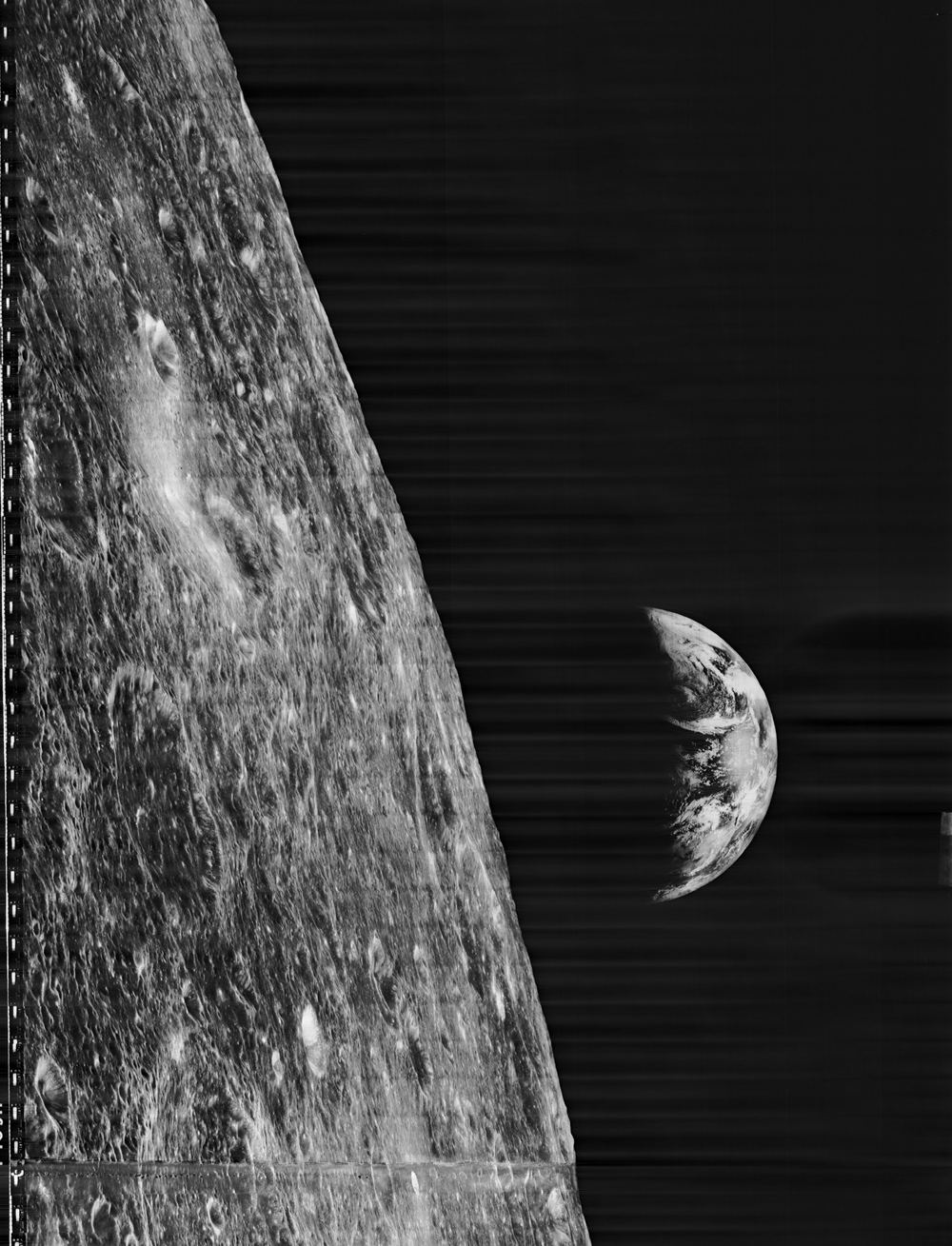
Not just crater fields and highlands in general. Individual boulders. Subtle terrain variations. The kinds of features that determine whether a particular spot is safe to land a spacecraft. This mission is specifically about finding and verifying Apollo landing sites.
The photography system is unusual. The spacecraft carries actual photographic film (Kodak), which is exposed and then developed onboard, and then a flying-spot scanner reads the developed film and transmits the image back to Earth as a radio signal. This whole process happens inside the spacecraft in the vacuum of space, which is an engineering achievement in itself. It would be simpler to use electronic imaging, but the film approach produces higher resolution than current electronic systems can achieve.
The Lunar Orbiter program plans five missions. Between them they’ll photograph virtually the entire surface of the Moon from low altitude, building a comprehensive map. The Apollo landing sites have to be chosen from this survey: flat enough for a safe landing, not too far from equatorial (to save fuel on the translunar trajectory), free of large boulders, free of craters deep enough to swallow a lander.
I’ve been looking at the photographs they’ve been releasing to the press. The terrain is more rugged than I expected up close — what looks smooth from Earth shows up as cratered and rocky at 150 miles altitude. The Apollo landing planners are going to have to look carefully. The Sea of Tranquility looks promising from the orbital photos; it’s one of the smooth mare (ancient lava plains) rather than the heavily cratered highlands, and relatively flat.
The Soviets have also sent lunar orbiters. The race to fully map the Moon before landing is happening simultaneously, with both programs essentially on parallel tracks. There’s a certain irony in two superpowers exhaustively photographing the same dead rock from competing perspectives.
But the photographs are magnificent. The Moon is beautiful and terrifying and closer than it’s ever been.
The landing sites are being selected. The missions are being planned. Everything is pointing toward a specific moment, in a specific place, on a specific date that nobody has announced yet.
Soon. It has to be soon.