John Young and Mike Collins completed the most operationally complex Gemini mission yet.
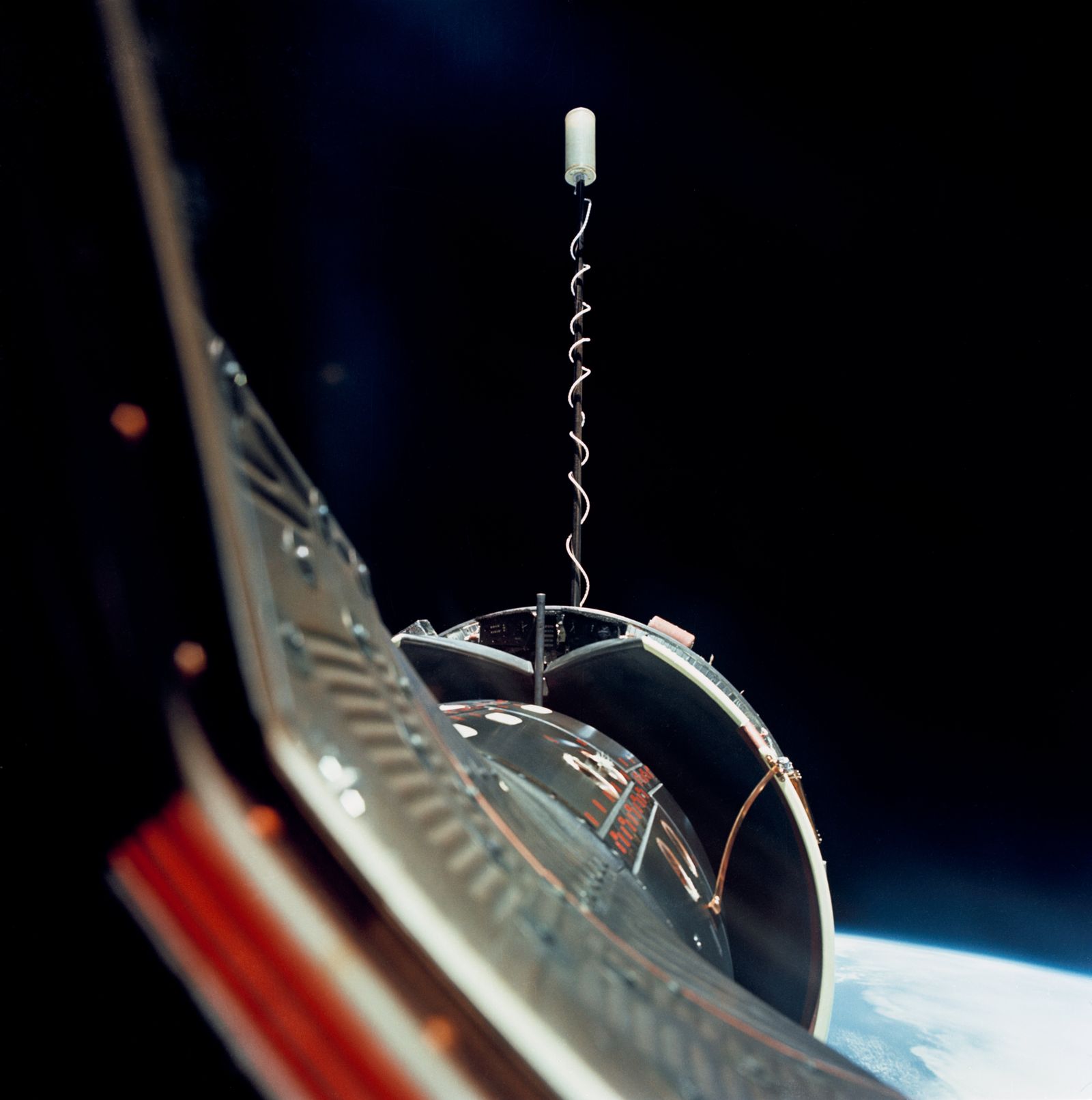
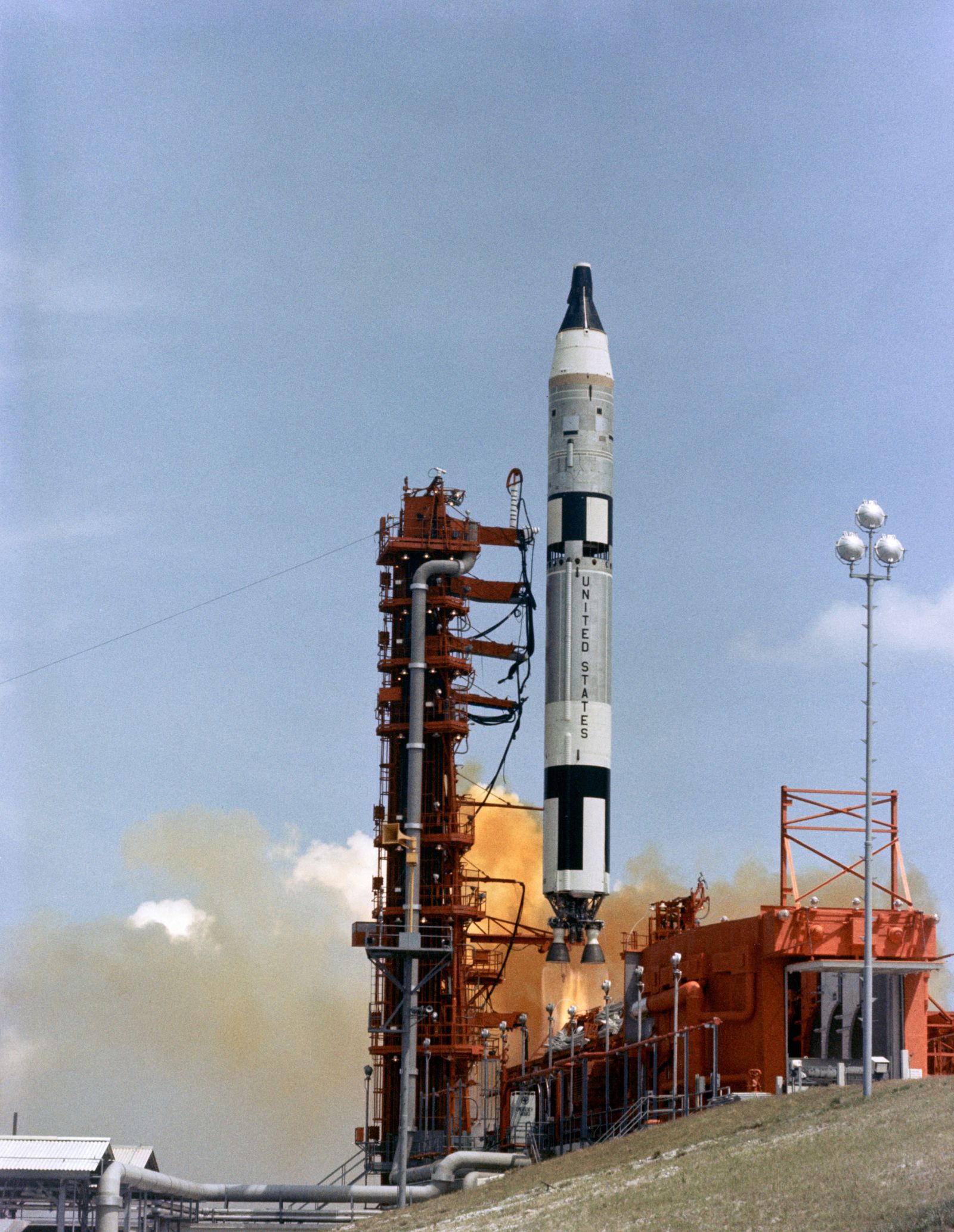
They docked with their own Agena target vehicle — the Agena 10 — and then used the Agena’s engine to boost themselves to a higher orbit where the dead Agena 8 (the one that caused the Armstrong spin emergency) was still drifting. They rendezvoused with Agena 8. Collins did an EVA to retrieve a micrometeorite detector package from the old Agena.
Two different Agena target vehicles. One mission. Three hundred miles above the Earth.
The operational complexity is staggering when you lay it out: launch, rendezvous and dock with Agena 10, use Agena 10’s engine to change orbit (a maneuver usually reserved for spacecraft, not target vehicles), find and rendezvous with Agena 8 in a completely different orbit, Collins to go out and retrieve an experiment pack from an uncooperative floating object, return and splash down. All in three days.
Collins’s EVA was partly successful. He got to Agena 8 and retrieved the micrometeorite package. But he had similar problems to Cernan — the work was more exhausting than expected, his movement was less controlled than he wanted, and there were visibility issues. He didn’t complete all his EVA objectives.
Still: a dual rendezvous, an uncooperative target approached and handled, a science package retrieved. Young was the commander and flew the mission with his characteristic competence — Young is one of the least famous astronauts and one of the most capable. He’ll go on to Apollo 10, and to Apollo 16 walking on the Moon, and decades later to fly the Space Shuttle.
One mission at a time. Each one teaching the next.