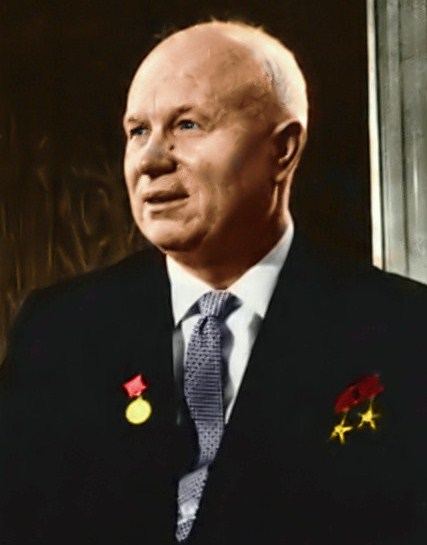
Nikita Khrushchev was removed from power yesterday and replaced by Leonid Brezhnev as General Secretary and Alexei Kosygin as Premier.
I’ve been thinking about what this means for the Soviet space program.
Khrushchev was the champion of the space effort. He understood its propaganda value instinctively and authorized the resources to pursue it aggressively. It was Khrushchev who pushed for Sputnik to be launched before America could do it, who pushed for Gagarin to beat Glenn, who celebrated every Soviet first as a demonstration that communist science was superior to capitalist science.
The space program under Khrushchev was not primarily a scientific enterprise. It was a competition, and Khrushchev set the rules of the competition: count firsts, accumulate them, beat the Americans at each milestone.
The new leadership’s attitude is unknown. Brezhnev is a pragmatist; he cares about the Soviet military-industrial complex, about maintaining power, about the domestic economy. He may be less personally invested in the space race than Khrushchev was. He may also see the strategic and prestige value clearly enough to maintain the funding.
The technical side of the Soviet program is led by Chief Designer Sergei Korolev, who has had more to do with Soviet successes than any politician. His standing may actually improve with Khrushchev gone — Korolev spent years in the Gulag before being rehabilitated and put to work on rockets, and his relationship with Khrushchev was complicated.
What I suspect: the Soviet program will continue, because too much has been invested and too much prestige is at stake to stop. But it may become less reckless. Voskhod with no spacesuits may have been the end of the “impressiveness at any cost” approach.
Or it may not. It’s genuinely hard to know from here.
The race continues. New drivers in Moscow.