I’ve been trying to understand how you actually navigate a spacecraft from Earth to the Moon. It’s not like driving.
There are no roads. There are no landmarks in the conventional sense. Everything is moving — the Earth is rotating and orbiting the Sun, the Moon is orbiting the Earth, the spacecraft is on a trajectory that’s constantly changing under the influence of gravity from all of these bodies. How do you aim for something that’s always moving, when you’re also always moving, and the thing you’re aiming at is 240,000 miles away?
The answer involves some physics and a lot of computing, and I’ve been reading about it for a week.
The fundamental principle is this: the spacecraft doesn’t fly to where the Moon is. It flies to where the Moon will be. The translunar trajectory is calculated so that the spacecraft, after its translunar injection burn, will coast along a curved path that intersects the Moon’s position roughly three days later. The Moon will have traveled partway around its orbit by then, and the spacecraft will meet it there. It’s like throwing a ball to where a moving person will be, except the distances are incomprehensible and the physics is exact.
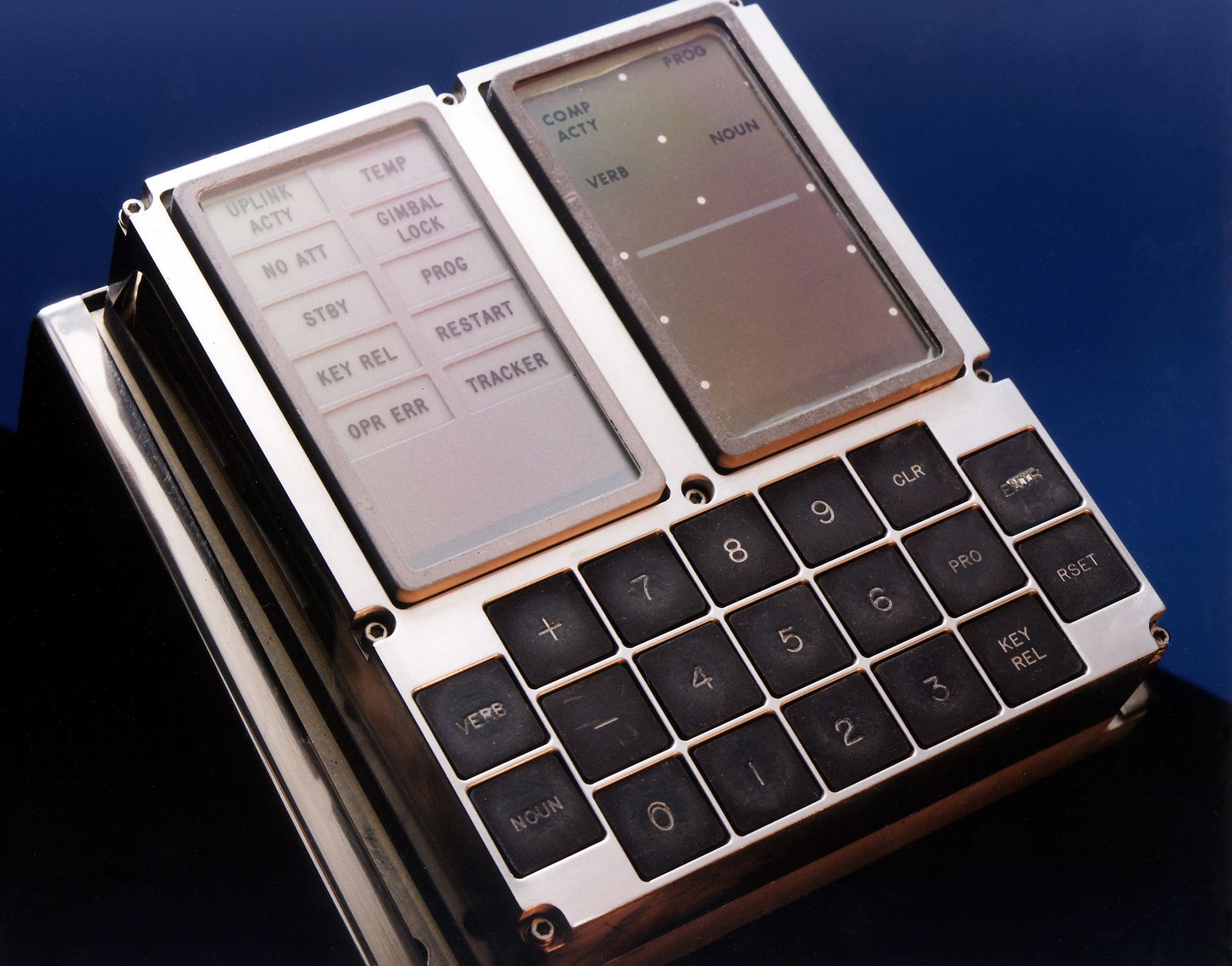
MIT’s Instrumentation Laboratory is building the guidance computer for Apollo. It’s about the size of a large toolbox — maybe two cubic feet. By current computing standards, this is remarkably compact. It uses integrated circuits (a new technology that consolidates what used to be thousands of separate transistors and wires into small chips) and runs software specifically written for navigation and guidance.
The computer has 4,096 words of erasable memory and 36,864 words of read-only memory. These numbers would mean nothing to me three years ago; they still barely mean anything to me now, but I’ve been told that this is extremely limited — the engineers have to write their software with extraordinary frugality because there’s no room for waste.
There’s also a physical navigation system: a sextant and a telescope, which the astronaut uses to sight stars and landmarks and feed the data into the computer. The computer can calculate the spacecraft’s position from celestial references — the same principle that navigators on ships have used for centuries, adapted for three-dimensional space.
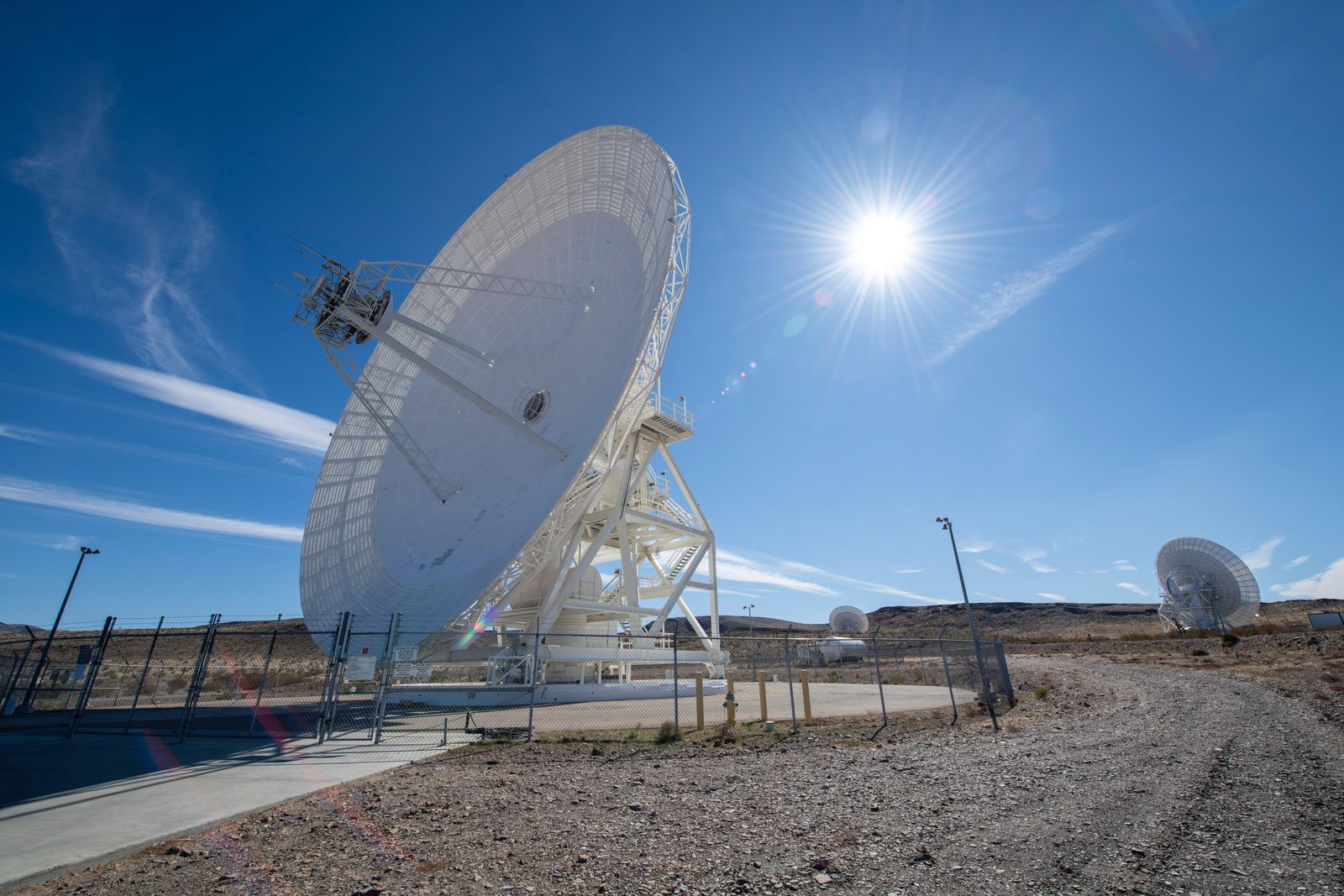
And there’s a network of ground stations — tracking antennas around the world — that measure the spacecraft’s radio signal with extreme precision, calculating its exact velocity from the Doppler shift and its exact position from the signal strength and timing. Mission Control knows where the spacecraft is. The spacecraft knows where it is. If these two disagree, someone has to figure out why.
The complexity of all this is why the Gemini program spent two years practicing rendezvous and docking. If you can reliably navigate to within a few feet of another spacecraft in Earth orbit, you have the fundamental skill for getting to the Moon. The Moon is farther, but the navigation principles are the same.
I asked Harold if he’d ever tried to calculate where a ball would land by working out the physics equations while it was in the air. He said that was obviously impossible. I said: that’s what you have to do to get to the Moon, except you have three days to solve the equations and the stakes are slightly higher.
He said, “Well, that’s what the computers are for.”
Yes, Harold. That’s what the computers are for.