Last night, for the first time in history, a live television picture was transmitted across the Atlantic Ocean via satellite.
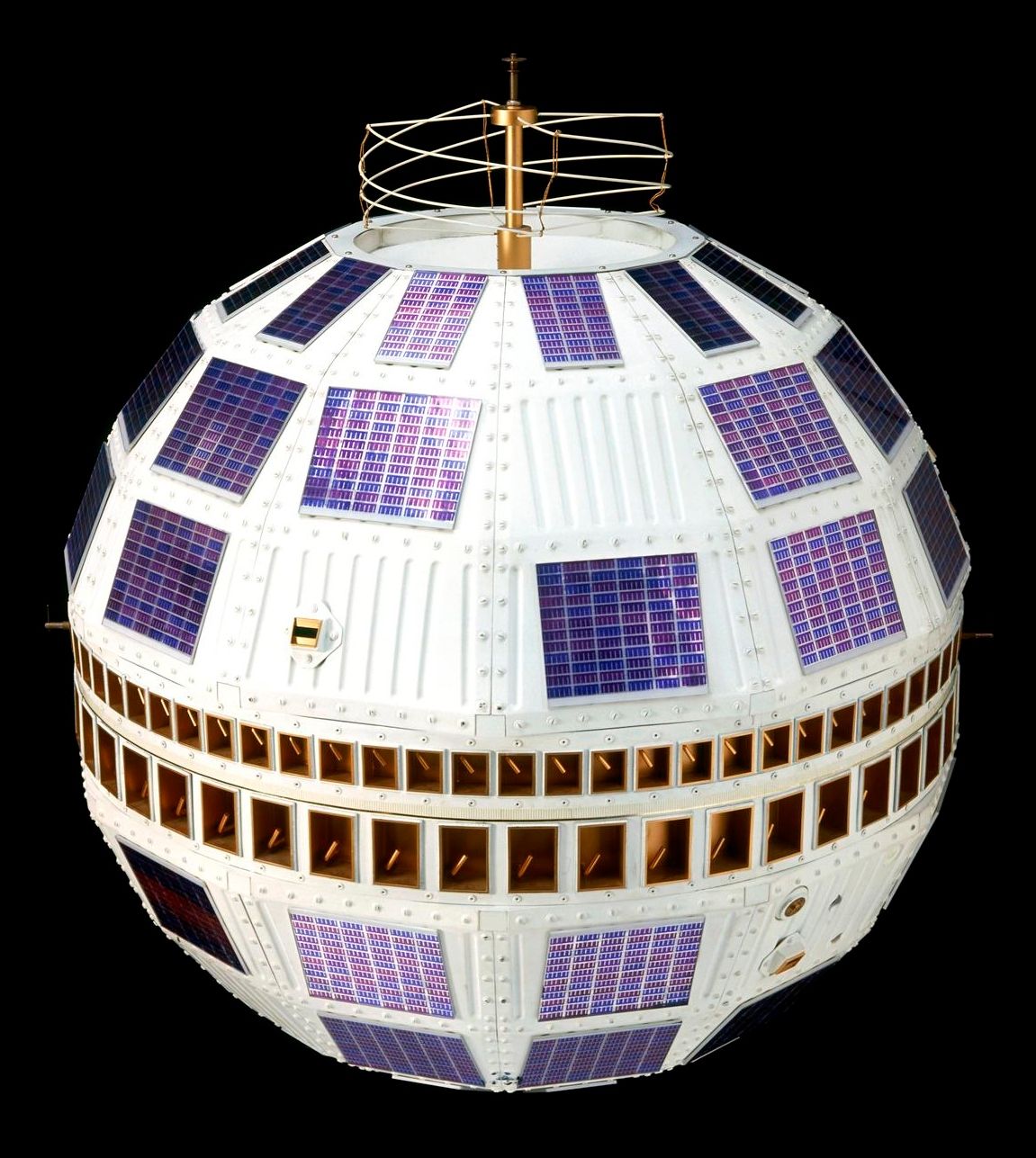

Telstar 1, launched yesterday by Bell Labs and NASA, relayed a television signal from the Andover Earth Station in Maine to the Pleumeur-Bodou station in France and the Goonhilly station in Britain. The first image transmitted: an American flag in front of the Andover antenna, and a brief scene of the antenna itself.
Not very dramatic, as television goes. But the fact of it is extraordinary: a live picture, traveling up to a satellite 22,000 miles away (well, Telstar is much lower than that — about 3,500 miles at its orbit), being received in Europe in real time.
Telstar is not geostationary — it moves in a low-to-medium orbit, which means the window for transmission is only about 20 minutes per orbit as the satellite moves into view of both ground stations simultaneously. But in that window, the signal is reliable and the picture quality is good.
The implications for broadcasting and communication are enormous. Right now, transatlantic television requires physically flying film across the ocean — a day’s delay. Telstar means live. News events, speeches, sporting events — anything could, in principle, be transmitted live across the ocean the moment it happens.
The space race is often told as a story about prestige and rockets and astronauts. But the communication satellite is perhaps the most practically consequential space development of the decade. Satellites like Telstar’s successors will eventually create the infrastructure for a genuinely global communication system.
I keep thinking about what this means for the space program itself. The astronauts communicate with Mission Control via radio, which works for one spacecraft. But as the network of spacecraft grows, as we go further from Earth, the communication infrastructure becomes critical.
Telstar is Year One of that infrastructure. Small beginning, but the right one.