This morning I watched a man go to space on a television set in the window of Caldwell’s department store on Fifth Street. I had taken a long lunch specifically for this purpose. The store had pushed the set right up to the glass so the crowd gathering on the sidewalk could watch, and there were maybe forty of us standing there when the countdown reached zero.
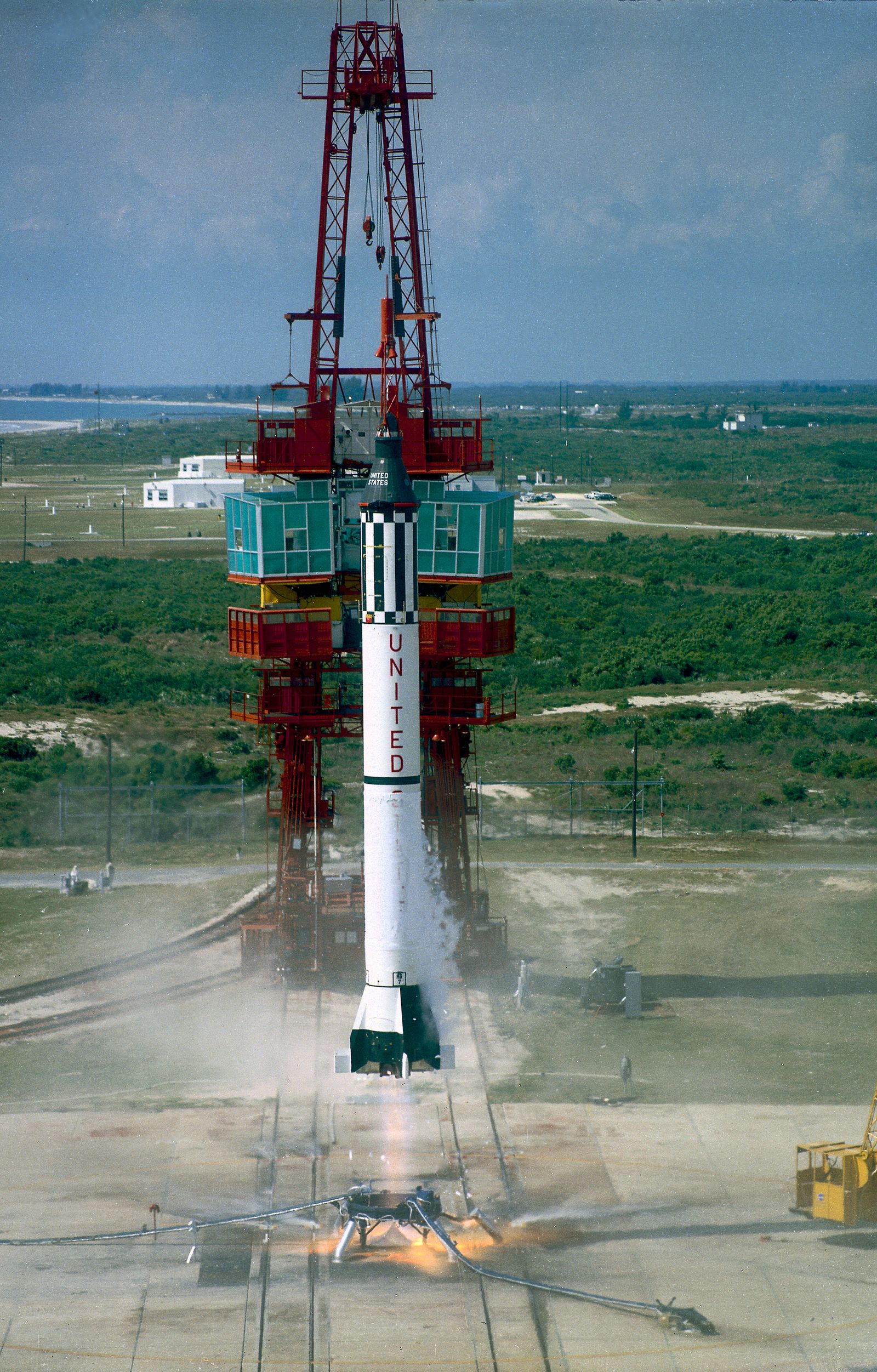
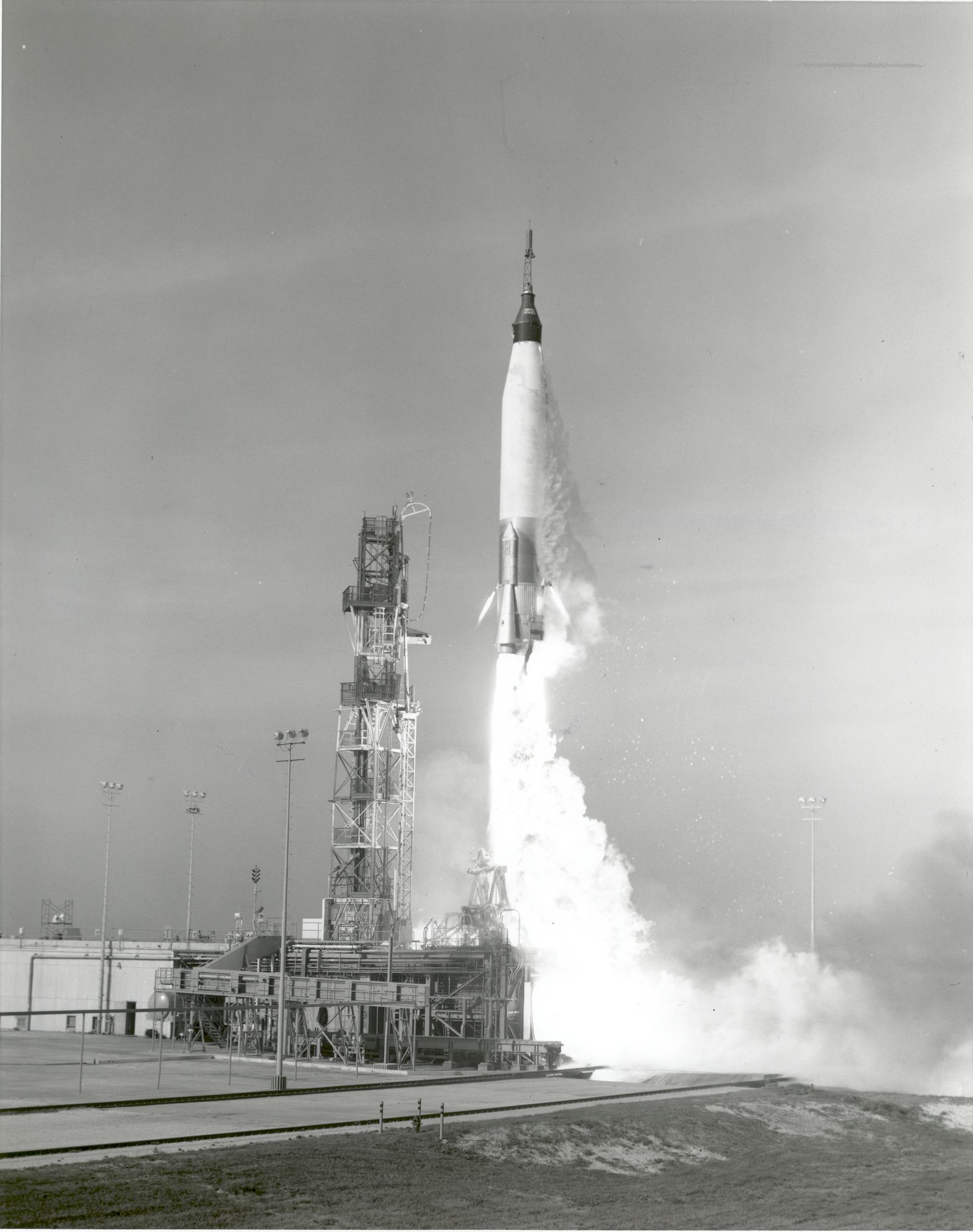
Alan Shepard. Commander, United States Navy. Test pilot, Project Mercury astronaut. The first American in space.
The rocket was called the Redstone — a smaller and more modest vehicle than the Soviet Vostok booster, honestly — and it carried a capsule called Freedom 7. The capsule was barely big enough for one man to fit inside. I’ve seen the photographs, and I keep thinking about what it would feel like to climb into something that small, let them seal the hatch, and wait while someone counted down from ten. The courage required for that one action — just sitting there and waiting — seems to me almost beyond comprehension.
The countdown ran on time, which I was told is unusual. The rocket ignited right at 9:34 AM Eastern time. I watched it rise off the pad at Cape Canaveral. The crowd on the sidewalk went quiet. Someone next to me — a woman in a green coat — grabbed my arm, which I didn’t mind at all, because I had a similar impulse toward the stranger on my left. We watched the white needle climb into the morning sky and then diminish to a bright spark and then disappear.
Fifteen minutes and twenty-two seconds later, Alan Shepard was in the Atlantic Ocean, alive, having been to the edge of space and back. The helicopter was already picking him up when the announcer confirmed everything had gone well.
I walked back to the office in a kind of daze. People were celebrating in the streets — actually celebrating, clapping and calling out. Someone had a radio and people were gathered around it on the steps of the courthouse. A man in a gray suit was shaking hands with strangers. I shook his hand too.
Now, I want to be honest about something: this was not what Gagarin did. Gagarin orbited the Earth. Shepard went up and came back down in a steep arc — what they’re calling a suborbital flight. His maximum altitude was 116 miles. He was weightless for about five minutes. He traveled roughly 302 miles downrange. It took fifteen minutes, while Gagarin’s flight took nearly two hours. The Soviets will note all of this, and they won’t be wrong.
But here is what I keep thinking about: he did it. An American did it. He rode a rocket into space, he looked out the window (there’s a small porthole in the capsule — he asked them to include it), he reported what he saw, he stayed calm, and he came back. The capsule splashed down in the ocean and a helicopter retrieved him and he was fine. He was fine. Alan Shepard is alive and America is in space.
The things I know about Shepard: he’s a New Hampshire man, born in 1923. He flew fighters in World War II and became a test pilot after. He was one of the original seven Mercury astronauts selected in 1959. He’s supposed to be ferociously competitive — they say he wanted very badly to be first, and the selection for this first flight was kept secret almost until launch day. He got it. He won.
Betty asked me over dinner what I thought it felt like. To be in space, even for fifteen minutes. I said I didn’t know. I said I thought it probably felt like nothing else in human experience. You leave the Earth. You float. You see something no one in your family line, going back to the first humans, has ever seen. And then you come back down. I said I thought it probably felt like being born, or like dying, or like something for which we don’t have a word yet.
She said I was being dramatic. She’s probably right. But I think this is one of the times when being dramatic is the appropriate response.
America is in space. One man, fifteen minutes, and something has changed. I don’t know exactly what yet. But something has.