They beat us.
I heard it on the radio at work — Betty called me at the office, which she never does, because she knew I’d want to know immediately. A Soviet cosmonaut named Yuri Gagarin completed a full orbit of the Earth this morning and landed safely in the Soviet Union. One orbit, approximately 108 minutes, altitude of about 188 miles. Vostok 1.
First human in space. A Soviet.
I sat at my desk for a few minutes and didn’t do anything. My colleague Petersen came by and said “Heard the news?” and I said yes. He shook his head and went back to his office. That was the whole conversation. There wasn’t much more to say.
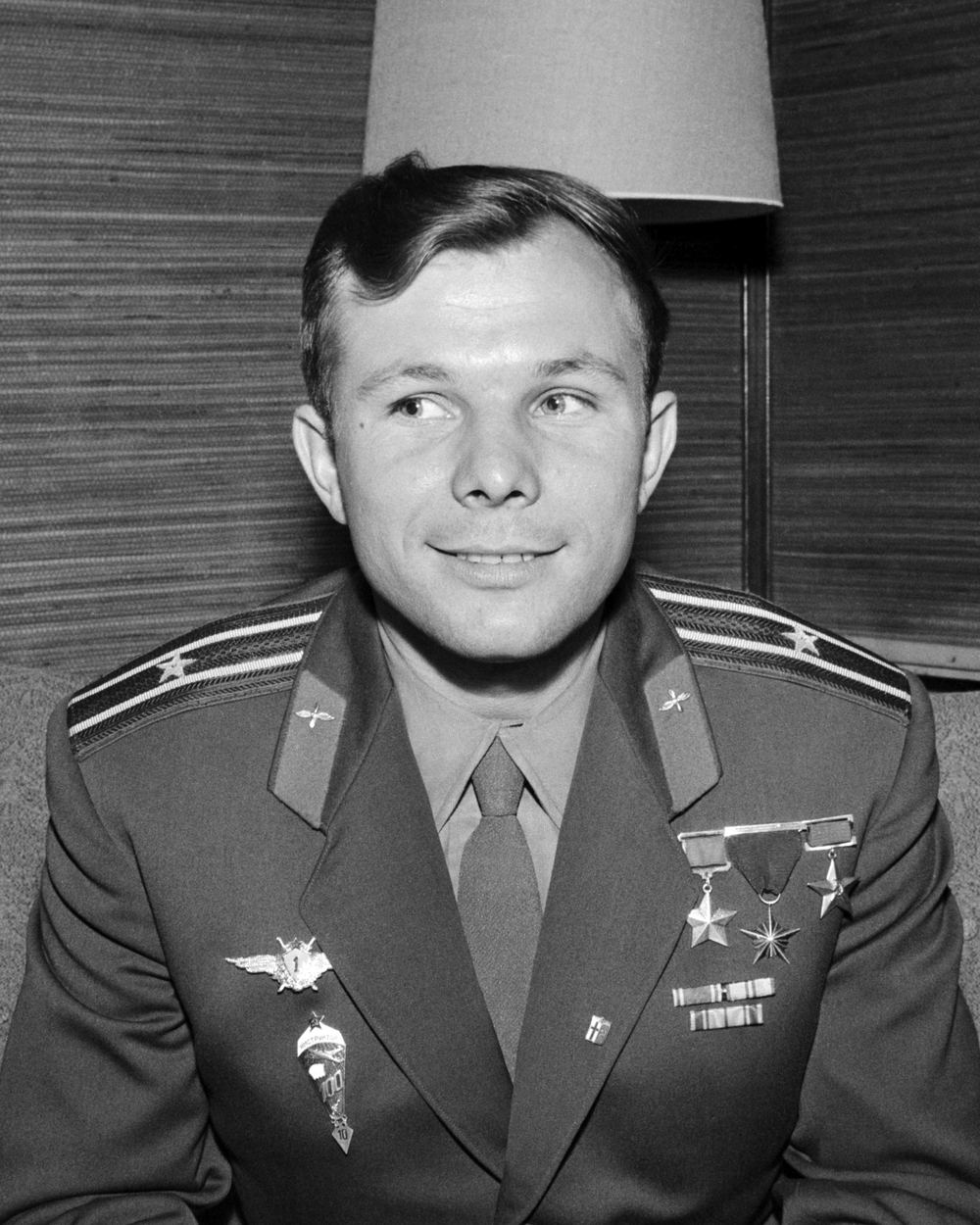
I’ve been expecting something like this since Ham went up in January. The Soviets have been ready for months, it seems — maybe longer. Gagarin is 27 years old, a jet pilot, apparently a man of considerable personal charm. The photographs we’re seeing are of a young, grinning man in an orange flight suit with “CCCP” on his helmet. He looks like he’s won a bet.
They had the courage, or the ruthlessness, to send a man before we were certain the technology was ready. We debated and planned and sent Ham to prove the capsule was safe. They just sent a man. Whether that speaks to Soviet boldness or Soviet disregard for human life, I genuinely don’t know. Probably both.
What does it mean that they did it first?
I’ve been arguing with myself about this all day. On one hand: a Soviet man in orbit is not a Soviet weapon pointed at me. Gagarin didn’t hurt anyone. The scientific achievement, separated from the politics, is genuinely magnificent. A human being looked down at the Earth from space and came back to tell us about it. He reportedly said the Earth was beautiful. That he could see the oceans and the clouds. That it was small, and blue, and surrounded by darkness.
On the other hand: the propaganda implications are enormous. Every nation watching this race — every country in Asia and Africa and Latin America deciding whether to align with the Americans or the Soviets — just watched the Soviet Union do something the United States could not. The implication, which Khrushchev is going to hammer home at every opportunity, is that Soviet communism produces superior science and superior achievements.
I don’t believe that. I believe we could have beaten them if we’d been less cautious and better organized. But I can’t prove it from here in Ohio.
What I keep coming back to is Gagarin himself. He’s not a villain. He’s a test pilot who volunteered for an extraordinary mission and executed it correctly. He orbited the Earth. Whatever the politics, he did something no human being had ever done before, and he did it well, and he came back alive.
The Soviets won this round. We’ll see about the next one.
Somewhere in Houston and in Huntsville and at Cape Canaveral tonight, a lot of very capable people are staying late at their desks. I hope they are anyway.