He went. He came back. He was in space for fifteen minutes and thirty-seven seconds, and the whole country stopped to watch.
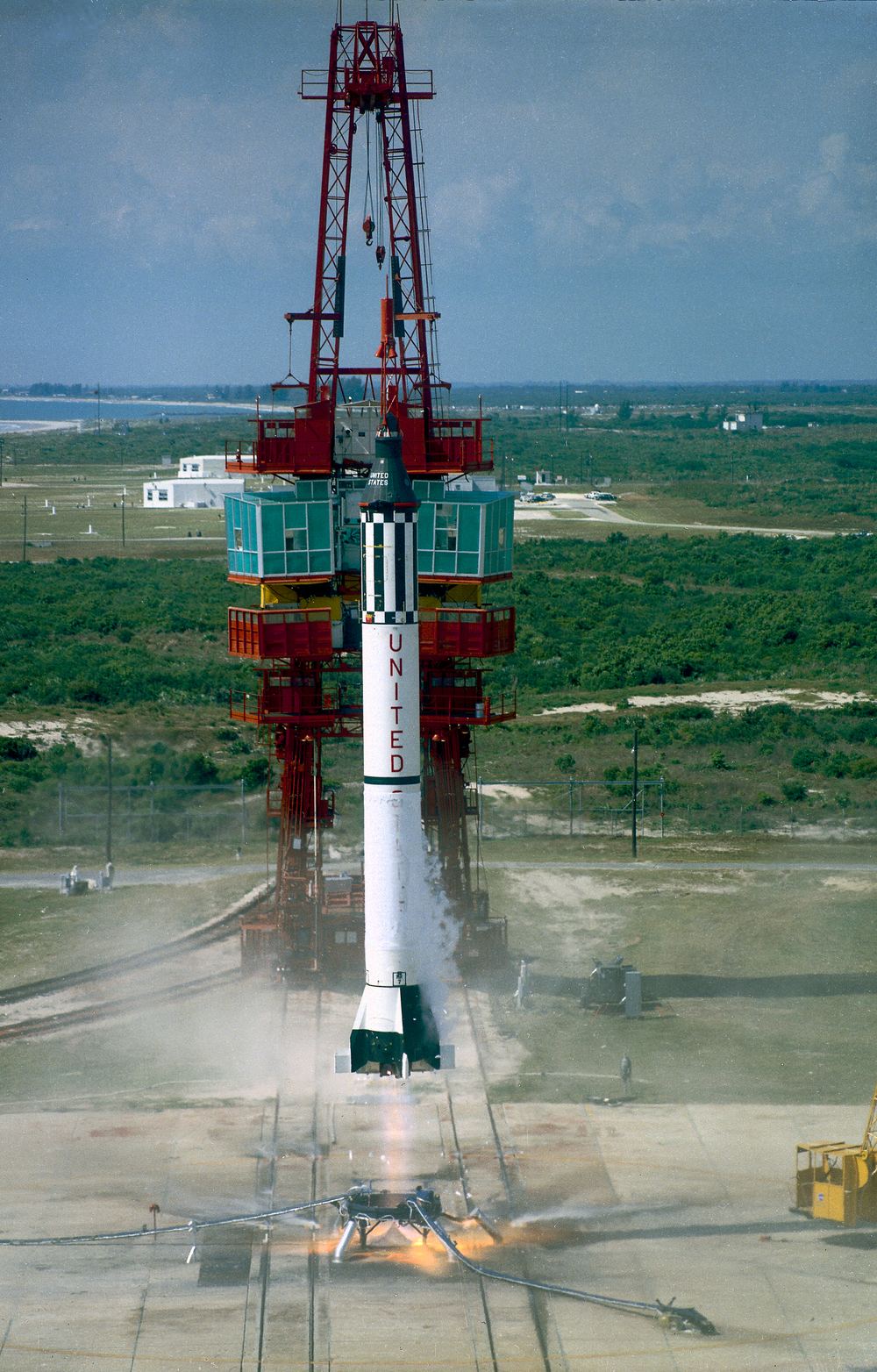
Alan Shepard launched this morning at 9:34 AM from Cape Canaveral aboard Freedom 7. His mission was suborbital — meaning he went up and came back down in a great arc, never completing a full orbit like Gagarin did three weeks ago. The Redstone rocket burned for two minutes, propelling the capsule to an altitude of 116 miles before it arced back down and splashed into the Atlantic. From liftoff to splashdown: fifteen minutes, thirty-seven seconds.
Fifteen minutes. People keep noting how brief it was compared to Gagarin’s 108-minute orbit. They’re not wrong. This is not the same thing. Shepard did not orbit. He proved we can get a man into space and bring him back alive, but the Soviets proved that weeks ago. We are still behind.
But here’s what I keep thinking about: Shepard flew that thing. He wasn’t just a passenger. After the rocket burned out and the capsule was coasting in space, he switched to manual control and maneuvered the capsule himself — changing its attitude with the hand controller, proving that a human pilot can operate a spacecraft. He reported his readings, described what he saw, performed every task they asked of him. He was the most capable person in the vehicle, not just a warm body strapped to a rocket.
The launch was delayed for hours this morning because of weather, then equipment issues. Shepard sat in that capsule for more than four hours before they finally lit the candle. I cannot imagine that wait. You are strapped into a steel cone on top of a rocket that is extremely flammable, waiting for someone else to decide you can go. Four hours.
He reportedly told the launch controllers, at one point during the delays, to “fix your little problem and light this candle.” Which is the most Shepard thing I’ve heard. That man was ready to go.
When the rocket finally launched, Betty and I were watching on television — we had called Harold over, and his wife Edna too, and we sat in the living room barely breathing. The rocket went up and up and the announcer counted altitude and then the capsule separated and then it was quiet for several minutes and then they reported splashdown and I heard Betty exhale next to me like she’d been holding her breath for five minutes, which she probably had.
He came back. He landed safely in the Atlantic, was recovered by helicopter, was described as “in excellent condition” — smiling, waving, chipper. The photographs tonight show a small man in a silver suit climbing out of a small capsule on the deck of a recovery ship, grinning.
President Kennedy watched the launch from the White House. He is apparently going to make a big speech about space soon — bigger than just Mercury. There are rumors of a commitment to land on the Moon before the end of the decade. I’ll believe it when I hear it, but I believe Kennedy might actually say it.
Tonight, for fifteen minutes and thirty-seven seconds, an American was in space. It wasn’t Gagarin’s orbit, but it was ours, and it was real, and Shepard did it exactly right. That has to count for something.
It counts for a lot, actually. It counts for enough.