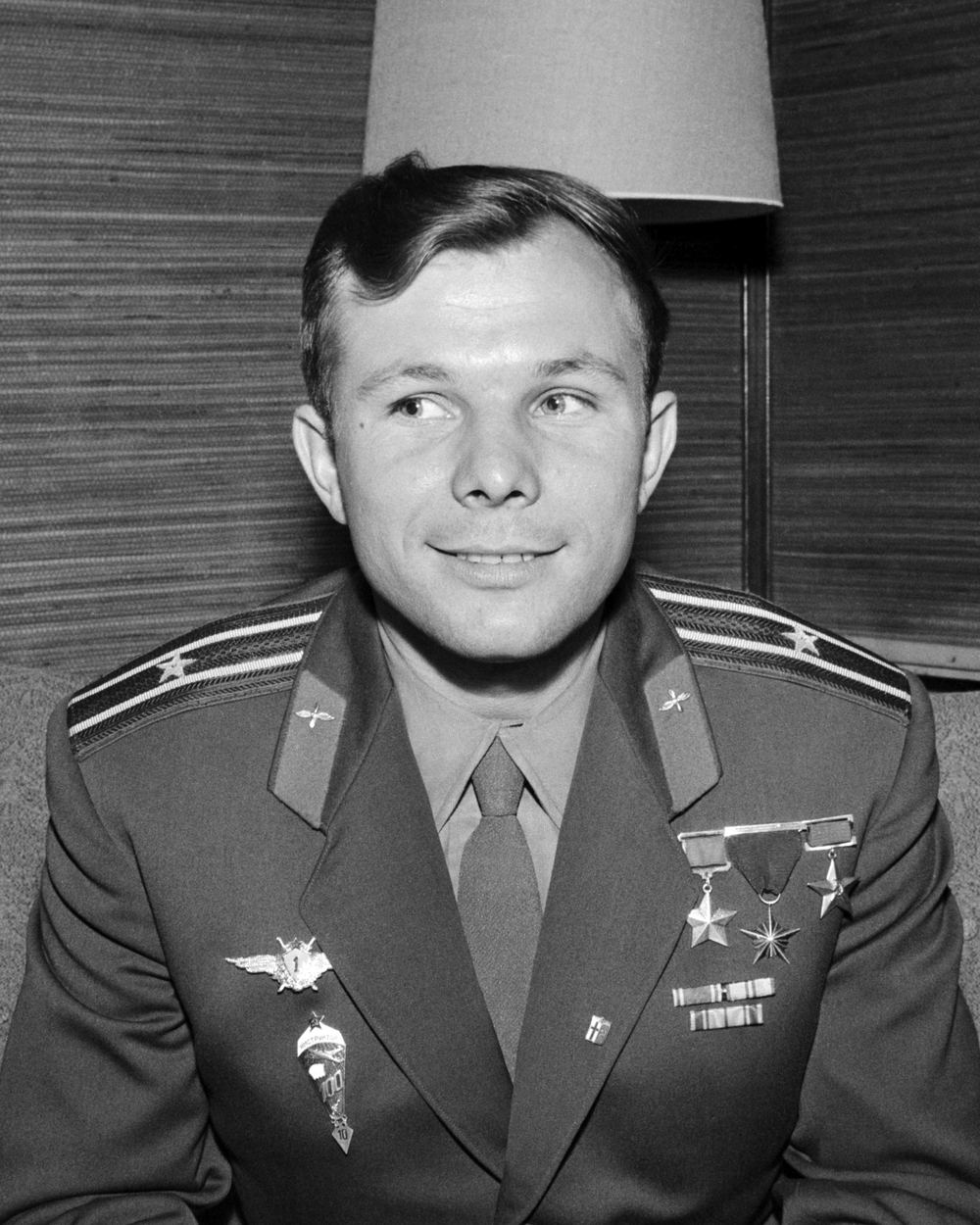
I heard it on the radio before I even finished my first cup of coffee. It was a Wednesday morning, April 12th, 1961. The announcer said it so matter-of-factly that for a moment I thought I had misheard. Then he said it again: a Soviet cosmonaut named Yuri Alexeyevich Gagarin had just completed one orbit of the Earth and landed safely in Russia. One hour and forty-eight minutes in space. The first human being to leave this planet.
I sat at my kitchen table with my fork halfway to my mouth and I just stopped moving.
Betty came in from the kitchen and asked what was wrong. I told her. She said, “The Russians?” and I said yes, the Russians. She shook her head in a way that I couldn’t quite interpret — was that admiration? Worry? Disgust? I had the same problem with my own reaction. I wasn’t sure what I felt.
At work, it was all anyone talked about. My colleague Frank, who is a Navy man through and through, was furious. “They beat us,” he kept saying. “They beat us again.” He was thinking about Sputnik four years ago, the satellite that had beeped its way around Earth while America watched. That was humiliation enough. But a man? A human being? The first one to leave Earth was going to be a Russian pilot named Yuri Gagarin, and not an American, and there wasn’t a single thing Frank or I or anyone else could do about it.
But the more I sat with it — through the afternoon meetings, through the drive home, through dinner — the more something else crept in alongside the national wound. Something like awe. A man had been in space this morning. A person had looked down at our planet from orbit. Whatever you thought about Soviet politics or the arms race or Khrushchev banging his shoe at the United Nations, a human being had done something that no human being had ever done before, and that was… remarkable. That was just remarkable.
I went to the library after dinner and found everything I could about Vostok — that’s what they called the spacecraft. It means “east” in Russian. Gagarin was in there for 108 minutes. The spacecraft weighed about five tons. He didn’t control it — it was automated; he was along for the ride, essentially, which some people are saying is why the Soviets didn’t mind sending him. But he was still up there. He was still floating somewhere above the Earth, looking down, while the rest of us ate our breakfasts and did our jobs.
What did he see? What does Earth look like from orbit? I tried to imagine it — the curve of the horizon, the thin shell of atmosphere, the blackness of space. The papers say he reported that the Earth looked beautiful, that he could see clouds and oceans and the edges of continents. I believe him. I think it would have to be beautiful. I think if you’re the first person to ever look down at your home planet from the outside, you see it new. You see it the way Adam must have seen the garden — before you’ve gotten used to it.
My neighbor Harold came over while I was out in the yard that evening, and we stood for a while looking up at the sky. It was getting dark and the stars were coming out. Harold said, “They beat us.” And I said yes. Harold said, “It’s shameful.” And I said I wasn’t sure shameful was the right word exactly. He looked at me like I had lost my mind. Maybe I had.
Here’s what I keep coming back to: Gagarin is twenty-seven years old. He grew up in a log cabin. His family was evacuated during the German occupation in World War II. He became a steel worker before he became a pilot, before he became a cosmonaut, before he became the first human being to see Earth from space. The same Earth that Abraham Lincoln looked up at and Isaac Newton looked up at and everyone who has ever lived has looked up at — Yuri Gagarin looked DOWN at it. This morning.
I wonder what America’s response will be. President Kennedy has been in office less than three months. I imagine there are some urgent conversations happening in Washington today. If Gagarin’s flight doesn’t light a fire under the American space program, I don’t know what would.
Before I went to bed, I stepped outside one more time. The sky was fully dark. I looked up and tried to find something — some mark of what had happened today. There was nothing, of course. Just the same stars as always. But I knew now, in a way I hadn’t known this morning, that the space between us and those stars was not empty and unreachable. A man had been there today. One of us. Even if he was a Russian.