They sent a dog.
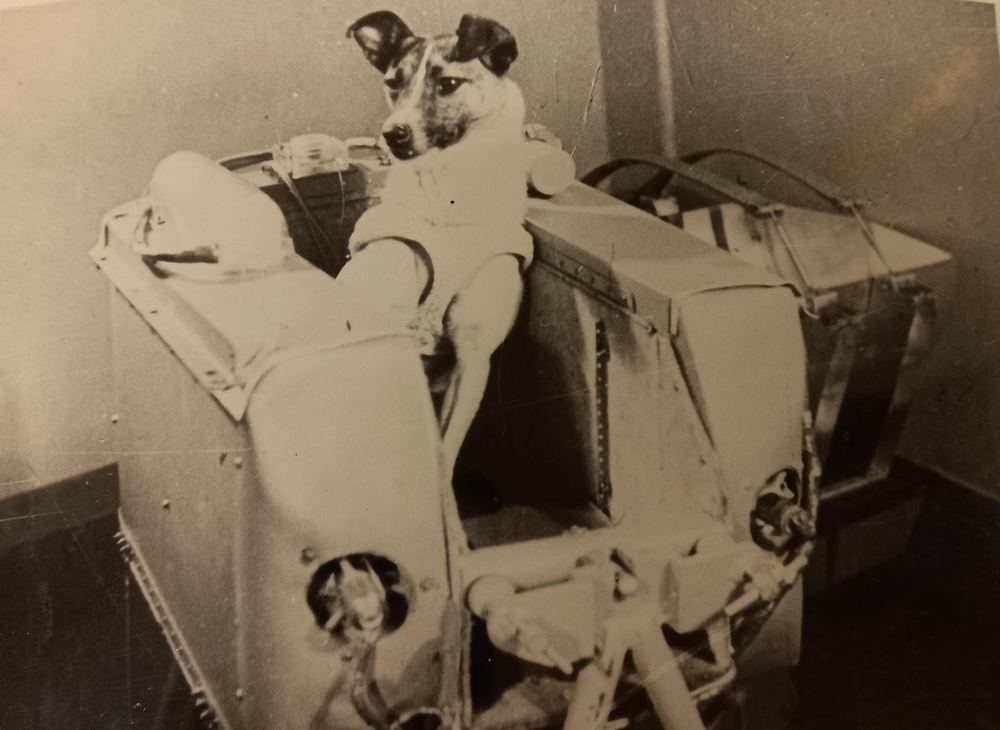
Sputnik 2 launched yesterday, and inside it is a dog named Laika — which apparently means “barker” in Russian. A small mixed-breed stray they found on the streets of Moscow. She’s orbiting the Earth right now. A living creature, above the atmosphere, circling the planet at 18,000 miles per hour.
And everyone knows she’s not coming back.
Betty cried when she heard the radio report. I didn’t cry, but I sat with the newspaper for a long time without reading it. There’s something about a dog that makes this all more real than Sputnik 1 did. The first satellite was steel and transistors. This is a heartbeat. They put a heartbeat in orbit.
I’ve seen some commentary that frames this as Soviet propaganda — showing that a living creature can survive the conditions of space, to prepare for putting a man up there. And that’s probably right. The cold analysis is that Laika is a proof of concept, a biological test subject, and the Soviets have already announced she won’t survive the mission because they haven’t solved re-entry yet. Her capsule will burn up in a few months when its orbit decays. She’ll be up there — alive right now, already dead in a few hours — and then she’ll come down in fire.
I believe the propaganda framing is correct. I also believe it doesn’t make it any better.
Harold came over for coffee this morning and we talked about it for an hour. Harold is a Korean War veteran, a practical man who has trouble with sentimentality, and even he was bothered. “It’s one thing to send a machine up there,” he said. “Machine doesn’t know what’s happening to it. Dog knows something’s wrong.” He drank his coffee and shook his head.
What are we supposed to do with this? The technical achievement is real — a live animal in orbit is a massive step beyond a radio transmitter. The Soviets are moving fast. And I find myself in the uncomfortable position of being both impressed and horrified and alarmed, all at once. Impressed because it’s genuinely extraordinary science. Horrified because of what they did to that dog. Alarmed because while we’re arguing about budgets and congressional committees, the Soviet space program is putting living things in orbit.
I keep thinking about what this means for the men who will go up there someday. Assuming anyone survives it. Assuming any government — ours or theirs — can develop a way to actually return a human being from orbit.
The military applications are the part that frightens the congressmen, I know. A rocket that can put a satellite in orbit can put a nuclear warhead anywhere on Earth. That’s the real competition here. But I find myself less concerned with the military angle and more preoccupied with the thing itself — the sheer audacity of what they’re attempting. What it would mean to go up there. To look down.
Poor Laika. She had no idea what she was part of. Just a stray dog who got picked up off the streets of Moscow and ended up in history.
I hope it was quick. The reports say she died within hours, probably from overheating. Not the worst death, I suppose. Better than burning up.
I’m going to put this notebook away for tonight and go sit with Betty and try not to think about a dog circling alone up above the clouds.