Last night I stayed up past midnight listening to a radio broadcast I still can’t quite believe was real.

My name isn’t important. I’m nobody in particular — a thirty-two-year-old insurance adjuster from outside Columbus, Ohio, with a wife named Betty, a used Studebaker in the driveway, and a vegetable garden that’s been taking too long to put to bed this fall. I mention all this because I want to be clear: I am not a scientist. I am not a soldier. I have no clearance and no special knowledge. I’m just a man who couldn’t sleep on October 4th, 1957, because something unprecedented happened in the sky above my head.
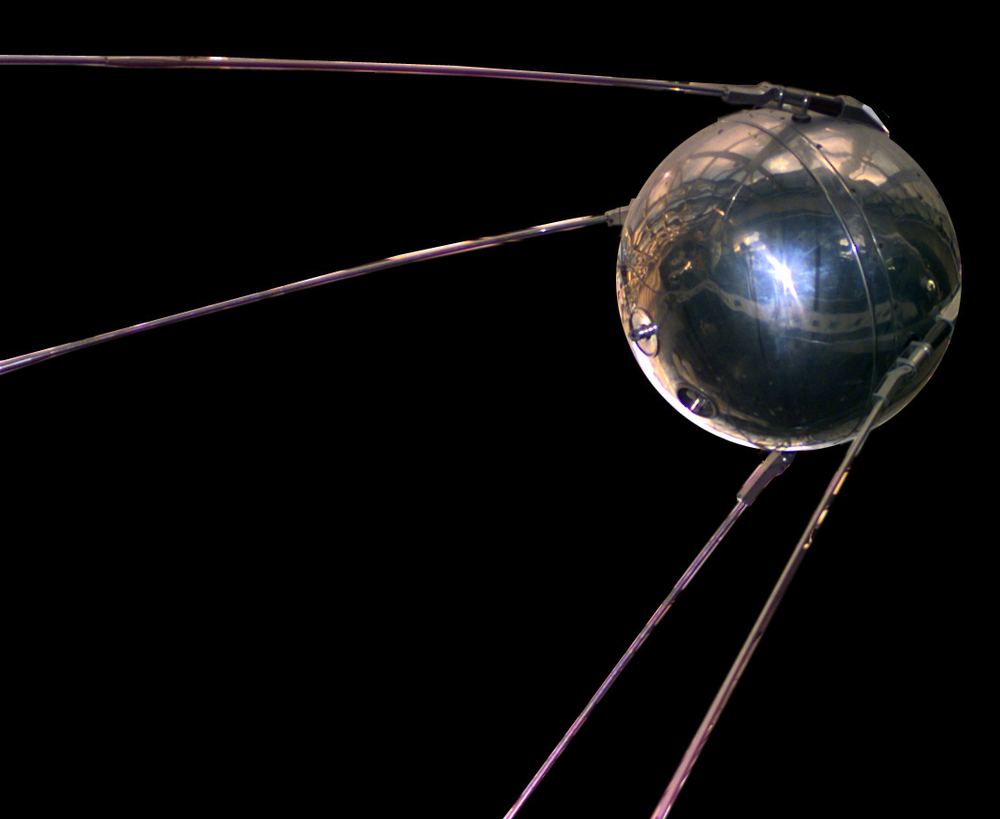
The Soviets launched a satellite. Sputnik, they’re calling it. Little traveler.
I heard it on the radio — Walter Cronkite, calm as ever, explaining that a metal sphere the size of a beach ball was now orbiting the Earth at roughly 18,000 miles per hour, passing over the United States every 96 minutes. Every 96 minutes. While I was eating dinner. While Betty was washing dishes. While our neighbor Harold was mowing his lawn for what he swore was the last time this season.
A Soviet device was circling overhead.
I went outside in my bathrobe at 11 PM and stood in the backyard staring up at the sky, which of course told me nothing. The thing is too small to see with the naked eye. But knowing it was up there — somewhere up there — made the ordinary Ohio sky feel different. Smaller and larger at the same time. I found myself wondering how it looked from up there. What kind of signal was it sending? The radio said it was transmitting a simple beep on two frequencies — nothing in the signal, just proof that it existed and was working.
Beep. Beep. Beep.
I read every newspaper I could get my hands on today. The Times, the Dispatch, a copy of the Cleveland Plain Dealer I borrowed from Harold. The tone ranges from careful technical description to barely concealed panic. Senator Lyndon Johnson is quoted saying this could be “the worst defeat the United States has suffered since Pearl Harbor.” The editorial page of the Dispatch is calmer, noting that Sputnik has no military payload and poses no direct threat. Just a beach ball. Just a beep.
But here’s what I can’t stop thinking about: they did it first. We’ve been told for twelve years that American science and American industry and American know-how were the envy of the world. We rebuilt Europe. We split the atom. We make the best cars, the most steel, the tallest buildings. And the Soviets — the Soviets who we sanctimoniously described as backward communists running on peasant farming and political terror — put a machine into orbit before we could.
How did that happen?
I know this is the beginning of something. I don’t know what exactly. But I know last night changed things, the way certain dates change things: they’re a dividing line you only recognize clearly in hindsight, but that you can feel happening even in the moment. Before Sputnik. After Sputnik.
I’m going to start keeping a record. Whatever comes next, I want to have written down what it felt like to be an ordinary American watching it happen, from a backyard in Ohio, in my bathrobe, looking up at a sky that suddenly felt like it belonged to someone else.
Beep.