Apollo 11 is two days out from the Moon. They launched on Wednesday; it’s Friday now; they’ll enter lunar orbit Sunday.
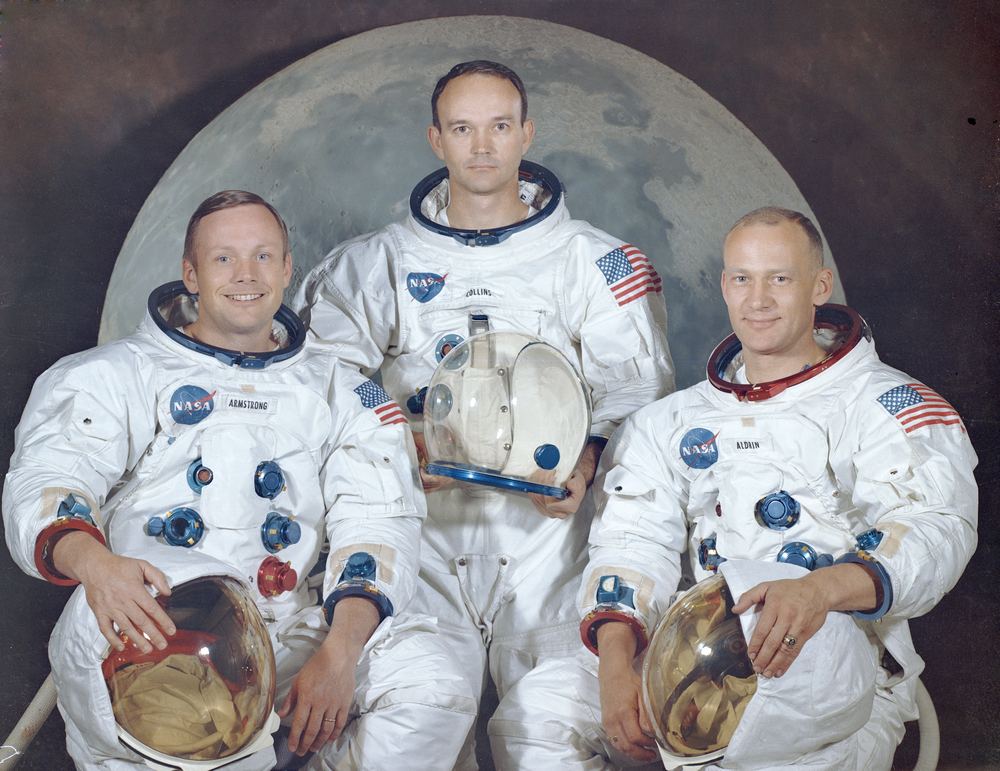
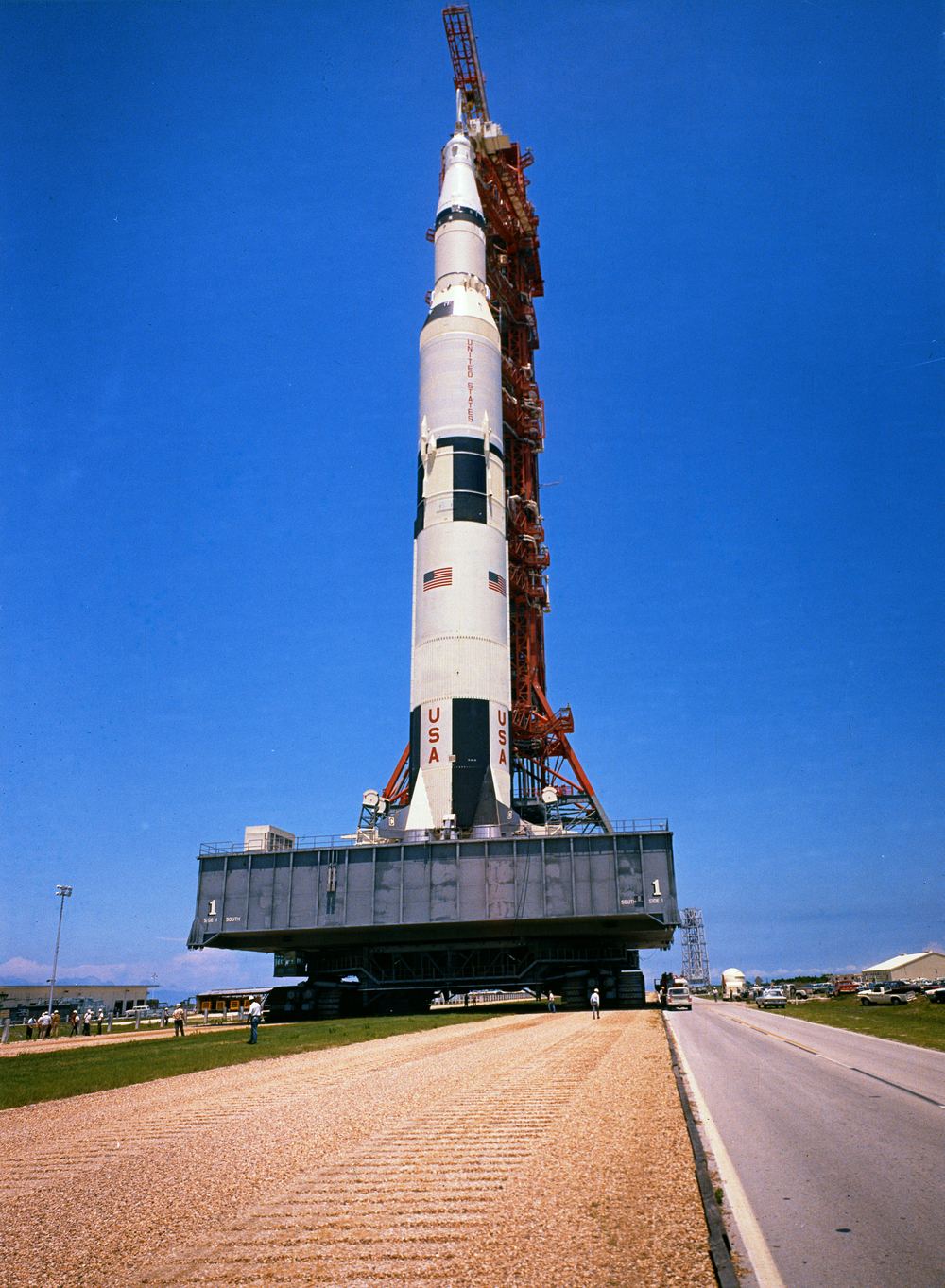
The astronauts are coasting at this point — the translunar injection burn happened on the day of launch, and since then they’ve been in free fall along their ballistic trajectory. They’re not firing any engines unless a course correction is needed (one small correction was made on the first day).
The velocity at this point is about 2,500 miles per hour, much slower than the 24,000+ mph they were doing right after the injection burn. The reason: Earth’s gravity has been slowing them down for two days. As they get farther from Earth, the deceleration decreases. When they cross the L1 point — the place where the Moon’s gravity exceeds Earth’s gravity — they’ll start accelerating toward the Moon.
That L1 point is about 210,000 miles from Earth, roughly 30,000 miles from the Moon. At that distance, after coasting for about 60 hours, the spacecraft will begin to pick up speed as the Moon’s gravity takes over.
The astronauts are passing time: meals, sleep schedules, equipment checks, the continuous low-level monitoring of all systems. The television broadcasts have been showing Collins’s cooking (rehydrated food, squeeze tubes) and the view out the window — an increasingly small Earth, an increasingly large Moon.
Armstrong is apparently not giving press conferences from the spacecraft. He answers questions from Mission Control with “roger that” and reads systems data. This is exactly in character.
Somewhere out there, right now, traveling at 2,500 miles per hour between two worlds, three people are eating and sleeping and checking their gauges. Ordinary work in an incomprehensible place.
Two days.