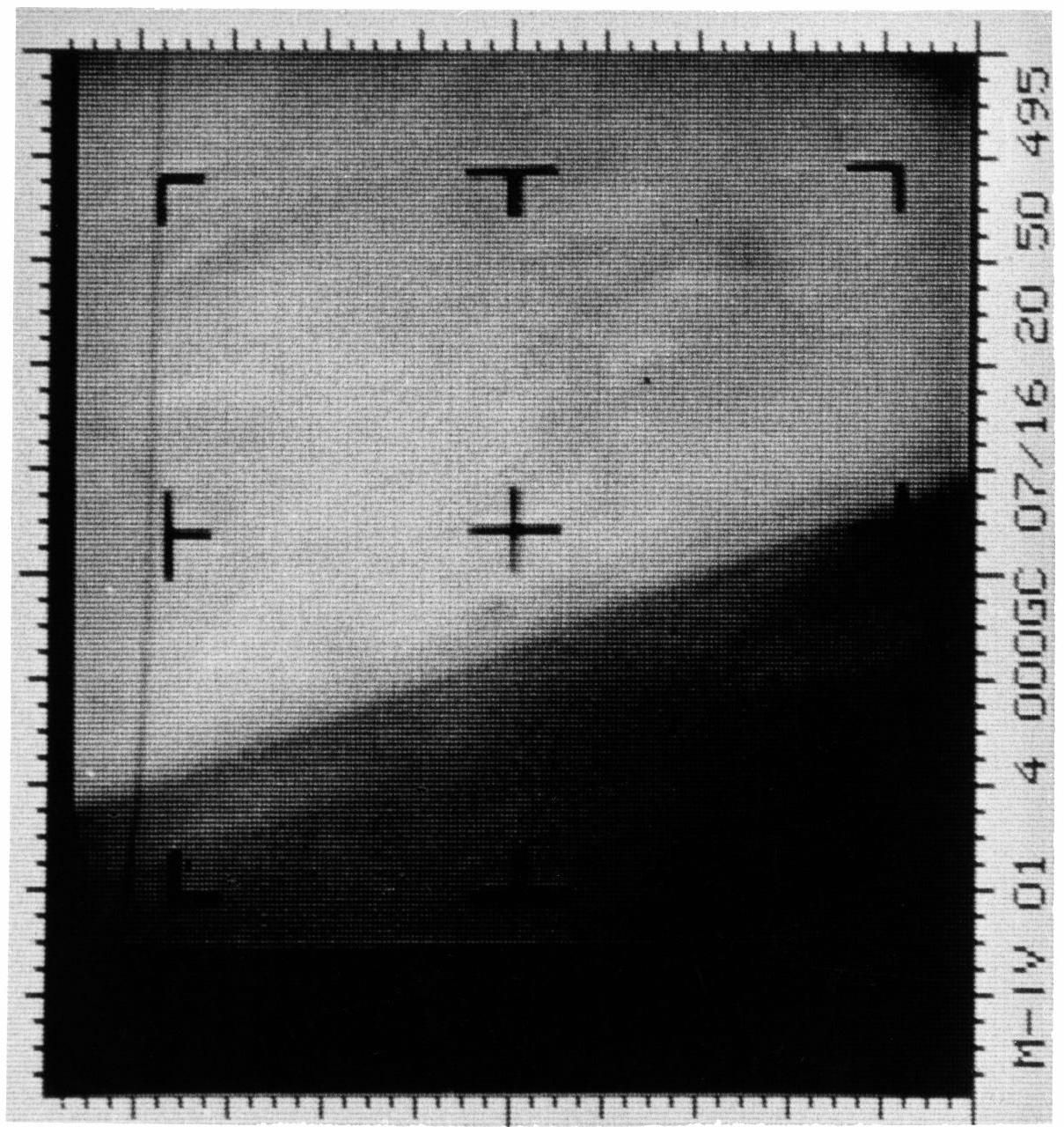
Mariner 4 flew past Mars on July 14 and took 22 photographs during the flyby. The first close-up images of another planet ever transmitted to Earth.
Mars looks like the Moon.
That’s the most startling finding. The images show a heavily cratered surface, reminiscent of the lunar highlands. No canals (which nobody with sense expected anyway, but there they are, or aren’t). No evidence of vegetation or liquid water. An ancient, cold, cratered desert.
There are important differences from the Moon: the craters are more eroded, suggesting Mars has (or had) processes that weathered them. The atmosphere is extremely thin — Mariner’s radio occultation experiment measured the Martian surface pressure at about 4-7 millibars, compared to 1,013 millibars on Earth’s surface. That’s essentially vacuum from a biological or engineering standpoint. The thin atmosphere means very little protection from radiation and no significant thermal regulation.
This is both discouraging and fascinating. Discouraging because the odds of Mars having current surface life are lower than optimistic pre-Mariner speculation suggested. Fascinating because the surface looks like early Earth might have looked — before plate tectonics and erosion reshaped everything, before the atmosphere changed. Mars may be a preserved record of what rocky planets look like in an early stage.
The 22 photographs represent about 1% of the Martian surface. We’ve made a 22-frame sample of a planet. The remaining 99% is unknown from direct imaging.
The unmanned space program runs in parallel with the human spaceflight program. While Gemini is practicing orbital rendezvous, Mariner is flying past planets. The scientific programs are separate but the rocket technology is related.
What would it take to send people to Mars? The Mariner data is discouraging: thin atmosphere means you can’t use aerodynamics for descent, you need rockets. Long trip — six months each way with current rocket technology. Long stay — you can’t return immediately, you wait for the planets to align again. 500+ days total mission duration. Radiation exposure. Communication delays of up to 22 minutes.
Mars is hard in a different way than the Moon. The Moon is hard because it’s dangerous. Mars is hard because it’s far.
Someday, though. Someday.