Stafford and Cernan flew Snoopy to within 47,000 feet of the lunar surface today. Nine miles. They could see boulders. They photographed the Sea of Tranquility landing site from close range.
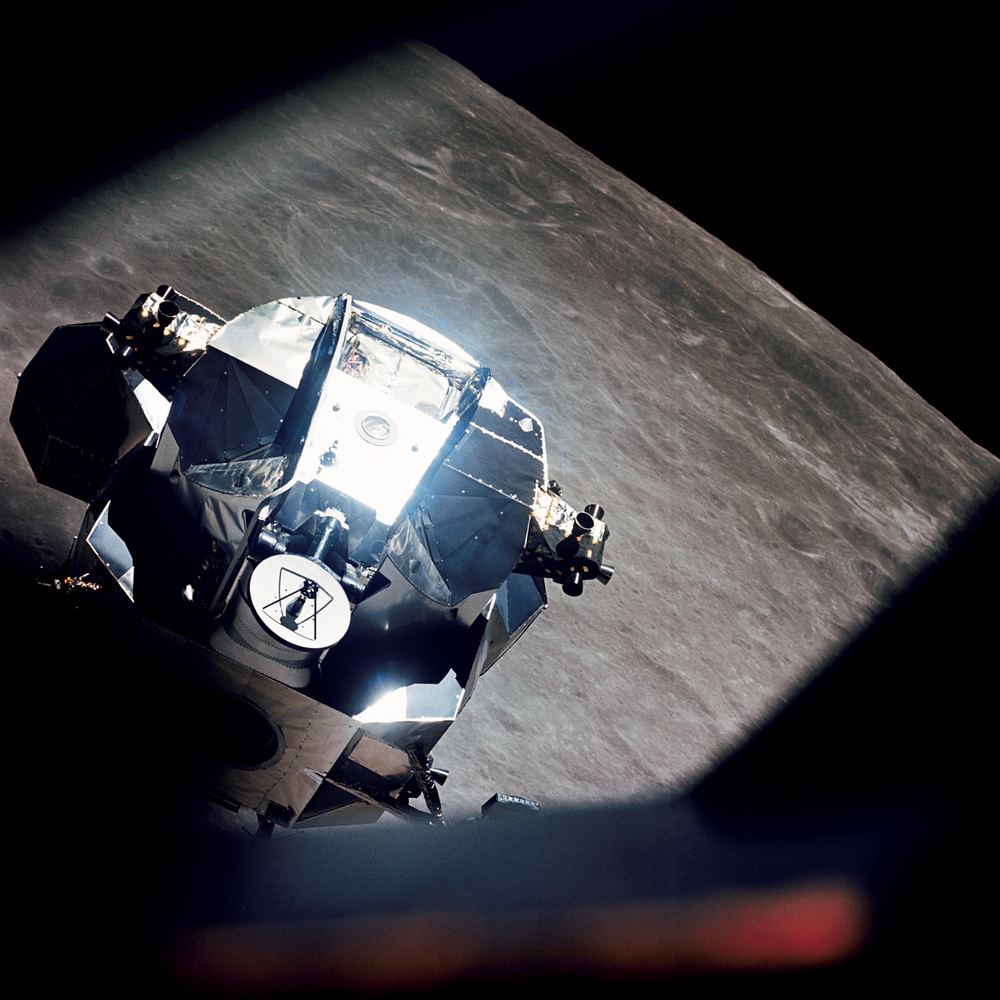
And then there was a moment of chaos that nobody expected.
After the low pass, when they fired the ascent stage explosive bolts to separate from the descent stage in preparation for re-joining the command module, the ascent stage went into an unexpected tumble — pitching and rolling rapidly. The problem turned out to be a switch set to the wrong position: the ascent stage guidance system was in the wrong mode for the separation. The ascent stage briefly began to hunt for an object to maneuver toward, which at that moment happened to be the nearby descent stage instead of the orbiting command module.
The tumble lasted about eight seconds. Cernan’s voice in the recording says what I’ll charitably call a colorful word. They got control back, identified the problem, corrected it.
Eight seconds. In another spacecraft, without Stafford and Cernan’s experience and quick hands, that could have been fatal. The ascent stage tumbling and unable to recover means no rendezvous with the command module means three dead men.
They recovered. They rendezvoused. They docked. They came home.
But I want to note the eight-second tumble because it illustrates something about spaceflight that the clean television coverage doesn’t convey: it is genuinely dangerous, not just in the abstract sense where any powerful machine has theoretical failure modes, but in the specific sense that when things go wrong they go wrong fast and the margin between acceptable and catastrophic can be very small.
Apollo 10 accomplished everything it was supposed to. The landing site is verified. The navigation data is confirmed. The descent trajectory and abort procedures are tested. Snoopy went to 47,000 feet and came back.
Armstrong and Aldrin are next. The full descent. The surface. The ladder.
If the switch is in the right position.