Tom Stafford and Gene Cernan flew the Lunar Module called Snoopy down to 47,000 feet above the surface of the Moon today. Forty-seven thousand feet. Eight point four nautical miles. If you’re standing on the lunar surface looking up, they were about the height of a commercial airliner above you.
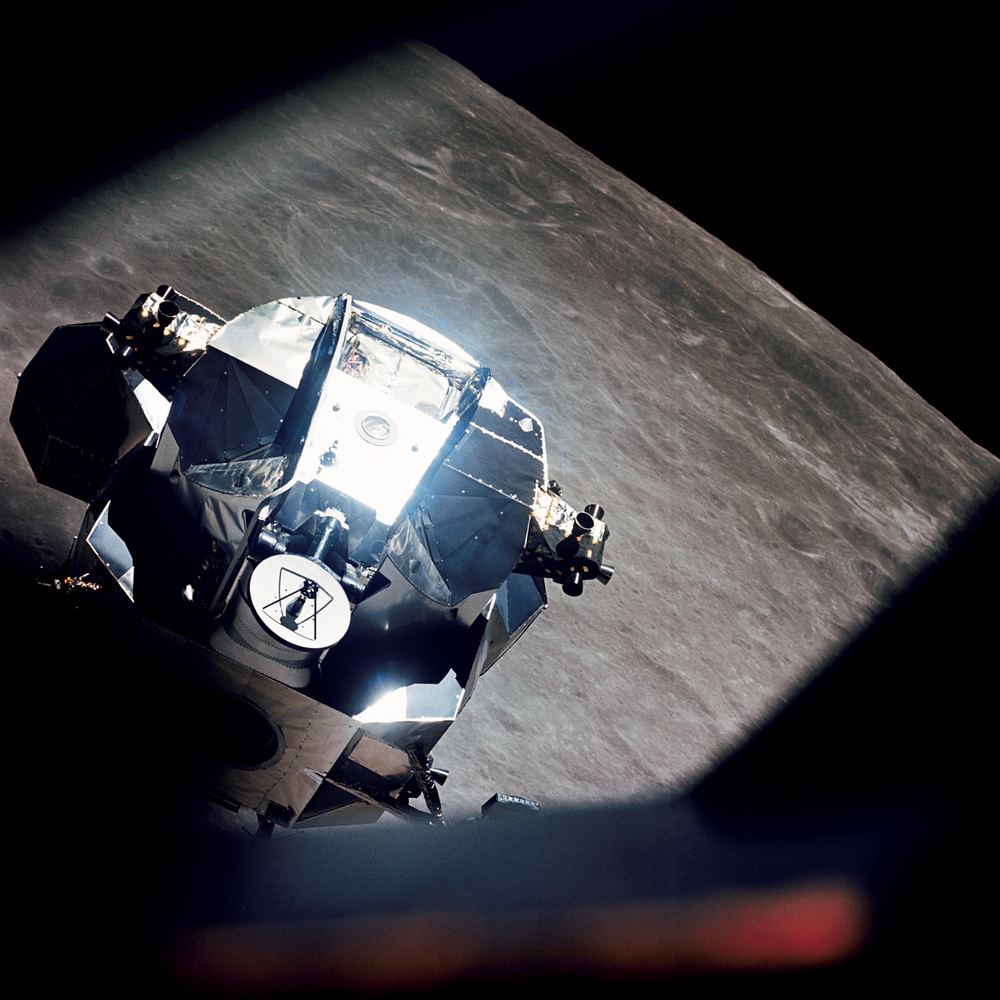
They looked down. They could see the Sea of Tranquility — the planned landing site for Apollo 11. They could see individual craters. The surface was close enough that the mission transcript records Cernan saying things like “there’s a crater right there” — like a man on a low-flying airplane spotting landmarks below. They were close enough that the texture of the surface was visible. They were RIGHT THERE.
And then the mission plan called for them to fire the ascent engine and go back up. So they did.
I understand the logic. I do. This was the dress rehearsal. The point was to test every single step of the landing process EXCEPT the landing itself, so that when Apollo 11 comes through in July, there are no unknowns. Stafford and Cernan tested the descent engine, the navigation, the rendezvous radar, the communication systems, the abort procedures — everything that needs to work perfectly in two months. And it all worked. John Young, orbiting alone in Charlie Brown, watched Snoopy descend and ascend and rendezvous. Every system was verified. The data is being analyzed right now.
I understand all of this. The mission plan is correct. This is the right way to do it.
And yet.
Eight point four nautical miles. You could have landed. The descent engine works — they proved it. The landing radar works. The navigation works. Stafford is one of the best pilots in the program. Cernan is no less than that. They were right there, close enough to see the landing site, and mission parameters said: not today.
There is a story — I don’t know if it’s true — that NASA purposely put only enough fuel in the ascent stage to prevent an unauthorized landing. That the planners didn’t entirely trust the crew to follow orders when they were 47,000 feet above a surface they had never been closer to. I choose to believe this story is apocryphal. I choose to believe Stafford and Cernan followed the plan because they are professionals who understood the reasoning and honored it.
But I also think Gene Cernan, specifically, looked down at that surface from eight miles up and felt something that no mission plan can fully accommodate. He was so close. He could see it. There’s a picture in his mind now — the Moon, close, textured, real — that he’ll carry for the rest of his life. He had to go back up.
Cernan reportedly swore a good deal during the ascent, which I find entirely relatable.
Apollo 10 is a success. A complete, thorough, by-the-numbers success. Every piece of the puzzle is in place except one: the landing itself. And that piece is now assigned to Neil Armstrong and Buzz Aldrin, who will fly the Lunar Module called Eagle in July.
Everything is ready. The dress rehearsal is done. The Moon is waiting. The decade is more than half over — Kennedy said before the decade is out, and it’s 1969. July is coming.
I keep looking at the sky in the evenings lately. The Moon is there most nights. I look at it differently now than I did a year ago. It’s not abstract anymore. Men have orbited it. Men have been eight miles above its surface. Men have looked down at the Sea of Tranquility from altitude and seen the spot where they plan to land.
I can barely sleep. Is that ridiculous? I can barely sleep.