The Soviets lost a cosmonaut too.
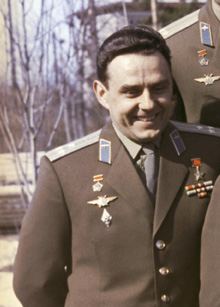
Vladimir Komarov died yesterday when Soyuz 1 crashed on landing. The parachute system failed — tangled, didn’t fully deploy — and the capsule hit the ground at high speed. Komarov is the first person to die during an actual spaceflight (as opposed to on the ground, as Grissom, White, and Chaffee did).
We knew they were testing a new spacecraft. Soyuz 1 was the first crewed flight of the Soyuz capsule, which the Soviets plan to use for lunar missions the same way we plan to use Apollo. There were apparently known problems with the spacecraft before launch — there are reports, which I take with some caution since they’re from unnamed sources in secondary publications, that engineers raised concerns and were overruled by schedule pressure. Political pressure for a space anniversary celebration. The echoes of what happened to Grissom’s crew are uncomfortable.
I’ve read that the mission had problems almost immediately after launch — attitude control failures, solar panels failing to deploy. There may have been discussion about sending a second Soyuz to attempt a rescue. That mission was apparently scrubbed when the problems became clear. Komarov was on his own.
He reportedly knew he was going to die. He made phone calls during descent. I’ve seen reports that he was angry — at the people who sent him up in a spacecraft he knew wasn’t ready. Whether those reports are accurate or embellished, I cannot say. The Soviet program does not publish its failures the way we do.
The score is now: one American crew of three, one Soviet cosmonaut. Both programs had failures. Both programs have paid for those failures in human lives. Both programs, I assume, will press on.
Komarov was 40 years old. He had flown once before, on Voskhod 1. He was an experienced man, and if the reports are correct, he was a brave one — one who flew a spacecraft he had reason to doubt, because that was what his program needed from him.
There’s a parallel universe where the Soyuz works perfectly and America and the Soviet Union race to the Moon with clean safety records. That’s not the universe we live in. In the universe we live in, the first crewed flights of both the Apollo and Soyuz capsules killed people.
Human spaceflight is dangerous. We know that. The question is whether we build the systems carefully enough that the danger is genuinely necessary — not manufactured by poor management, by schedule pressure, by people in offices overruling engineers in the trenches.
I hope both programs learned what they needed to learn. I hope no one else dies because someone in a meeting decided a deadline was more important than a safety review.
Rest in peace, Vladimir Komarov. You deserved better from your program.