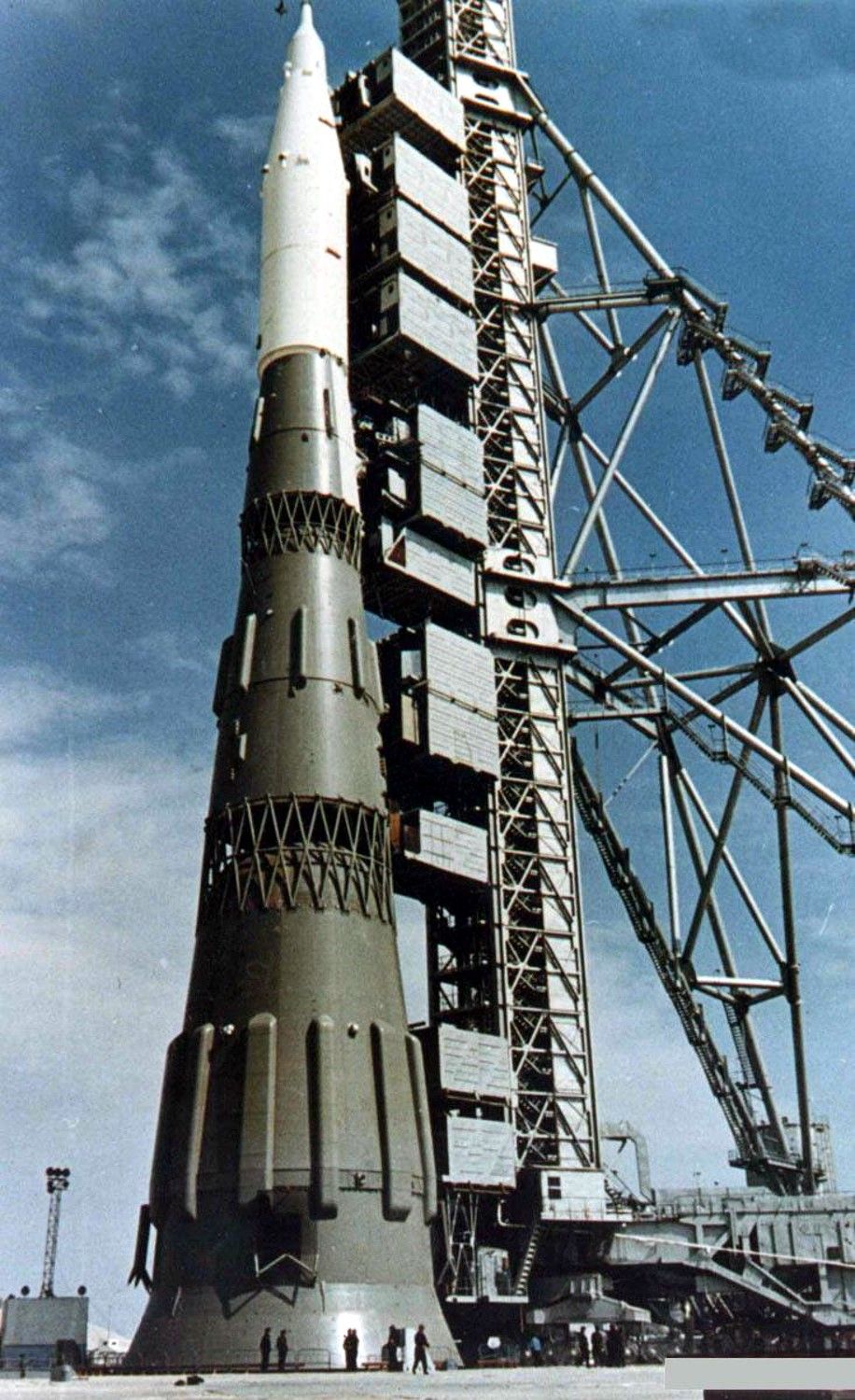
Western intelligence and aerospace press are reporting that the Soviet N1 lunar rocket — the Saturn V equivalent — has now failed on all four test flights, and the program appears to be in serious trouble.
The N1 is a massive rocket — slightly taller than the Saturn V, with thirty NK-15 engines in the first stage. Thirty engines is an engineering philosophy completely different from ours. The Saturn V uses five enormous F-1 engines; the N1 uses thirty smaller ones. The argument for multiple engines is redundancy — if one fails, you have twenty-nine more. The argument against is complexity: thirty engines means thirty times the plumbing, thirty times the sensors, thirty times the possibility of an engine-to-engine interaction problem.
The N1 test flights:
February 1969: First test. Exploded 70 seconds into flight due to an engine fire.
July 1969 (two weeks before Apollo 11): Second test. The rocket cleared the launch pad, then crashed back and exploded. The explosion destroyed the launch facility, setting the program back 18 months. (If the launch facility had survived, there might have been a third N1 attempt before Apollo 11 landed — the outcome of the manned race could theoretically have been different.)
June 1971: Third test. Reached 50 seconds of flight, then a loose bolt was ingested into a turbopump, causing failure.
November 1972: Fourth test. Reached 107 seconds of flight — the longest yet — then catastrophic failure.
All four failed before the first stage completed its burn. The fundamental problems: engine interactions, propellant feed instability, difficulty controlling thirty engines simultaneously.
The program is being reviewed. Vasily Mishin, who took over from Korolev, is apparently under pressure. Whether the N1 continues depends on political decisions in Moscow that we can’t see clearly from here.
The manned lunar landing is not happening for the Soviets. The question is whether they persist with a different architecture or pivot entirely to the space station program, where they’re actually ahead of us.