NASA has been releasing transcripts of the air-to-ground communications for Apollo missions, and I’ve been reading them. The language is unlike anything else I’ve ever read.
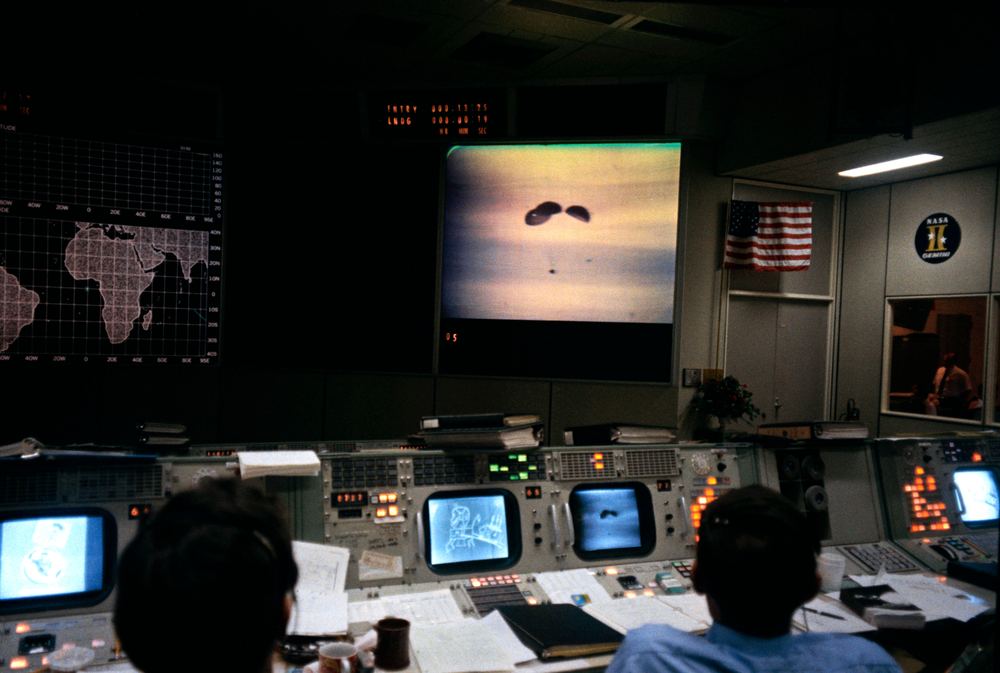
It’s a genre of its own. Part technical report, part field dispatch, part something that doesn’t have a name. The speakers are enormously competent people conducting matter-of-fact conversations about conditions no human being has ever been in before, and the combination of the technical vocabulary and the extraordinary circumstances creates a kind of deadpan poetry.
Some examples from the Apollo 11 transcripts (reconstructed from memory and notes):
During the powered descent, with the 1202 alarm sounding: “Houston, we’ve got a program alarm… 1202… 1202.” “Roger. Go. Alarm.” “Go.” Just that.
Armstrong, on the surface, after picking up the first rock sample: “I got…some of the rock, soil, fine material…as you can see from this picture.”
Aldrin, stepping down from the ladder: “Beautiful view.” Then, a moment later: “Magnificent desolation.”
Collins, reporting from lunar orbit after the landing: “I just can’t believe this is happening.” The voice of the man who flew to the Moon and stayed in orbit while his crewmates walked on it.
The word “nominal” appears constantly. Everything is “nominal” or “looks good” or “coming along.” When something is not nominal, the description becomes specific and careful and careful and careful. You can feel the professional training pressing down on whatever emotional response the speaker has and replacing it with precision.
I’ve read portions of the Apollo 13 transcripts from the hours after the explosion. The voices stay measured. “We’ve had a problem here” — Lovell’s famous report. Not “something terrible just happened,” not panic. “We’ve had a problem.” The training and the culture and the discipline that produces that measured report in that moment is worth study.
There are also private moments that leaked through. Aldrin, very quietly, reading his own communion service in the lunar module after landing, before the EVA. That wasn’t on the public channel; it came out in interviews. A private thing made in the most public possible moment.
The transcripts are history. Not the polished history of the press releases but the working history — the actual words, the pauses, the “roger that,” the “go,” the “come on.” I’m glad they’re releasing them.