The Apollo 204 Review Board has released preliminary findings, and they are damning.
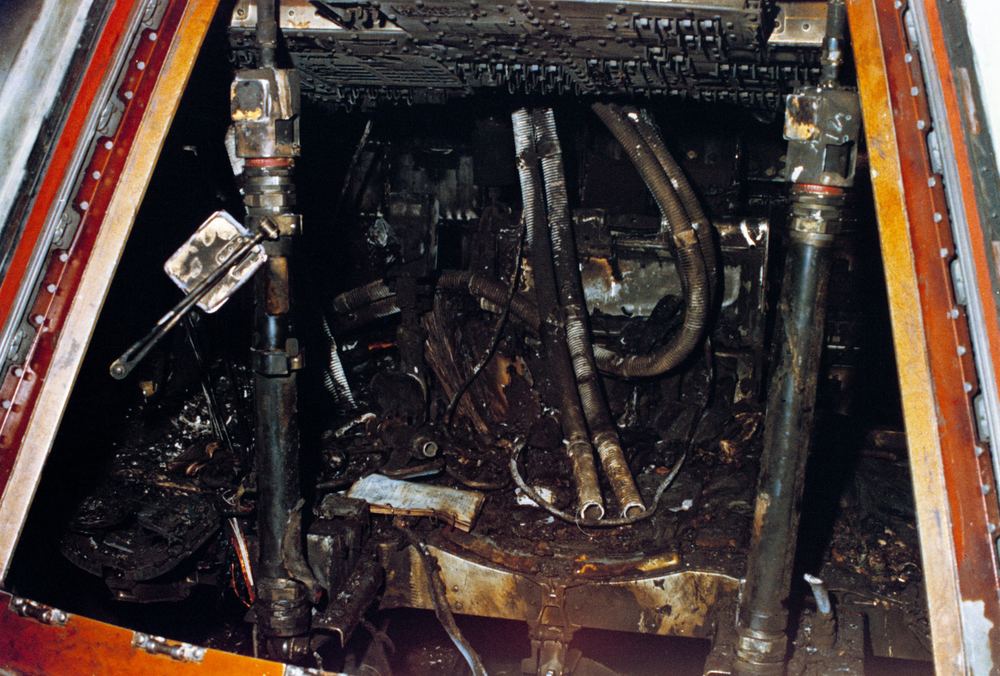
Investigators found 1,407 documented instances of workmanship problems in the Block I command module before the fire. 1,407. Wiring bundles abraded by edges, connectors improperly crimped, materials installed without proper inspection sign-off, areas inaccessible for inspection once installed.
The specific ignition source for the fire has not been definitively identified. There are too many potential sources in the area of the wiring bundle near the environmental control system. What is clear: the ignition source existed because faulty wiring existed, and the fire spread so fast because the atmosphere was 100% oxygen at 16.7 psi (slightly above ambient) and because the cabin was full of flammable materials.
The board is finding fault at multiple levels: North American Aviation’s manufacturing quality control, NASA’s oversight of contractor performance, the spacecraft approval process that signed off on the capsule for the test, and the broader culture that had accepted increasing risk under schedule pressure.
I’ve been reading every piece of this that’s been made public, and the pattern that emerges is familiar from industrial accidents in other fields: a series of small compromises, each individually manageable, that accumulate into a catastrophic condition. Nobody decided to build a fire waiting to happen. Nobody signed off on making the capsule dangerous. But a thousand small decisions — defer this inspection, accept this workmanship deviation, prioritize schedule — combined into something that killed three men.
I think about Grissom knowing. His lemon. His concern passed through channels that didn’t act on it quickly enough.
The board’s final report will be released in April. The redesign is already underway. The question going forward is whether the culture changes along with the hardware.
Culture is harder to redesign than hardware.