The first Apollo crew has been set for a while now, but the launch date is getting close enough that I find myself thinking about them as people. Let me write down what I know.
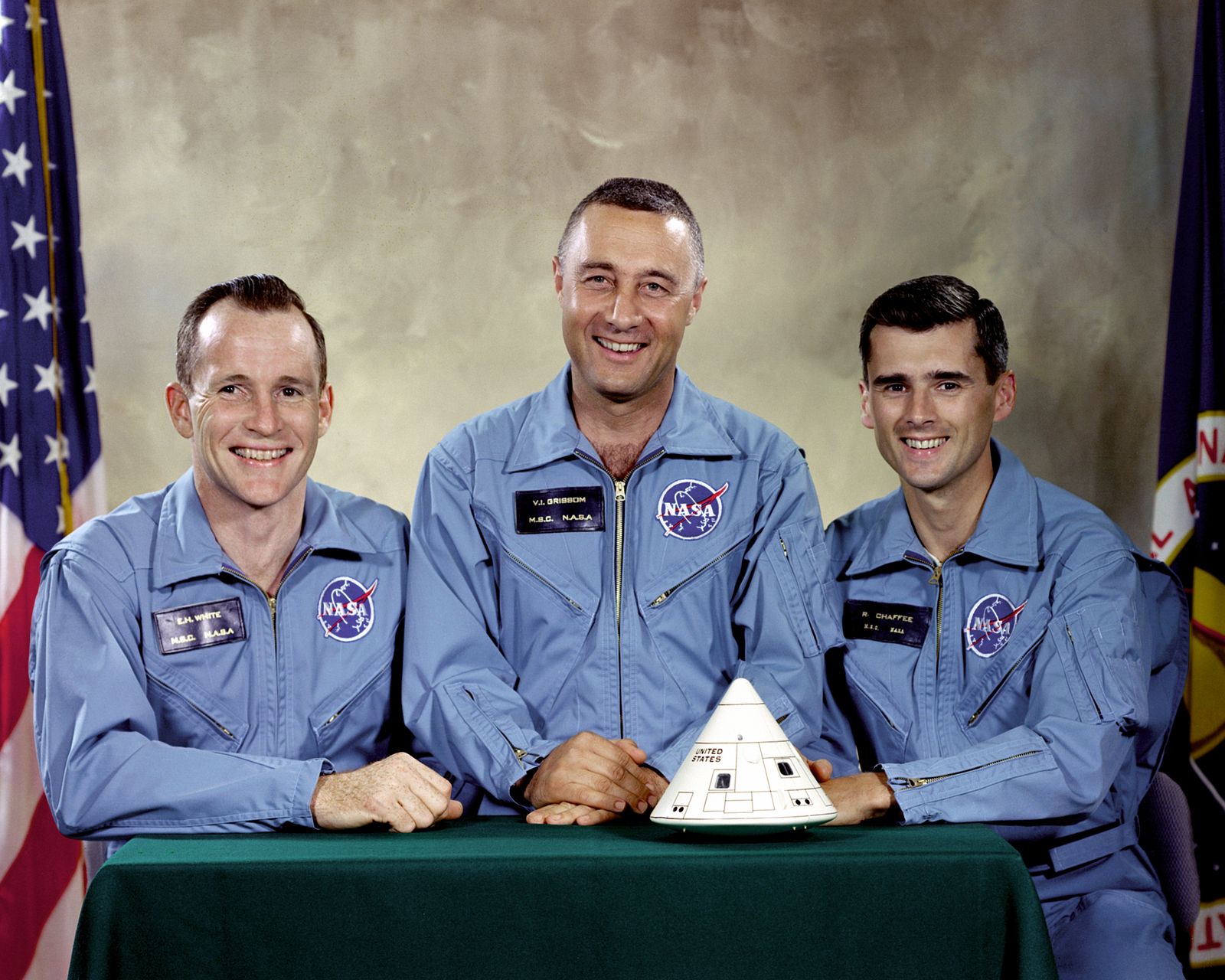
Virgil Ivan “Gus” Grissom. Lieutenant Colonel, United States Air Force. He was the second American in space — his Mercury flight in 1961 lasted about fifteen minutes, and then his capsule sank in the Atlantic when the hatch blew open prematurely. There was gossip, unfair I always thought, that he panicked and caused it. The investigation cleared him. The hatch design was flawed. And then he went back to space on Gemini 3 — the first Gemini mission — and flew a textbook mission with John Young. He named the capsule Molly Brown, after the Titanic survivor, because of the Liberty Bell 7 sinking. Dry humor. He seems like a tough, quiet, determined man. Not given to speeches or sentiment. He just does the work.
He is the commander of AS-204. He will be the first person to fly an Apollo spacecraft.
Edward Higgins White II. Lieutenant Colonel, United States Air Force. The man who didn’t want to come back inside. When McDivitt told him his twenty-three minutes were up on Gemini 4, White said it was the saddest moment of his life. I have thought about that quote many times since. He graduated from West Point, got a master’s degree in aeronautics from Michigan. He’s been in the military his whole career but he has a streak of wonder in him — you can see it in the photographs from his spacewalk, the way he’s grinning under his visor. He loves this. He absolutely loves being in space.
Roger Bruce Chaffee. Lieutenant Commander, United States Navy. I had to look him up, I admit. He was selected as an astronaut in 1963, but he hasn’t flown yet — this will be his first mission. He’s thirty-one years old, which makes him the youngest of the three. He flew reconnaissance missions over Cuba during the Missile Crisis, if you can believe it. He’s from Grand Rapids, Michigan. He loves his family, apparently — there are photographs of him with his wife and two children that have been in the newspapers, and you can see something easy and warm in his face in those pictures. He seems like a good man still at the beginning of his story.
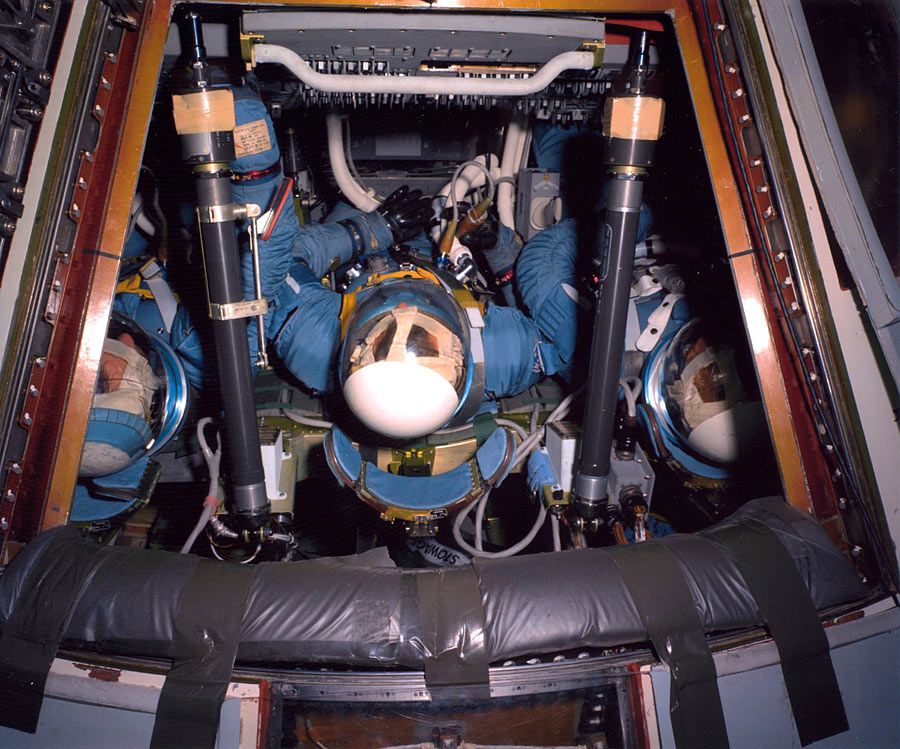
The three of them are preparing to fly Apollo in February. The spacecraft — the Command and Service Module, designated AS-204 — is being tested at Launch Complex 34 at Cape Kennedy. It’s the redesigned and much improved capsule that will eventually carry men to the Moon. This first mission is called a shakedown: they’ll orbit the Earth for perhaps two weeks, testing all the systems, proving the spacecraft is ready.
I find myself thinking about what it means that Grissom is doing this. He’s been in space twice already, survived a sinking capsule, endured unfair criticism, and here he is again: climbing into another spacecraft, accepting all the risks again, doing the job he signed up to do. There’s something that can only be called courage in that. Not the dramatic kind — not the kind you see in movies. The quiet, daily, deliberate kind. The kind that says: I know the risks and I accept them and I will show up and do my best.
I hope the launch goes well. I hope the mission goes well. I hope all three of them come home.
The Moon is close now. If this first crewed flight works, the next steps can happen. Maybe 1968 for a lunar orbit. Maybe 1969 for a landing. The decade is running out, but we still have time.
I clipped their crew photograph from the paper and added it to the folder. Three men, smiling, in front of their spacecraft. The first Apollo crew.