Gemini 12 splashed down today, and with it the Gemini program is complete.
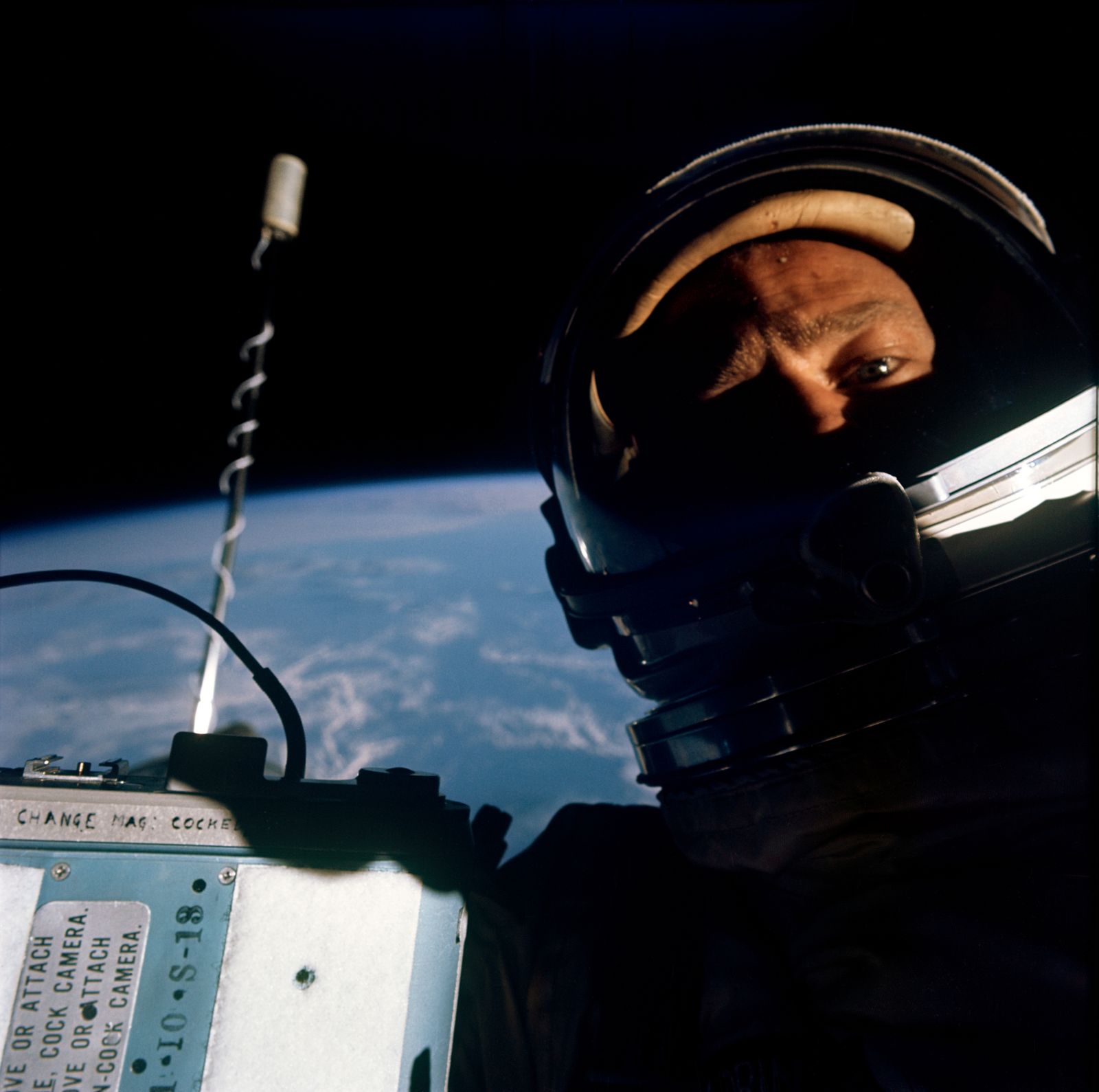
Two years, ten crewed missions, thirty crew members flown (counting repeats). We learned to dock, to spacewalk, to rendezvous, to survive two weeks in space. We answered every question we needed to answer before Apollo. Gemini did its job.
The final mission had Jim Lovell in command — his third spaceflight, which is remarkable — and Buzz Aldrin making history with extravehicular activity. Aldrin spent five hours and thirty minutes outside the capsule over three separate EVAs. Previous spacewalks had been difficult — astronauts got exhausted fighting the suits, couldn’t complete their tasks, had to cut EVAs short. Aldrin solved this by approaching spacewalking differently: he worked slowly and methodically, rested frequently, and used underwater training (at the neutral buoyancy pool he’d been developing) to prepare. He proved that productive EVA was possible.
The rendezvous radar on Gemini 12 failed, and Aldrin computed the rendezvous manually using star sights and orbital mechanics charts. Like Cooper’s manual re-entry in Faith 7, this is another reminder that you want a human brain in the loop when the computers fail.
Gemini is done. Apollo is next.
The score so far in the space race: Soviets have more firsts. First satellite. First living creature in orbit. First man in orbit. First woman in orbit. First spacewalk. First multi-person crew. But the United States has closed the gap dramatically. We can dock. We can spacewalk efficiently. We can survive two weeks in space. We can rendezvous. The skills for a Moon landing are in place.
The next thing is Apollo. And Apollo starts with an unmanned test, then a crewed test, then building toward the lunar mission. Kennedy said before the decade was out. The decade ends in three and a half years. It’s possible. I think it’s possible.
I’m going to keep this notebook through whatever comes next.