Wrong date — that was November 1966, not 1965. Let me be precise.
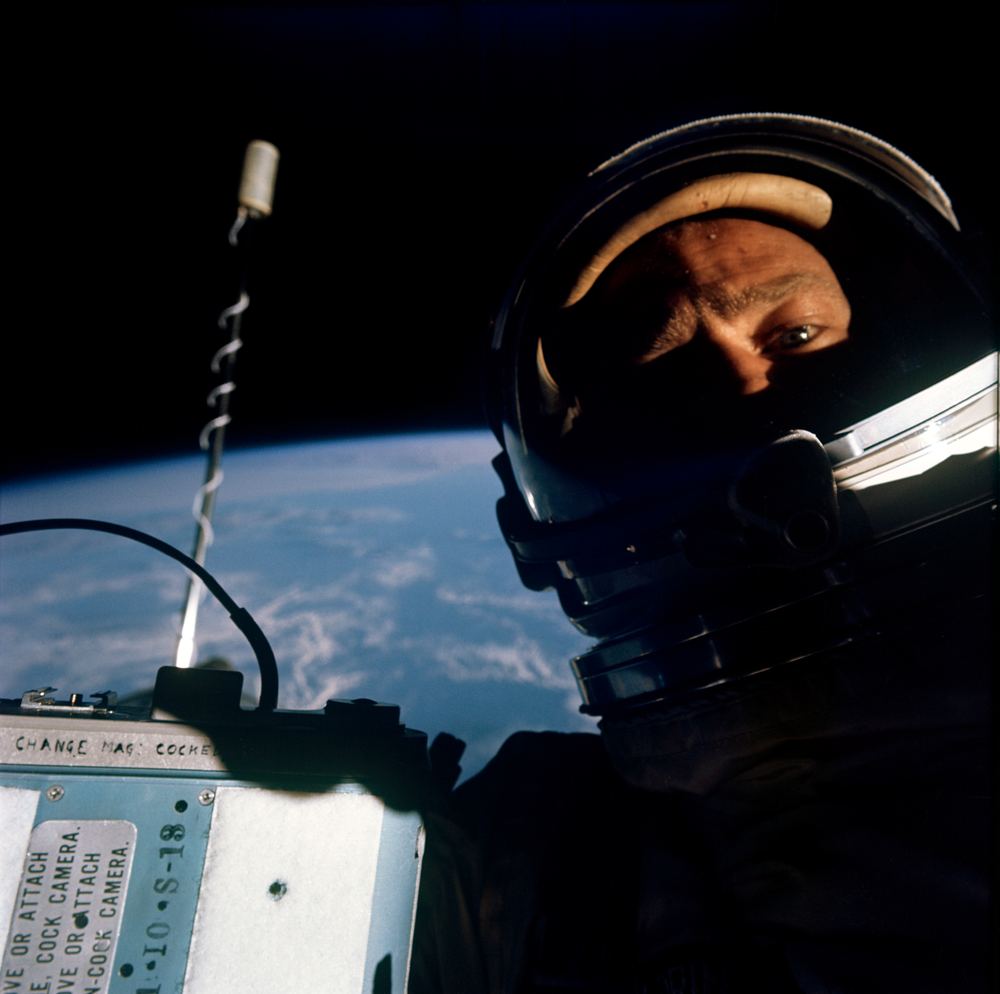
Gemini 12 splashed down on November 15, 1966. Jim Lovell commanded, Buzz Aldrin was pilot. The mission accomplished what several previous Gemini missions had struggled to do: productive, controlled extravehicular activity.
Aldrin spent five hours and thirty minutes outside across three EVAs. He worked methodically, used underwater training techniques to plan his movements, rested between tasks, and never let his metabolic rate get out of control. He completed all his assigned objectives.
The specific tasks included installing and removing equipment on the exterior of the Agena target vehicle, tightening and loosening bolts, connecting and disconnecting electrical cables, photography, and general equipment handling. All of these are things astronauts might need to do on the Moon’s surface or during a deep-space EVA.
What Aldrin proved: EVA is manageable if you plan for the metabolic cost, train in neutral buoyancy to simulate the resistance of the pressure suit, work slowly, and rest. The problem wasn’t that EVA was physically impossible; the problem was that previous crews were underestimating the effort required and overestimating their ability to work continuously.
Slow down. Rest. Work with the suit rather than against it.
The rendezvous radar on Gemini 12 failed early in the mission, and Aldrin computed the rendezvous manually using star sights and charts — demonstrating that the backup navigation methods actually work.
Gemini is done. Ten missions, two years, every major Apollo prerequisite checked. The program’s final image is Aldrin floating methodically outside a spacecraft while Lovell watches the Earth turn below.
That’s the right final image. Competent work, well done.