Jim McDivitt and Ed White flew four days on Gemini 4, and the mission produced two distinct stories.
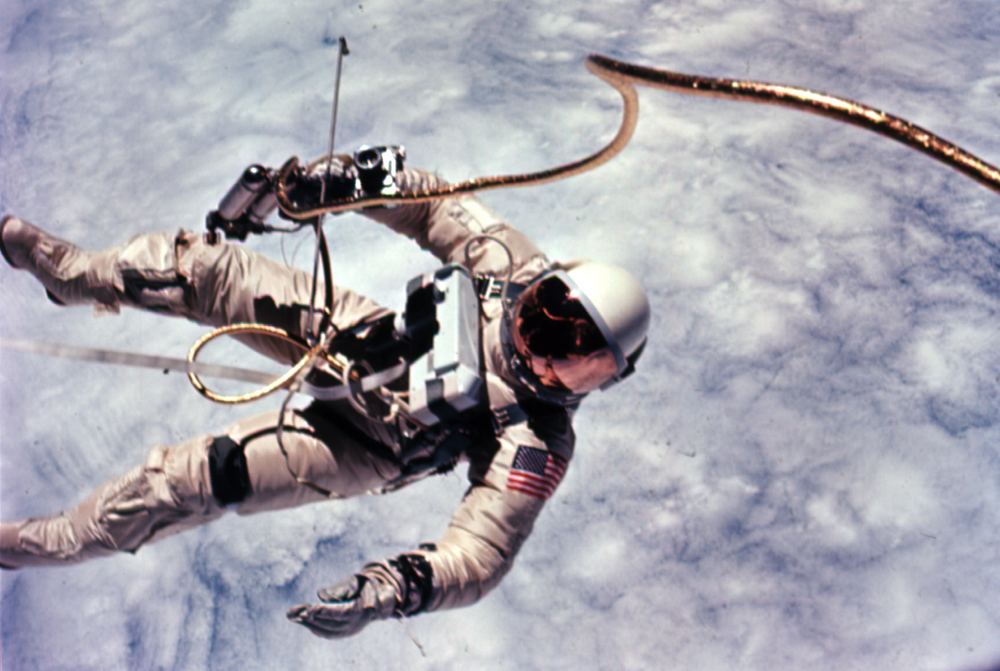
The more famous one is Ed White’s spacewalk — the American EVA that I’ve written about, the twenty-three minutes floating free, the gas gun, the reluctance to come back inside. That was June 3, early in the mission.
The less famous story is McDivitt’s attempt to fly a rendezvous with the spent second stage of the Titan II rocket that launched them. This was supposed to be a practice rendezvous — find the stage, maneuver close, practice the skills needed for later Gemini missions.
It didn’t work. McDivitt quickly discovered that orbital rendezvous is completely counterintuitive. His instinct was to thrust toward the target. But thrusting toward an object in a lower orbit speeds you up, which raises your orbit, which actually takes you farther from the lower-orbit object. The correct approach involves complex orbital mechanics maneuvers that feel backwards to a pilot trained in atmospheric flight.
McDivitt ran low on fuel trying to reach the second stage and had to give up. This failure was one of the most useful results of the Gemini program: it demonstrated conclusively that you cannot use aircraft instincts for orbital rendezvous. You need specifically trained orbital mechanics skills and computer support.
The later Gemini crews had this training. Gemini 6 and 7’s rendezvous worked precisely. Gemini 8’s and 9’s docking attempts encountered different problems. But they all had better orbital mechanics preparation because Gemini 4 showed what happened without it.
McDivitt went on to command Apollo 9, where he flew the lunar module’s first crewed test. His Gemini 4 experience — learning what orbital mechanics actually requires — was part of what prepared him.
Everything teaches something. Even the failures.