The National Aeronautics and Space Administration, which becomes official in October, is going to absorb the National Advisory Committee for Aeronautics — NACA — which has been America’s aeronautics research organization since 1915.
NACA is worth understanding because it’s the foundation everything else is built on.
For 43 years, NACA has been doing the quiet, fundamental work of understanding how aircraft fly: testing airfoil shapes in wind tunnels, developing supersonic aerodynamics, building the research aircraft programs that produced the Bell X-1 (first supersonic flight), the Douglas D-558 (first Mach 2 flight), and eventually the X-15. When engineers needed to know how air behaves over a wing at 400 miles per hour, they called NACA. When they needed to know how to shape a nose cone to survive supersonic re-entry, they called NACA.
NACA has research centers — Langley in Virginia, Ames in California, Lewis in Cleveland — with wind tunnels, flight test facilities, and institutional knowledge built over decades. These centers become the core of NASA.
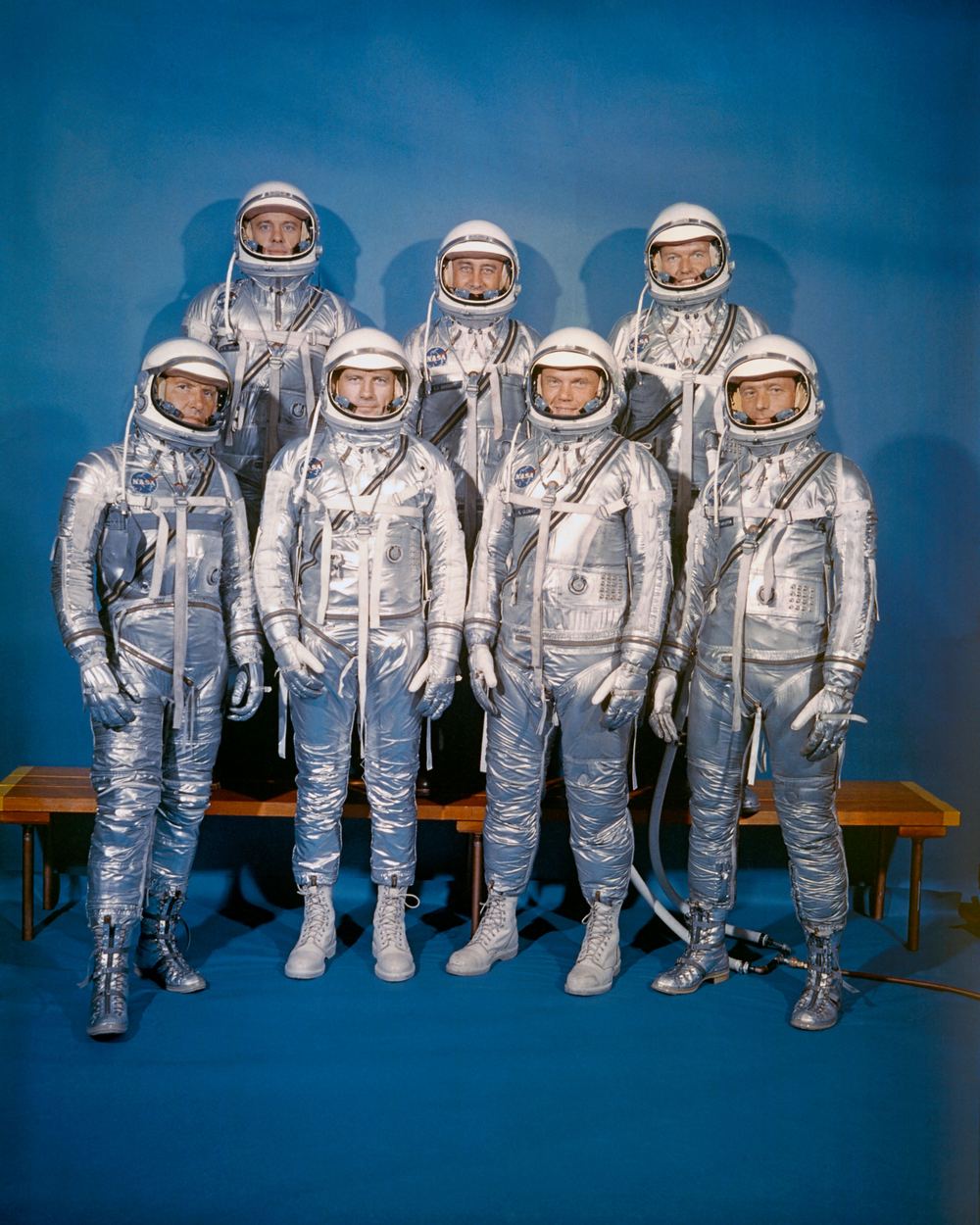
The astronauts themselves come partly from this tradition. Research test pilots who flew experimental aircraft at Edwards Air Force Base — the NASA High Speed Flight Station — were doing NACA research. Yeager broke the sound barrier on a government research aircraft. Scott Crossfield, who flew the X-2 and early X-15 missions, was NACA. Neil Armstrong joined NACA’s Lewis Flight Propulsion Laboratory before becoming a test pilot.
The specific knowledge that makes rocket re-entry survivable — the heat shield design, the blunt body concept that counterintuitively works better than a sharp nose for re-entry vehicles — came from NACA research. Dr. Harvey Allen at Ames developed the blunt body theory in the 1950s. Without it, Mercury and Apollo can’t come home.
NACA becomes NASA, and the aeronautics expertise becomes spaceflight expertise. The transition is mostly smooth because the problems are related: both involve aerodynamics at high speeds, both involve materials that have to survive extreme environments, both involve precision control systems.
The institutional memory matters. You don’t build what NASA is building from scratch. You build it on 43 years of careful quiet research.