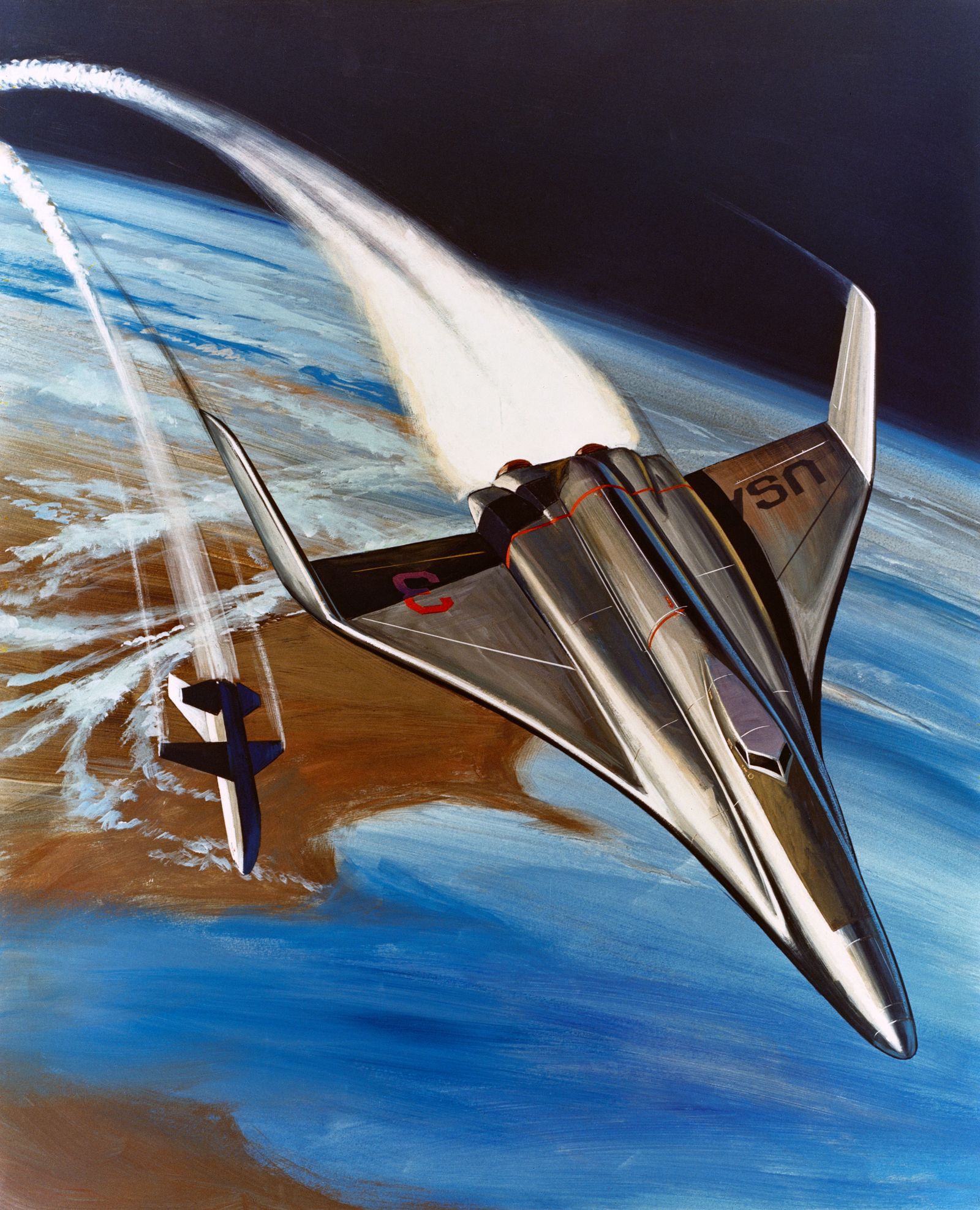
Nixon announced today that NASA will proceed with development of the Space Transportation System — the Space Shuttle.
The basic concept: a reusable winged orbiter launches with a large external fuel tank and two solid rocket boosters, reaches orbit, completes its mission, and returns to land on a runway. The solid rocket boosters parachute into the ocean and are recovered for reuse. The external tank is expendable — the only part thrown away each flight.
The economic argument: reusability reduces cost per pound to orbit. Expendable rockets cost about a thousand dollars per pound today. NASA projects the Shuttle will bring this to one hundred dollars per pound at fifty flights per year.
I am skeptical of those numbers. The Shuttle is enormously complex — a winged spacecraft with a cryogenic main engine system that must survive re-entry and fly again. Maintenance costs on that level of complexity will be substantial. Airlines spend enormous resources maintaining jet engines, and those are far simpler.
But the concept is right in principle. Throwing away a Saturn V first stage after two and a half minutes of flight is not sustainable for routine access to space.
The Shuttle will fly. I will watch its development. The question is whether it delivers on its promises or whether complexity consumes the savings.
Somewhere in the 1970s, a winged vehicle will land on a runway after returning from orbit. I want to see that.