I need to write down this particular story because I think it’s the one that will stay with me longest from this whole ordeal.
The Lunar Module Aquarius uses a specific type of CO2 scrubber cartridge to remove carbon dioxide from the air the crew breathes. If CO2 builds up to a high enough level, the crew will lose consciousness and die. Simple as that. The LM’s scrubbers are designed for two men for two days. With three men, the cartridges fill up faster.
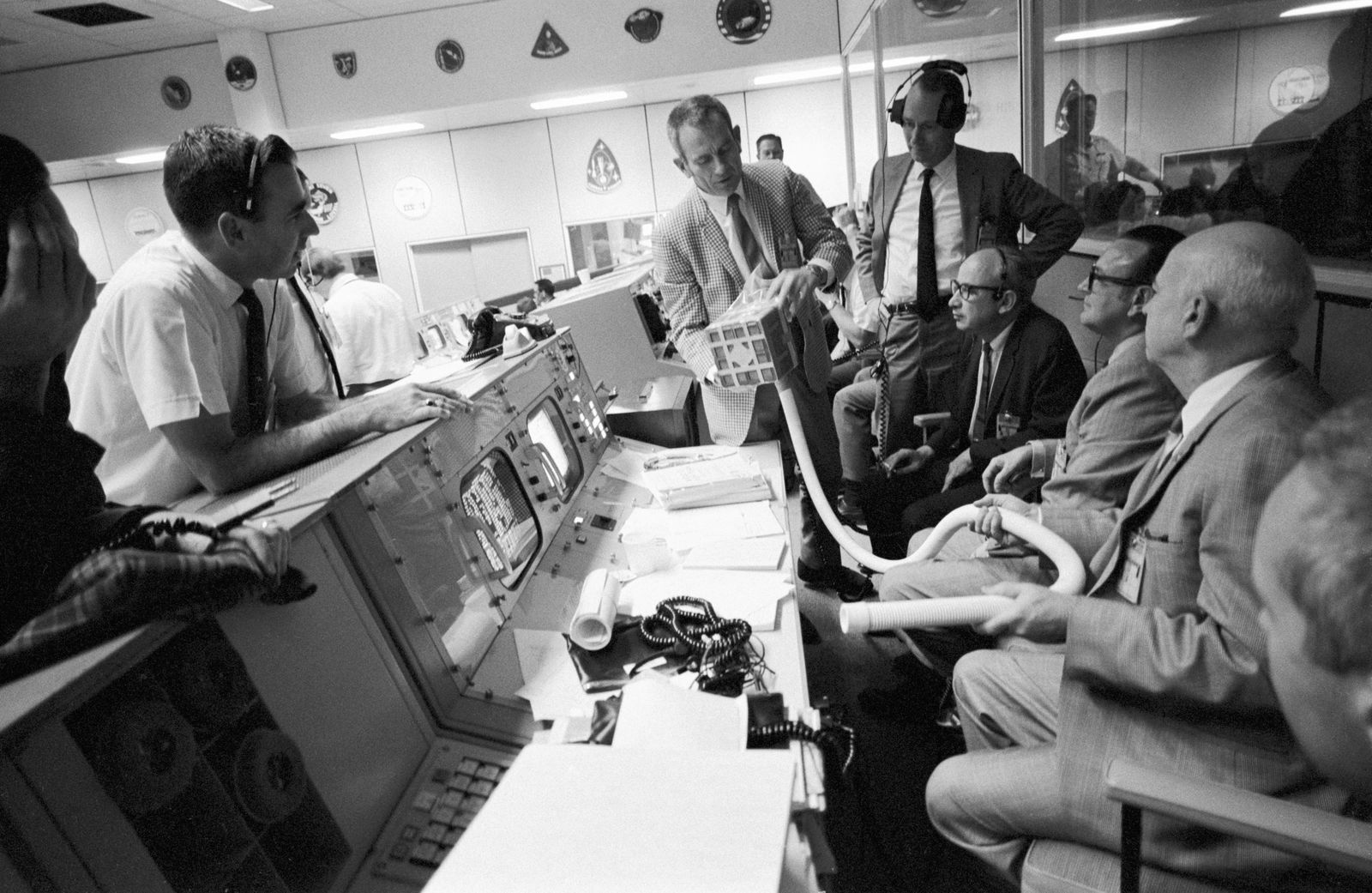
The Command Module had extra CO2 scrubber cartridges. Plenty of them. But the Command Module uses a different size: square cartridges rather than round. The Lunar Module’s scrubber accepts round cartridges. Square peg, round hole. Literally.
The CO2 levels in Aquarius were rising. Mission Control knew what was aboard the spacecraft — every single item that was packed and stowed, on both vehicles, is documented. They knew they had plenty of the wrong size cartridges and insufficient quantities of the right size. And they had to solve this problem using only materials that the crew had access to, in a spacecraft, with three increasingly cold and tired and stressed men waiting for the answer.
A team of engineers in Houston — I keep reading about “the engineers in the back room” and I keep trying to imagine what that room looked like — took out their own copies of the spacecraft manifest and began pulling objects off the list. What do they have? They have cardboard from the flight plan covers. They have lithium hydroxide cartridges (the square ones). They have plastic bags. They have tape. They have socks. They have a pressure suit hose.
Using these materials, they constructed an adapter that made the square cartridges functional in the round holes. A series of cardboard ducts and taped connections that routed air through the square cartridges from the round opening. They built a physical model of it in Houston, tested it, confirmed it worked, then read the instructions to the crew over the radio — step by step, in the right order, using the right objects from the manifest.
The crew built it. The CO2 levels dropped.
They called it the “mailbox,” because the finished device looked a little like one. A mailbox made of cardboard and tape and desperation, 200,000 miles from Earth, keeping three men alive.
I told my daughter about this tonight. About the square cartridges and the round holes and the engineers with the manifest and the mailbox. She’s been studying science in school, and she listened to the whole story without saying anything. Then she said: “So they improvised.” And I said yes. They improvised using what they had, and it worked, and three men will keep breathing because of it.
She said: “That’s what science is.”
Yes. That’s exactly what science is. You know enough to understand the problem. You know enough to find a solution from available materials. You test it. You implement it. You verify it worked. And three men keep breathing in the dark.
Two more days to go. Come home, gentlemen.