It’s a new year and I think 1968 is going to be decisive. I can feel it.
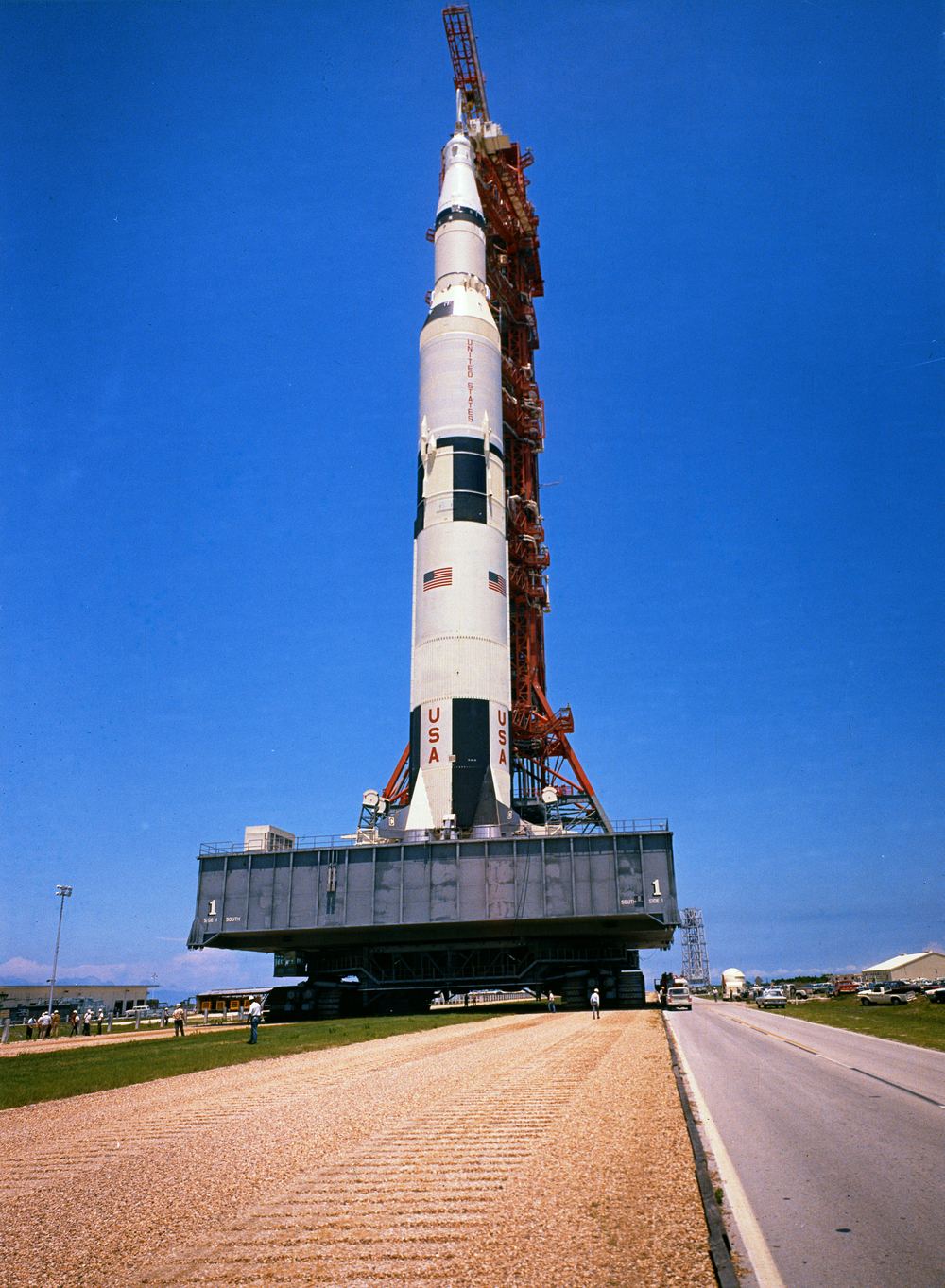
The schedule as I understand it: Apollo 5 is the unmanned test of the lunar module, scheduled for late January. Apollo 6 is another unmanned Saturn V test in the spring. Then — if everything goes well — Apollo 7 will be the first crewed Apollo mission, probably late 1968. If Apollo 7 goes cleanly, Apollo 8 could be ambitious.
What “ambitious” means for Apollo 8, I’m told, depends on what the Soviets do. There are strong rumors that the Soviet program is close to a manned lunar flyby — a mission where cosmonauts fly around the Moon, not landing, but seeing it up close and returning. If they do that first, it’s another Soviet first, but it still leaves the landing for us.
More important to me is the question of whether the redesigned Apollo capsule is actually fixed. The Block II is substantially different from the Block I that killed Grissom, White, and Chaffee. New hatch, new atmosphere protocol, new wiring, new materials. The engineers at North American Aviation (now North American Rockwell after a merger) have reportedly worked around the clock for nine months to rebuild the capsule. Whether they got it right, only the first crewed mission will tell.
Wally Schirra is commanding Apollo 7. He was Mercury and Gemini, one of the most experienced astronauts, and he is famously demanding about hardware readiness. His presence on Apollo 7 is itself a quality signal — NASA doesn’t put a skeptic like Schirra in that seat if they’re not confident in the machine.
I’m also thinking about the mission timeline beyond Apollo 7. A lunar landing requires an Apollo command and service module plus the lunar module — both have to work. The lunar module hasn’t flown yet with humans aboard. There will be a mission to test the lunar module in Earth orbit. Then possibly a deep-space test. Then the landing attempt.
That’s four or five missions between now and the landing, if everything works. We have roughly two years. That’s very, very tight.
I believe we’re going to make it. I don’t know exactly how to calculate that belief. The program has made it through the fire and the delays and the redesign and the Saturn V test. The talent in Houston and Huntsville and at the contractor sites is extraordinary. People are working very hard.
I believe we’re going to make it. Betty thinks I’ve always been too optimistic.
She might be right. But the alternative — assuming we won’t — seems worse. I’ll keep my optimism and keep watching.
1968. This is the year.