The Saturn V flew today.
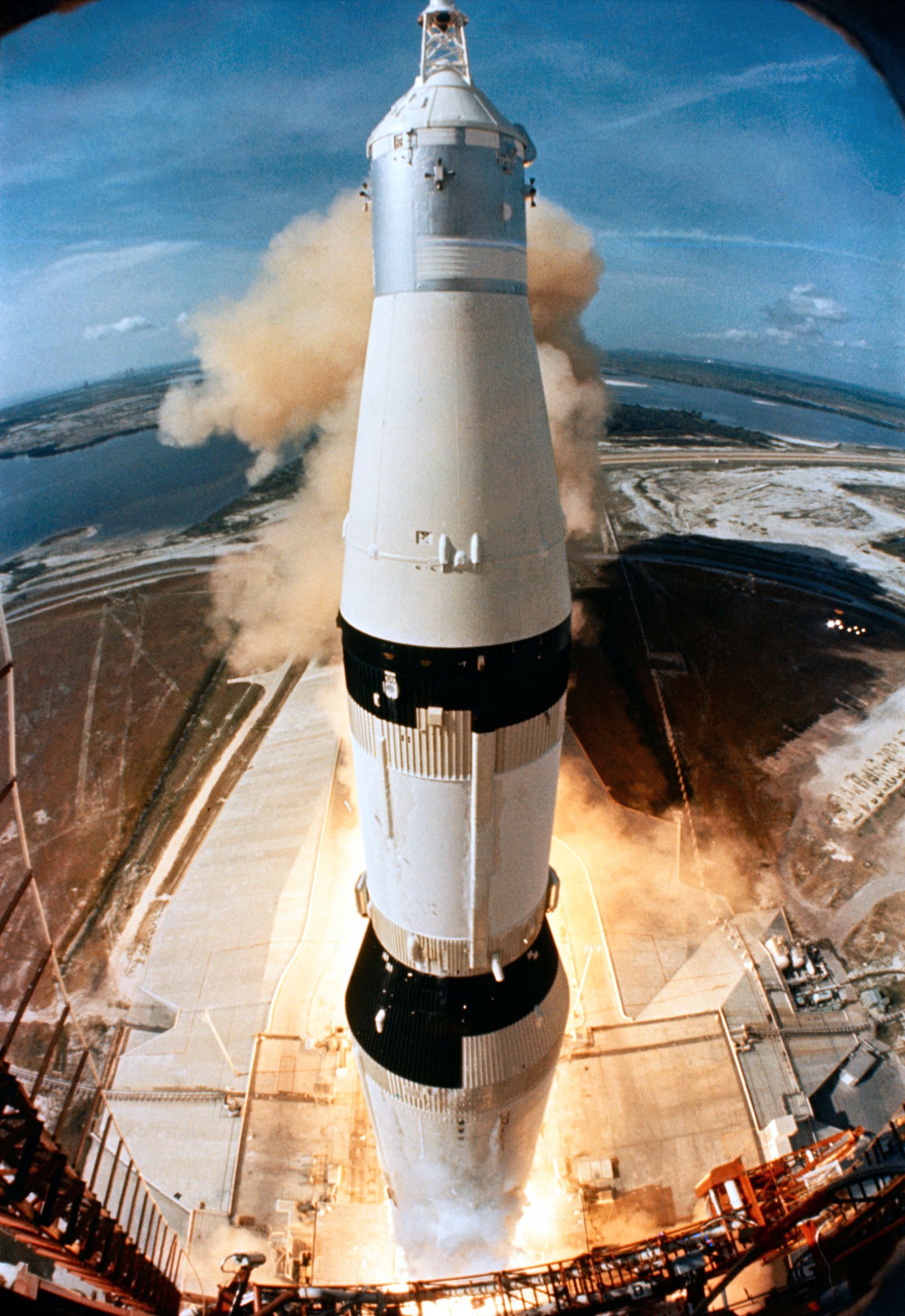
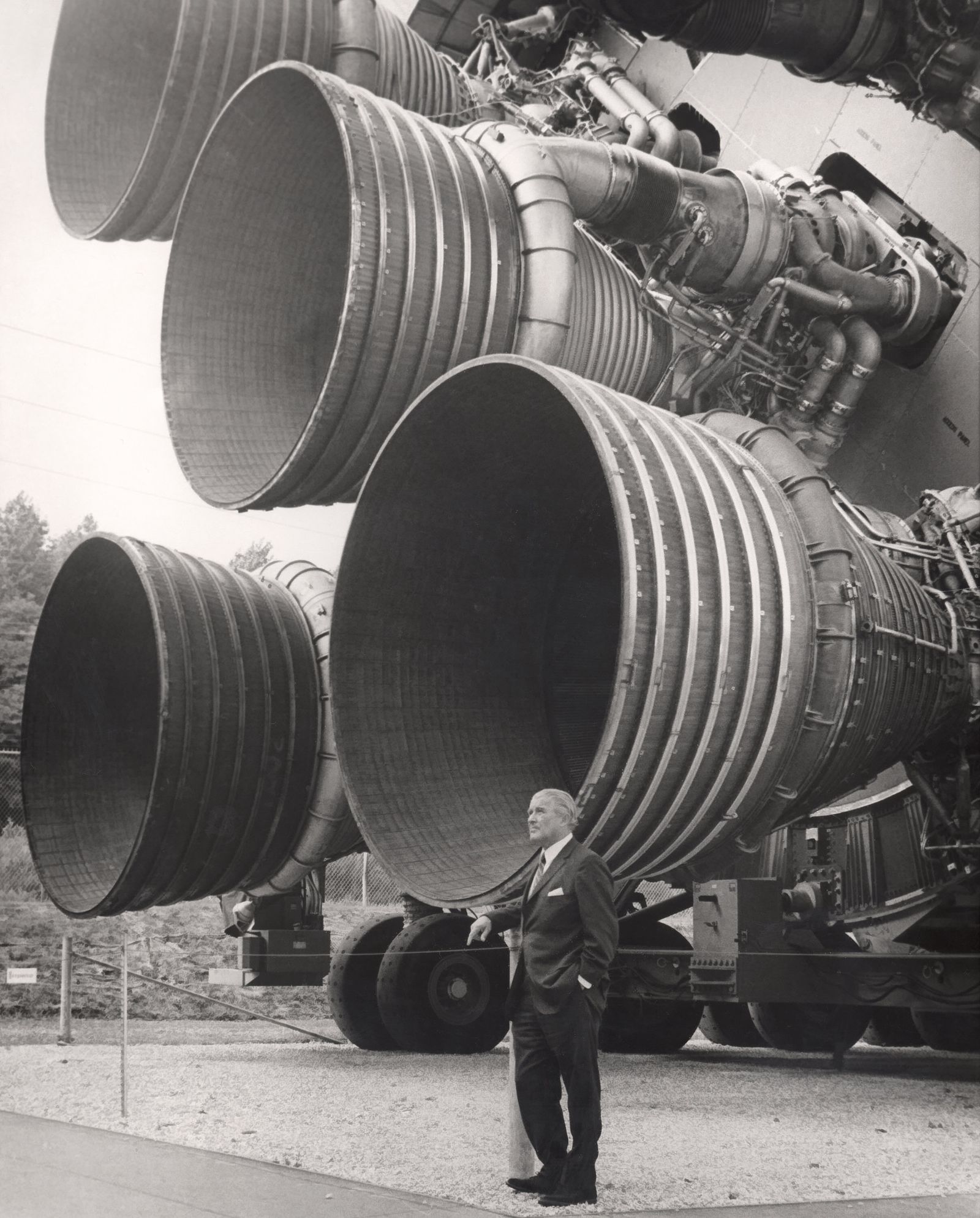
Not with people aboard — this was the first unmanned test, called Apollo 4. But the Saturn V itself, the rocket that will carry Americans to the Moon, left the ground under its own power for the first time this morning at 7:00 AM Eastern, and it worked. It worked perfectly.
I watched on television. The launch coverage was extensive, and when the time came — when the five F-1 engines at the base of this impossibly tall machine ignited — the cameras showed the shock wave rolling outward from the pad through the scrub grass. It hit the press area, three and a half miles away, and the reporters lurched. Cameras shook. The sound came through the television speakers as a wall of noise, a deep chest-vibrating rumble that I could feel even through the television set in my living room.
And I was in my house, hundreds of miles from Florida.
They say people on Cocoa Beach felt it in their sternums. They say windows cracked in nearby buildings. They say the birds in the surrounding area went silent for minutes afterward. When seven and a half million pounds of thrust ignite thirty-six stories of rocket, the world notices.
Let me try to put the Saturn V’s size in terms that mean something. It’s 363 feet tall. The Statue of Liberty from base to torch is 305 feet. This rocket is taller than the Statue of Liberty. It weighs six and a half million pounds fully fueled, nearly all of it propellant. The first stage alone burns through 20 tons of fuel — kerosene and liquid oxygen — every second. Every second.
The five F-1 engines in that first stage each produce 1.5 million pounds of thrust. Each one. Together they produce 7.5 million pounds. For comparison, the Redstone that launched Shepard in 1961 produced 78,000 pounds of thrust. The Saturn V is nearly a hundred times more powerful.
I find I can write these numbers but I can’t quite make them real in my mind. They’re just numbers. Ninety-six times as powerful. What does that mean? What does 7.5 million pounds of thrust feel like? I don’t think there’s a human analogy. You just have to watch it go.
Today’s test sent an unmanned Command and Service Module to high altitude and brought it back through reentry, testing the heat shield. The CM reached 25,000 feet per second on reentry — the speed at which it will be coming back from the Moon. The heat shield held. The parachutes deployed. The capsule landed in the Pacific right on target.
The whole thing worked on the first try. The most powerful rocket ever built, flying for the first time, flew a successful mission on the first attempt.
I have been following this program since 1961. I have watched every Mercury flight and every Gemini flight. I have watched the tragedy of Apollo 1 and the nine months of silence and rebuilding that followed. I have believed through all of it that we were going to get there.
Today, watching five F-1 engines light up and push 363 feet of rocket off the pad and into the sky, I feel something shift. Not doubt becoming certainty — certainty was never there to begin with, and I am too realistic to claim it now. But probability. The probability is moving. The Moon is getting reachable in a way it wasn’t yesterday.
The Saturn V flew. It worked. The engine is ready.
Now put people in it.