I read the account three times before I felt like I understood what happened yesterday.
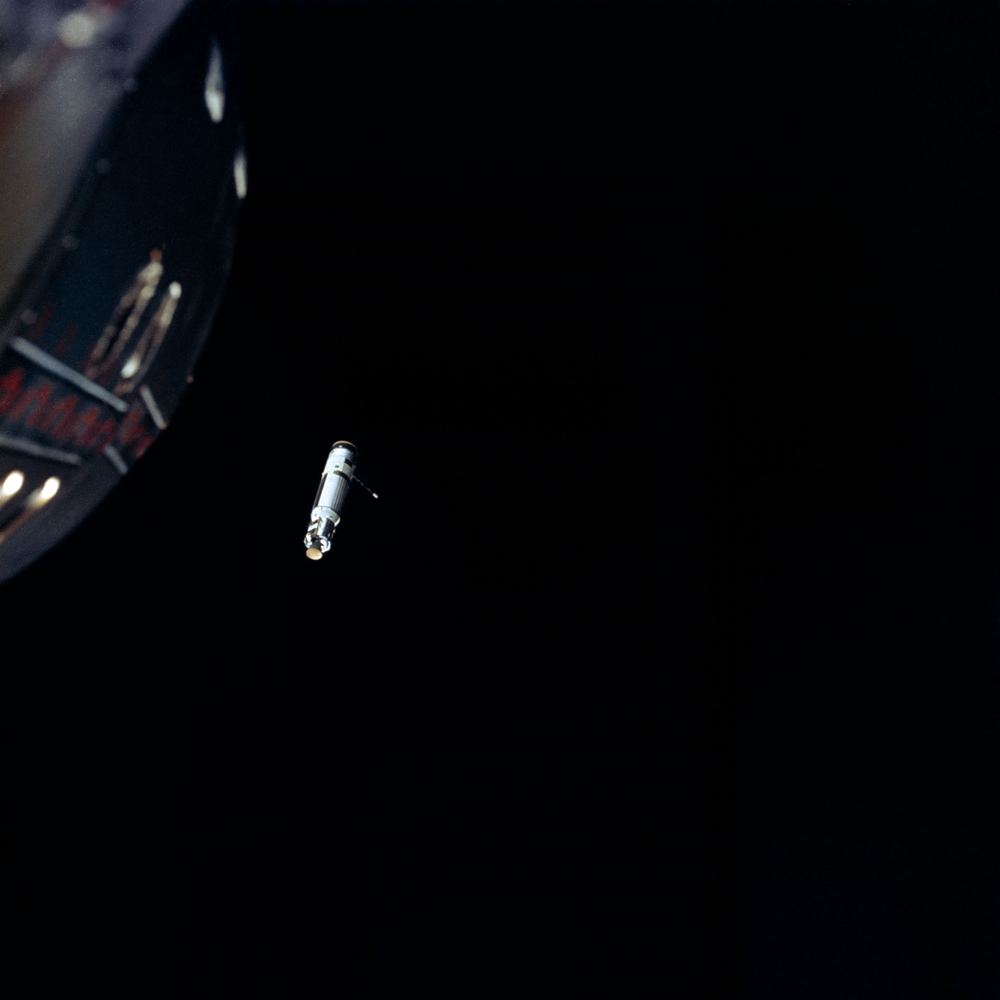
Neil Armstrong and David Scott launched on Gemini 8 on March 16th with two goals: to dock with an unmanned Agena target vehicle — which would be the first docking in space — and to have Scott perform an EVA. They achieved the first goal almost immediately; the docking with the Agena went smoothly, and it was the first time two spacecraft had actually joined together in orbit. A genuine milestone.
And then everything went wrong.
The combined spacecraft began to roll — a slow rotation that Armstrong and Scott noticed but initially attributed to the Agena. Armstrong used Gemini’s thrusters to try to stop the rolling, but it continued. They undocked from the Agena, thinking that would fix it.
It didn’t fix it. It made it worse. The problem wasn’t the Agena. The problem was Gemini — specifically, one of Gemini 8’s own thruster valves had stuck open, and it was firing continuously. With the Agena attached, the Agena’s greater mass had partially masked the effect. Once they undocked, Gemini 8 began spinning freely, and it accelerated fast. By the time they identified the problem, the spacecraft was rotating at one revolution per second. That’s sixty revolutions per minute. Armstrong and Scott were on the edge of losing consciousness.
Armstrong made a decision: he shut down all sixteen of the Orbit Attitude and Maneuvering System thrusters and used the Reentry Control System — the thrusters designed only for use during reentry — to stop the spin. It worked. The spacecraft stabilized. Both men were conscious. No one was dead.
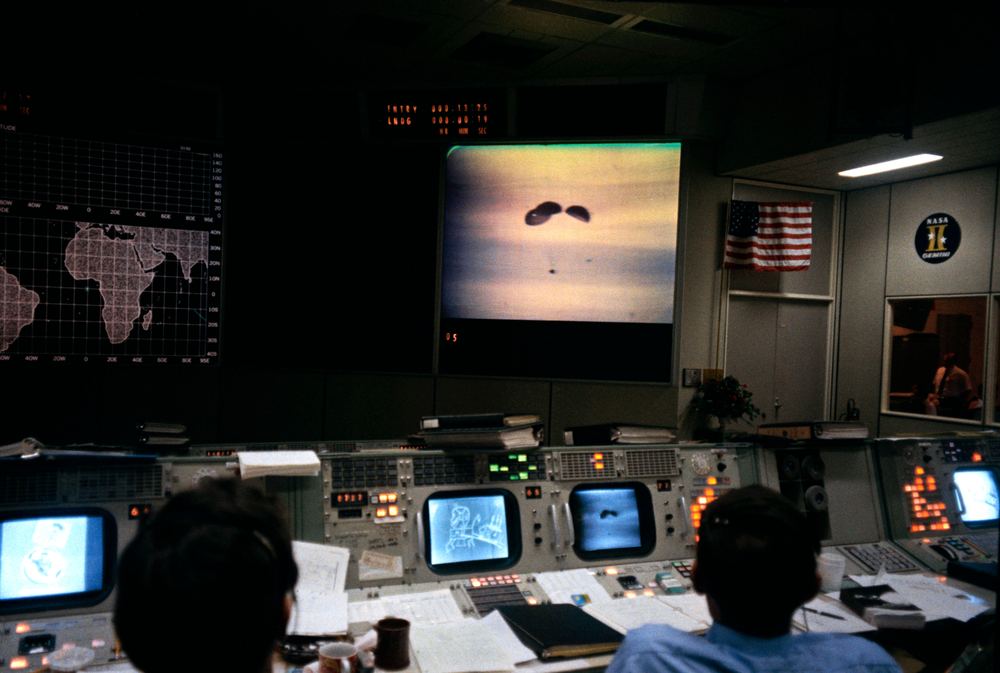
But mission rules say: once you’ve used the reentry thrusters in orbit, you have to come home immediately. They can’t be “used up” before reentry. So Gemini 8 had to cut the mission short. They came home after less than eleven hours of a planned three-day flight. No EVA. No second docking attempt. Just survival and reentry.
Armstrong landed the capsule precisely in the backup recovery zone in the Pacific. Pinpoint landing under extreme pressure after a near-catastrophe, on an abbreviated mission plan, with limited remaining fuel. The Navy ships had to steam three hours to reach them.
I thought about this all day. Neil Armstrong is thirty-five years old. He’s a civilian — technically; he was Navy before. He’s an engineer as much as a pilot, which apparently is part of what saved them: a fighter pilot’s instinct might have been to fight the spin directly; an engineer’s instinct was to figure out where the spin was coming from and cut it off at the source. Armstrong did the right thing and saved both their lives.
I filed the name: Neil Armstrong. Cool head in a crisis. Thinks clearly when everything is going wrong. Those are the qualities you want in an astronaut.
The program had its first real emergency, and the crew came home alive. The systems worked — the backup thrusters worked. The decision-making worked. Mission Control worked. The mission was cut short but no one died.
Still, I found myself thinking about what it would have been like if Armstrong hadn’t identified the problem in time. One revolution per second. That’s nauseating to imagine even sitting here in my chair. Up there, at altitude, in a spinning capsule, with the world wheeling past the windows and your hands on controls and the seconds ticking away — what does a man feel in that moment? What does he tell himself to stay calm enough to save his own life?
I don’t know. I hope I never have to find out.
But Armstrong did. And now he’s home.