Wally Schirra flew six orbits today in what everyone is calling a “textbook flight.” After Carpenter’s problems two months ago, that seems like exactly what this program needed.
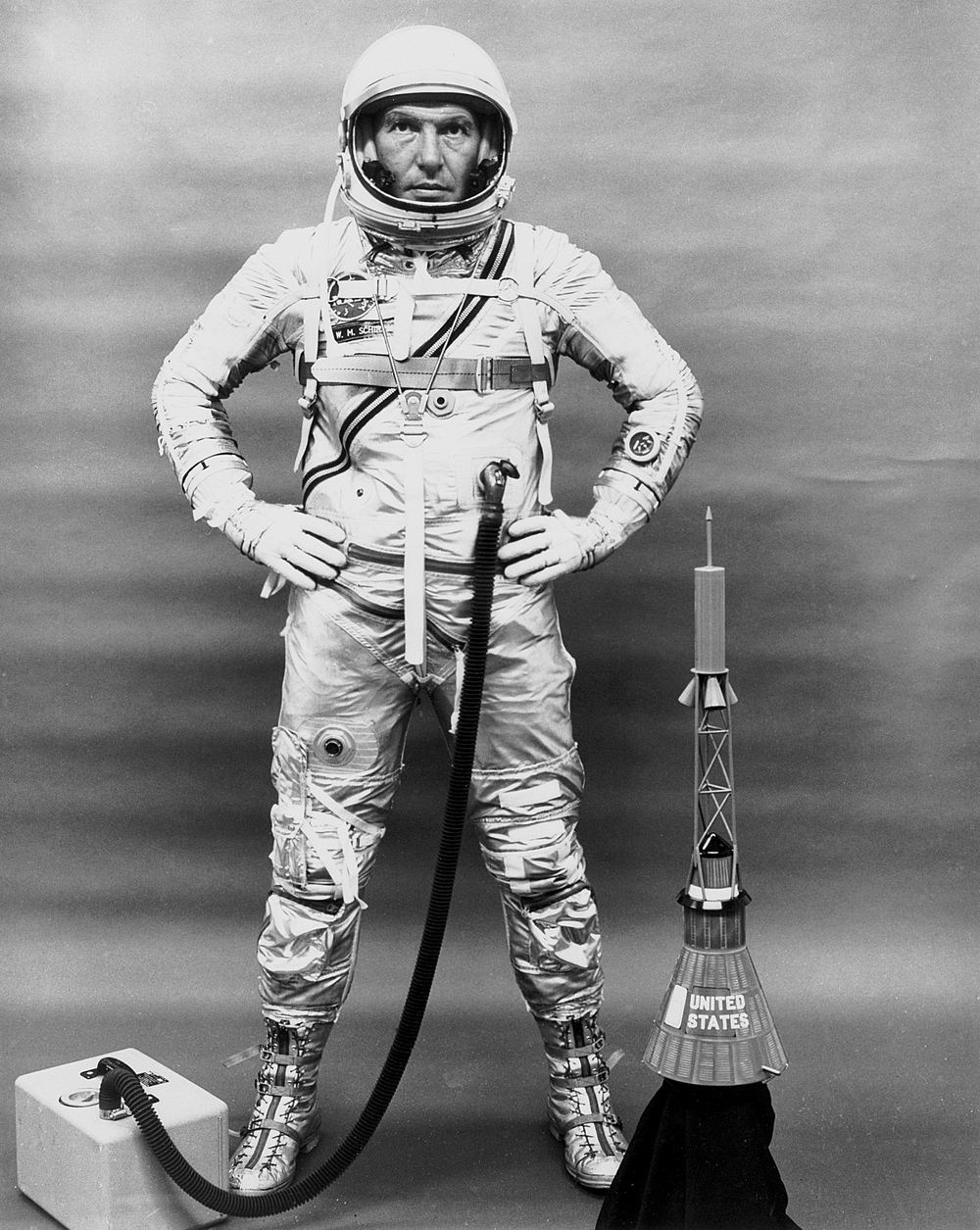
Sigma 7. Nine hours and thirteen minutes. Six times around the Earth. Schirra came down within eight miles of the recovery ship — essentially perfect — and was recovered quickly and in excellent health.
The thing that made this mission notable, beyond just the success, was how precisely Schirra flew it. He was meticulous about fuel usage — he conserved so much attitude control fuel that at the end of the mission he had more than 78% of his maneuvering fuel remaining. He ran the capsule in “chimp mode,” as the astronauts call it (manually passive, letting the automatic systems do most of the work) for long stretches to preserve propellant. He did everything correctly, on schedule, in order.
Schirra is a different kind of personality than Shepard or Glenn or Carpenter. Where Glenn is the earnest patriot and Carpenter is the curious scientist and Shepard is the aggressive competitor, Schirra is — from all accounts — a jokester, a man who defuses tension with a well-timed wisecrack. But when it matters, he’s apparently one of the most precise and technically disciplined pilots in the program. He flew Sigma 7 like a craftsman showing what the machine could do.
I find I’m glad the Mercury program is ending on this note. One more mission — Gordon Cooper’s, scheduled for next year — and then Mercury is done. Gemini is next, and Gemini is where things get serious for the Moon program.
Schirra did his job. He did it perfectly. Not flashily, not dramatically. He flew his mission and came home and the recovery ship barely had to move to find him.
That’s what excellence looks like, I suppose. Not the spectacular, but the precise.