The Soviet Union crashed a spacecraft into the Moon yesterday. Luna 2.
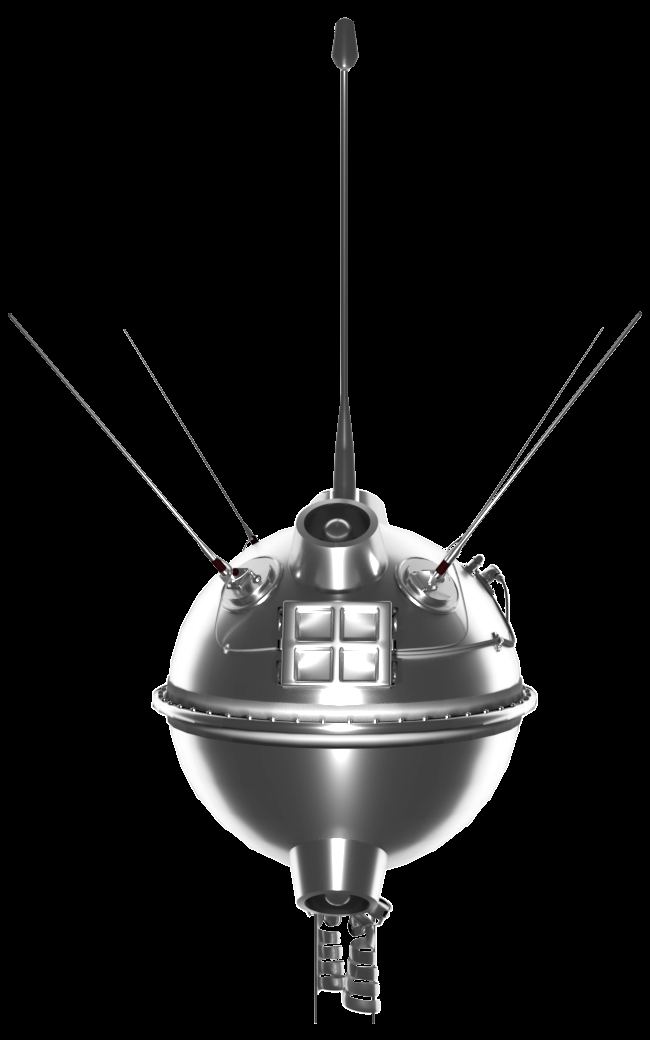
The first human-made object to reach another world. They aimed a rocket at the Moon and hit it.
The Moon is 240,000 miles away and moves. Hitting it requires calculating a trajectory that intersects the Moon’s future position, not its current position. Luna 2 took 36 hours to travel there. The Moon moved considerably in 36 hours, and the Soviet engineers calculated where it would be and aimed for that.
Luna 2 hit the Moon at about 7,000 miles per hour and is now on the surface — or rather, part of it is on the surface and part of it is dispersed impact debris. It wasn’t a soft landing; it was an intentional crash. The scientific value was primarily in demonstrating that you could hit the Moon, and in the data transmitted during the flight: Luna 2 confirmed that the Moon has no measurable magnetic field and no radiation belt.
A month earlier, Luna 1 had missed the Moon entirely and gone into solar orbit, becoming the first spacecraft to escape Earth’s gravity. So the Soviets tried twice and got one miss and one hit.
I’m struck by the precision implied in “one miss and one try.” They had to understand orbital mechanics well enough to aim for the Moon and hit it within 36 hours. That requires serious mathematical and computational infrastructure.
The political effect is significant: the Soviets have reached the Moon before us. Their hardware is on the lunar surface. Whether that means anything practically — no, not at all — but symbolically, it’s another item in the “firsts” ledger.
The Moon is 240,000 miles away and there’s Soviet hardware on it right now. Objects don’t have nationality; that piece of metal is just metal. But the people who sent it there are Soviet engineers, doing work that their American counterparts have not yet done.
We’re still catching up. We haven’t stopped catching up since October 1957.